Ibarski put 31, Nevade, 32300 G.Milanovac, Srbija
Rotary Embossing Die · Frankini Elettromeccanica, Italy
When your product needs to warn by touch before the customer reads the text, or when your brand deserves a label that feels different under the fingers. The Frankini DMR embosses directly onto the printed label as it comes off the roll, with a consistent depth on every piece in the run. A tactile warning triangle for EU CLP compliance, embossing for premium brands, debossing for a sophisticated blind impression.
Embossing on a label serves two completely different purposes. The first is legal: EU CLP regulations require a tactile warning triangle on packaging for hazardous substances. The second is marketing: embossing and debossing add a tactile dimension that sets your product apart from the competition on the shelf. The Frankini DMR handles both cases on the same machine, roll-to-roll.
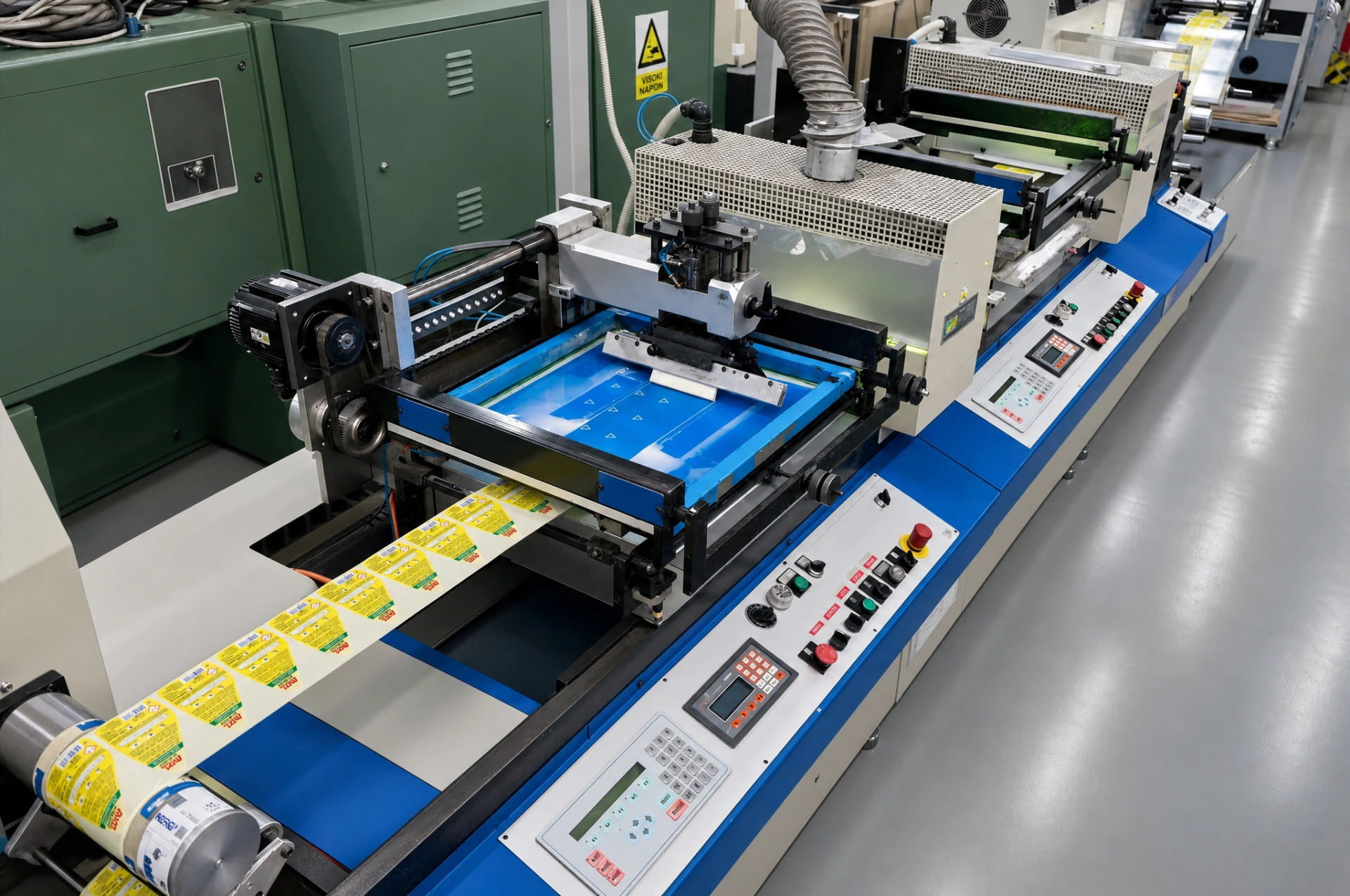
Not every label needs embossing. But when it does, it has to be precise, consistent throughout the entire run, and integrated into the printed label. The Frankini DMR does exactly that: rotary embossing or debossing on an already-printed label as it comes off the roll, as the final step before delivery.
EU CLP regulations require that all chemical products for general sale classified as toxic, corrosive, flammable, or harmful carry a tactile warning triangle per ISO 11683. Detergents, cleaning agents, paints, varnishes, pesticides, nicotine e-cigarettes. Without the triangle, the product cannot go on the shelf in the EU. The Frankini DMR forms the triangle at a depth of 0.25-0.5 mm directly on your printed label.
Embossing raises the logo, brand name, or a decorative element above the label's surface. The customer sees the difference, but feels it first. Premium spirits, luxury cosmetics, artisan foods, exclusive oils. Embossing communicates quality before the customer reads a single word on the label. On a shelf full of flat labels, yours stands out by touch.
Debossing presses the design below the label's surface. The effect is subtle, elegant, visible only at a certain angle of light. It's called a blind impression because it has no ink, only texture. It can be combined with foil stamping, where the foil sits into the recess for a 3D effect. For premium wines, perfumes, and luxury brands where less is more.
The manufacturer buys the printed label from one supplier and a transparent sticker with the tactile triangle from another. On the filling line, that means two applicators or manual application.
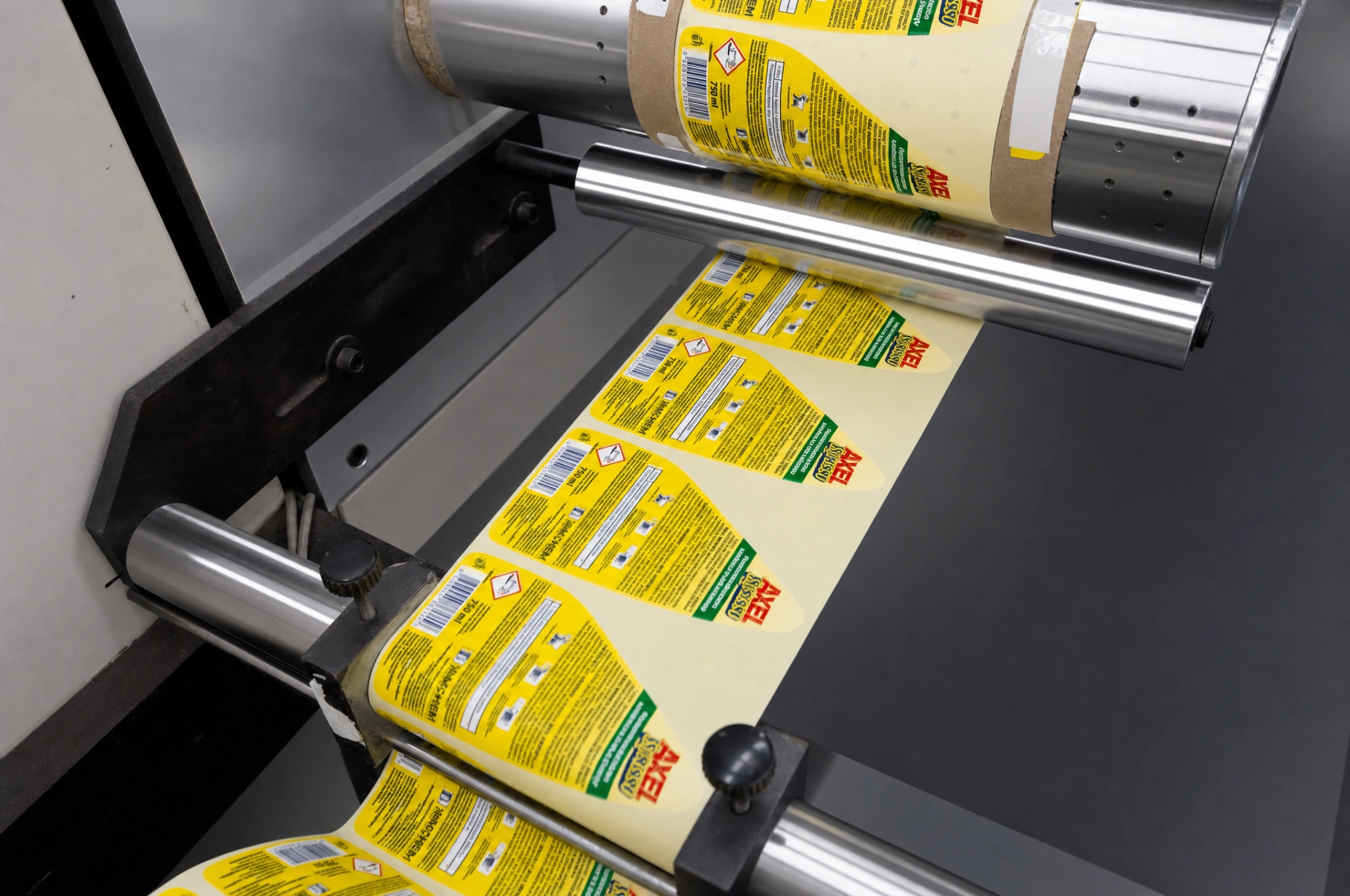
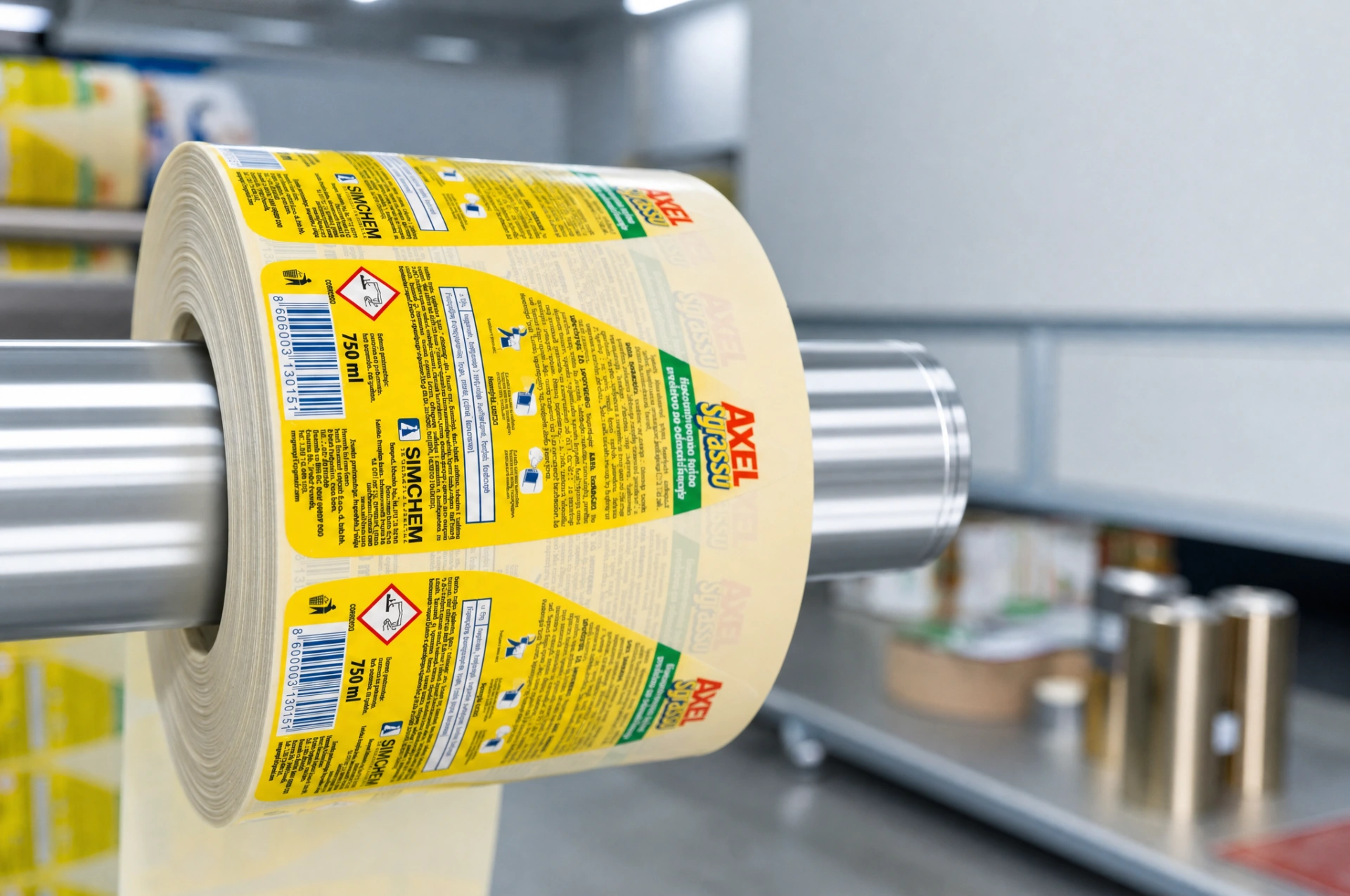
The label is printed on an MPS machine with all colors, GHS pictograms, and UV coating. It then goes to the Frankini DMR, where the embossing is formed. The result: a single roll of complete labels.
Not sure whether your product requires a tactile triangle? Send us the CLP classification from your product's safety data sheet (SDS). Our team checks whether the tactile marking is mandatory, recommends its position on the label based on ISO 11683 and your packaging shape, and integrates the embossing zone into the printed label. Let's check before we print.
A distributor returned an entire batch to me because an inspection on the EU market requires a tactile triangle on the packaging, and my label doesn't have one. The cost of the recall and relabeling exceeds the entire label order.
When the tactile triangle is formed on the Frankini DMR machine directly on the printed label, every label in the roll already has the embossing. It's not possible for an operator on the filling line to "skip" the triangle or forget to apply a separate sticker. One roll, one element, full compliance with EU CLP regulations on every piece.
My product is higher quality than the competitor's, but it looks the same on the shelf because both labels are flat and smooth. The customer chooses with their eyes and fingers, and my label doesn't offer anything different.
On the MPS EF 340, we print the label in color with cold foil metallic accents and selective UV coating. The roll then goes to the Frankini DMR, where the logo or a decorative element is raised above the surface. Three finishing processes on one label, each with its own function: metallic for shine, coating for contrast, embossing for touch. The customer picks up your product from the shelf because the label invited them to touch it.
I export a cleaning product to the EU and sell it on the domestic market too. The EU requires a tactile triangle, domestic regulations don't. I can't keep two label versions for the same product, my warehouse is too small for double the stock.
A tactile triangle on the label doesn't hurt in markets where it isn't mandatory, but it helps in markets where it is. One label version with integrated embossing passes both domestic and EU inspection. One order, one SKU, one stock. You eliminate the risk of shipping the wrong version to the wrong market and reduce storage and administrative costs.
Three more short clips of tactile label production on the Frankini DMR line. Each one loads only when you play it, so they don't slow down the page.
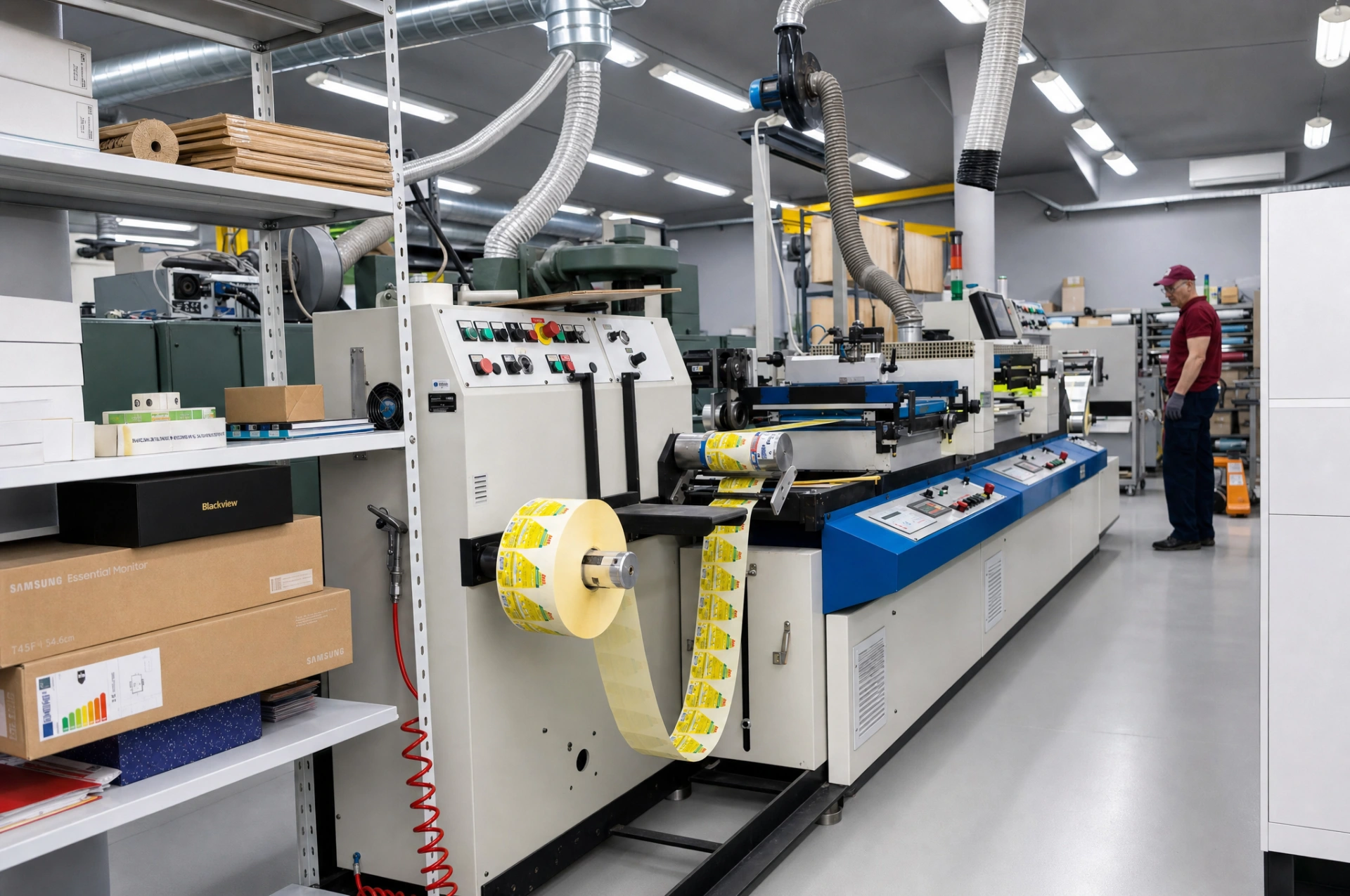
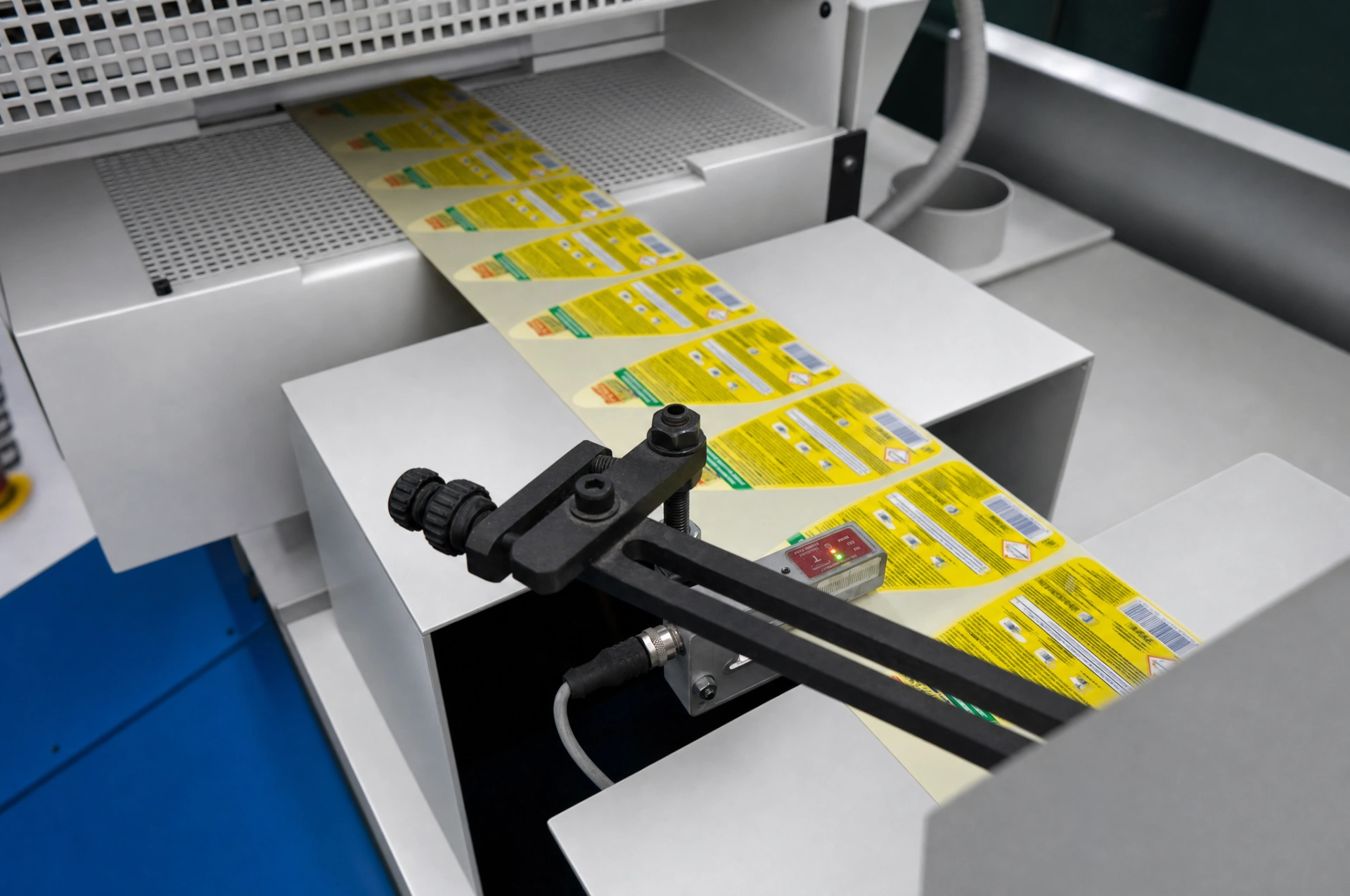
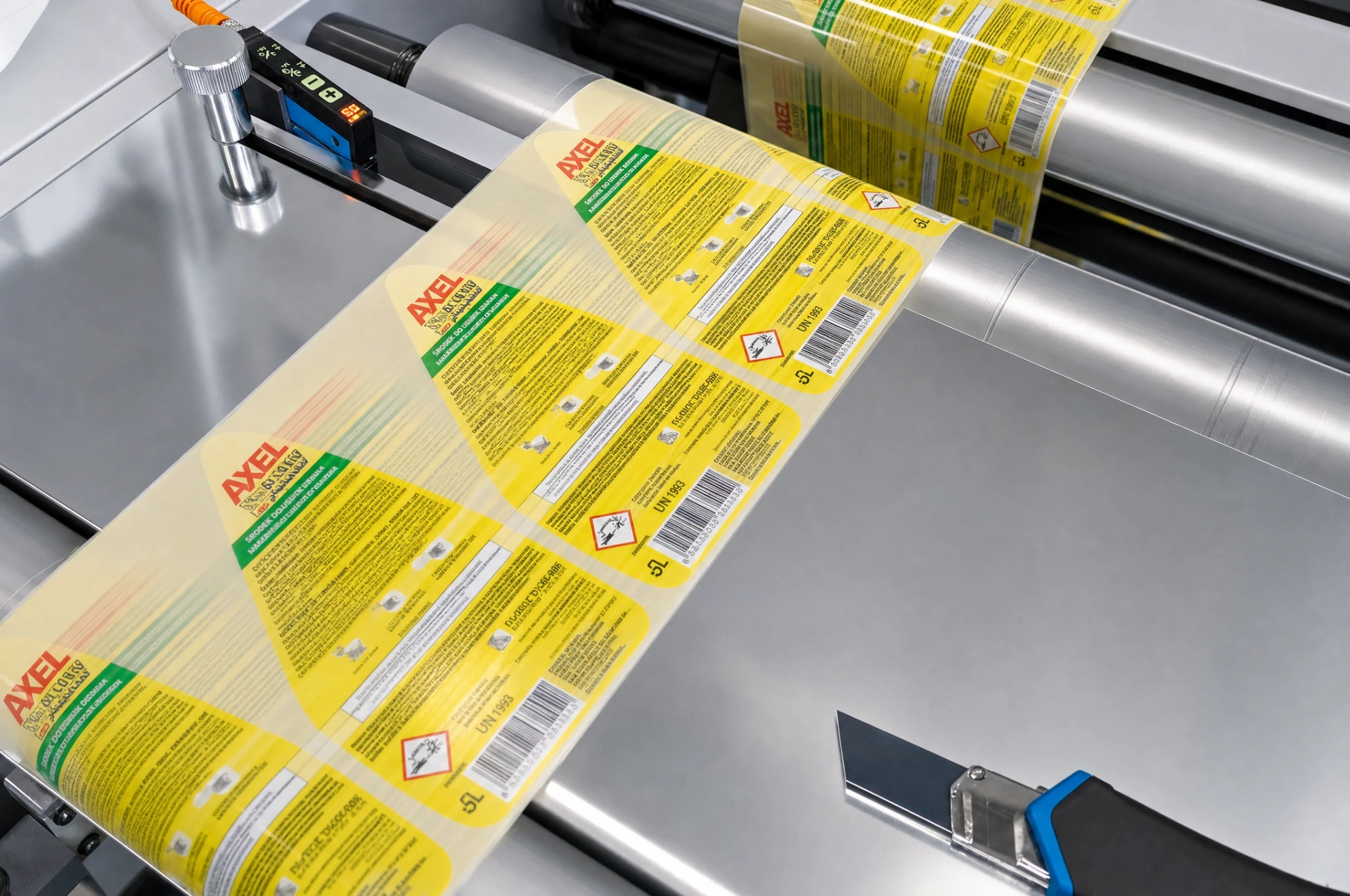
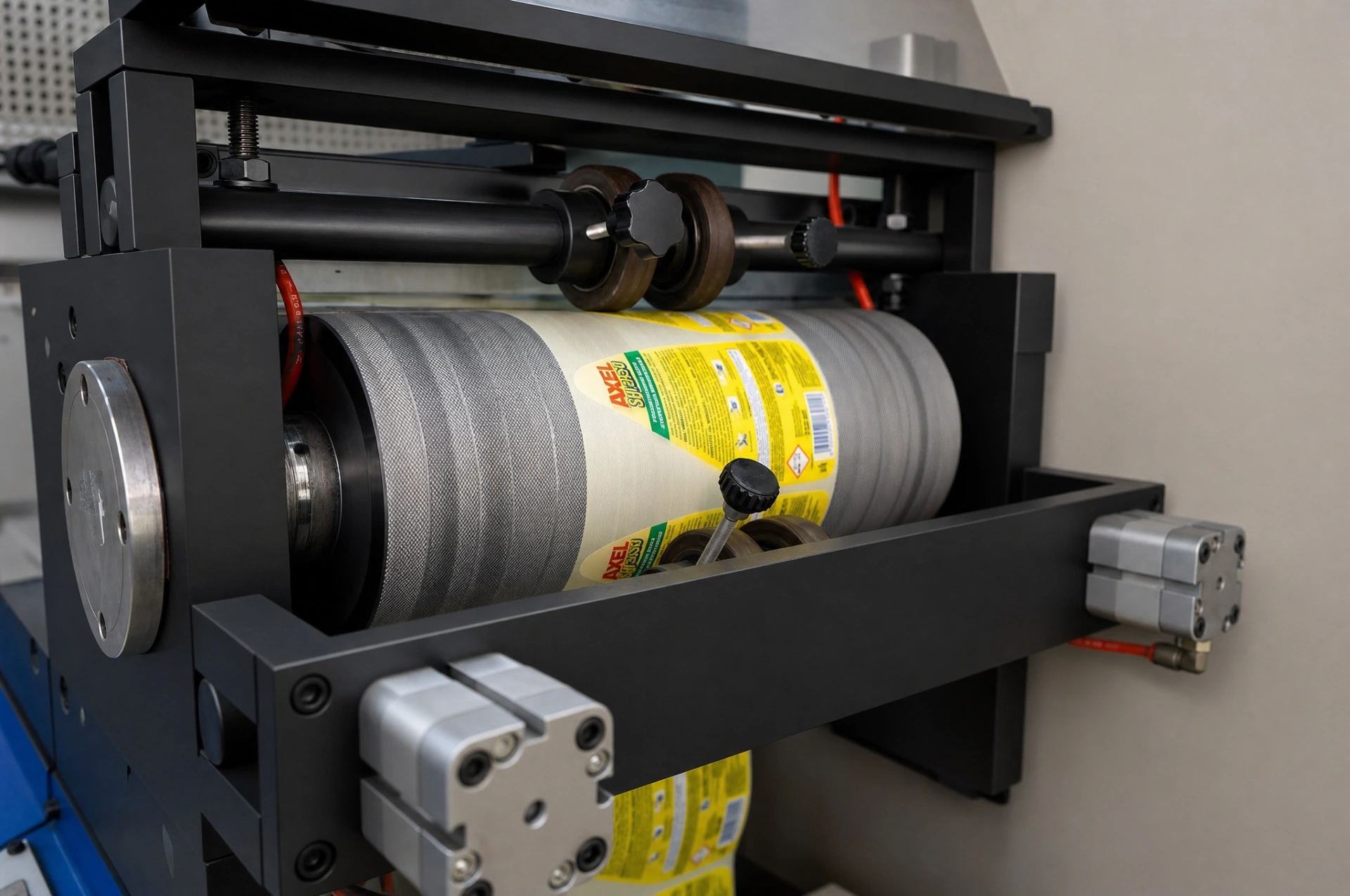
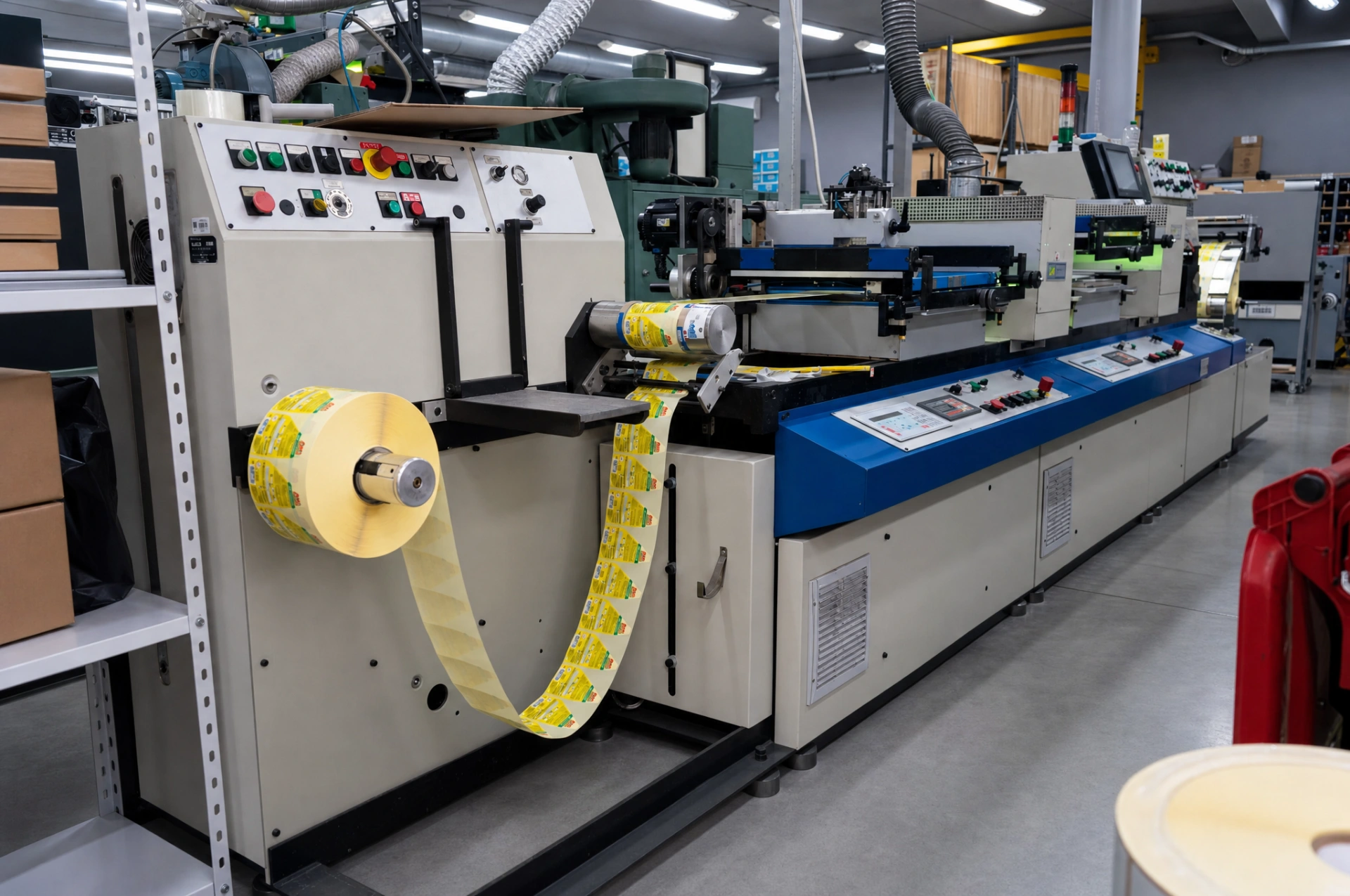
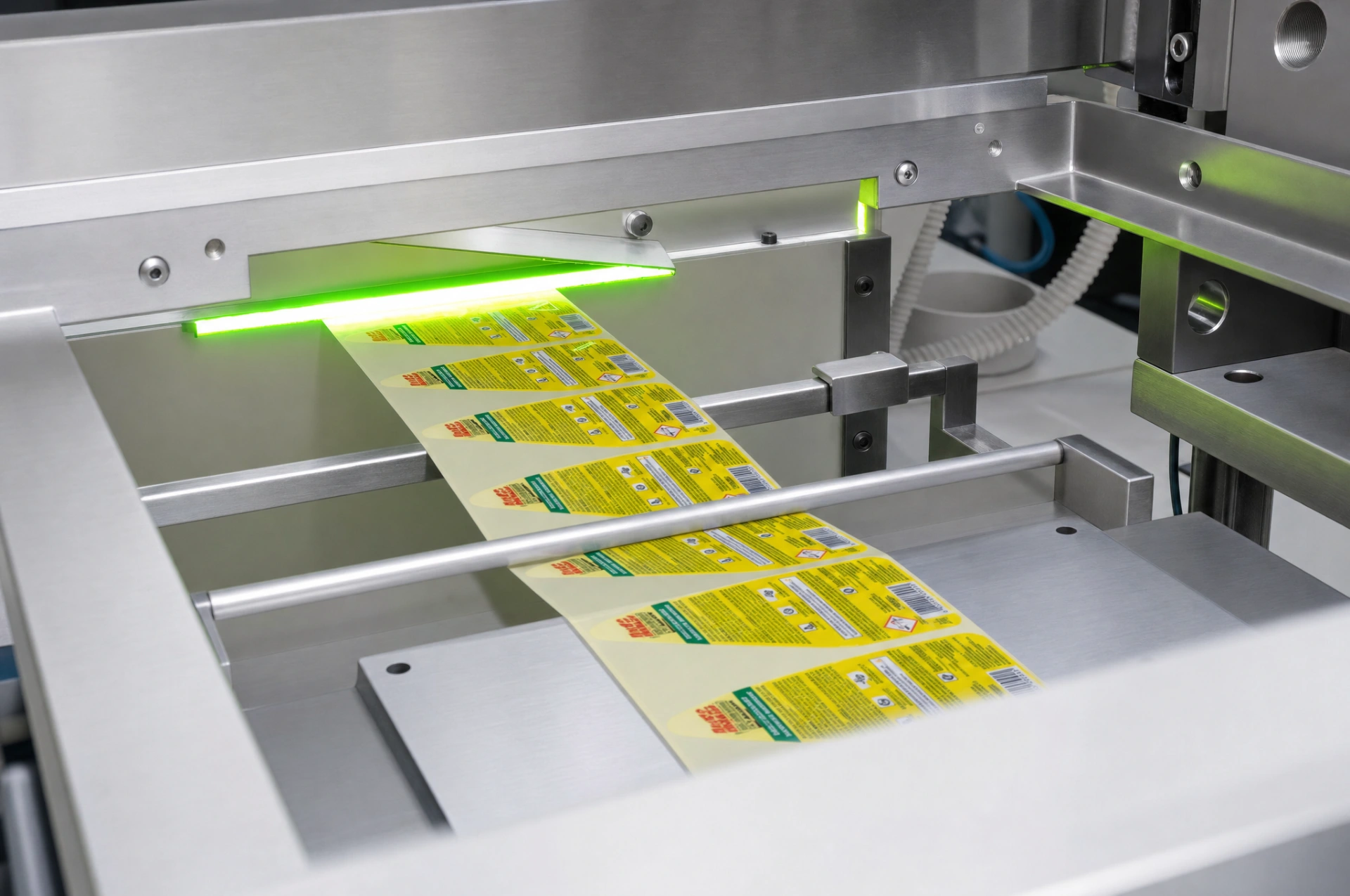
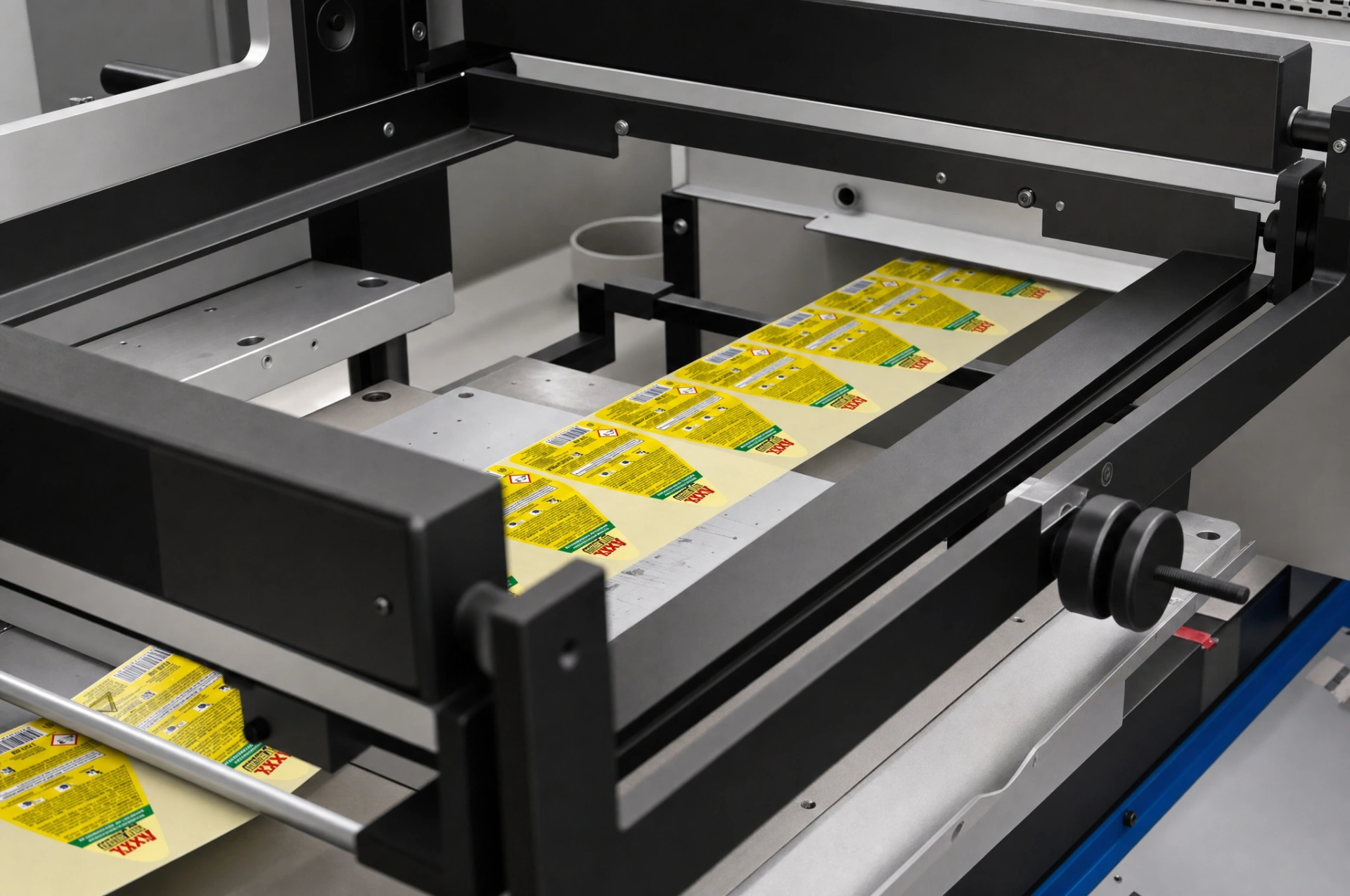
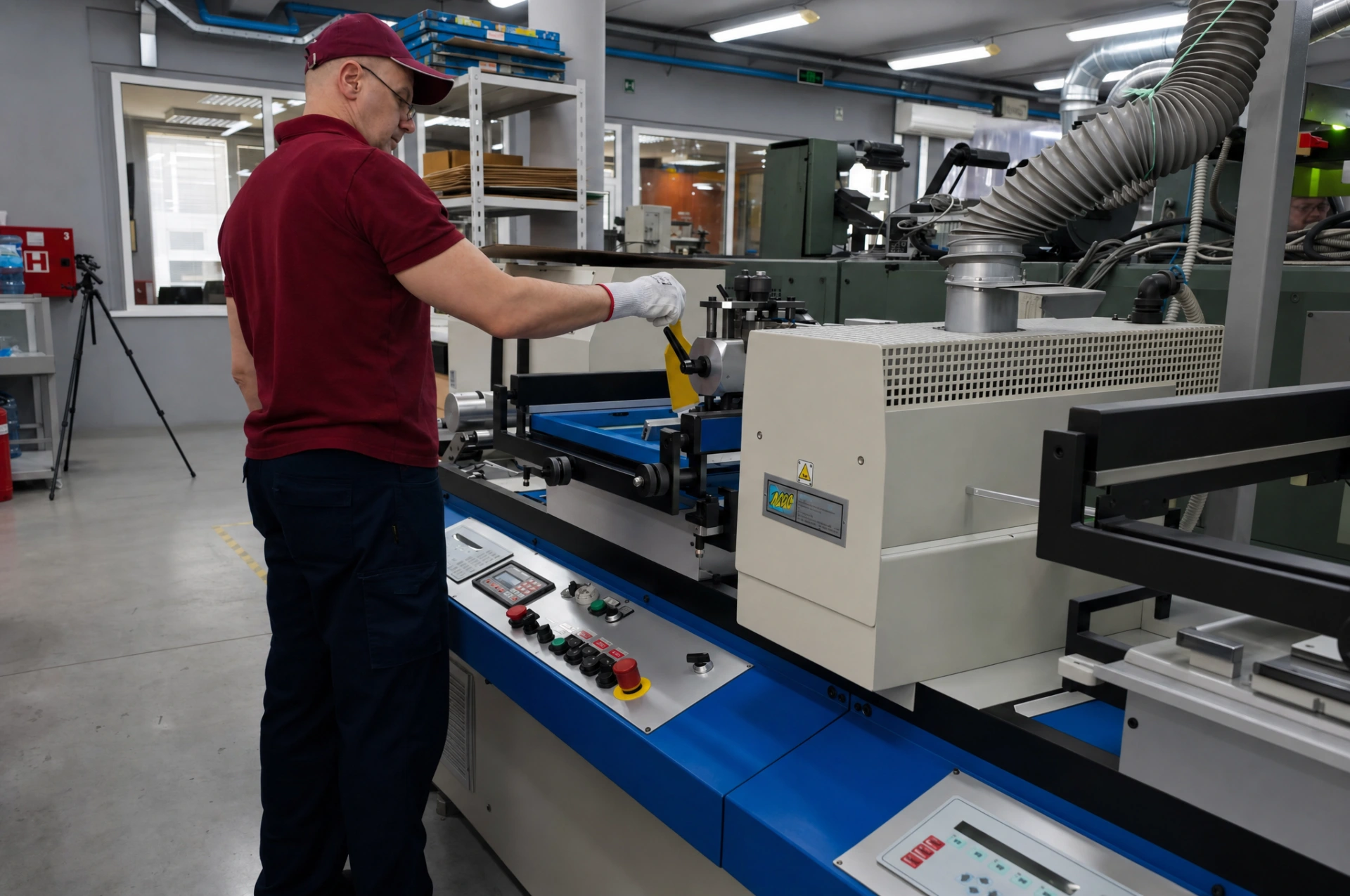
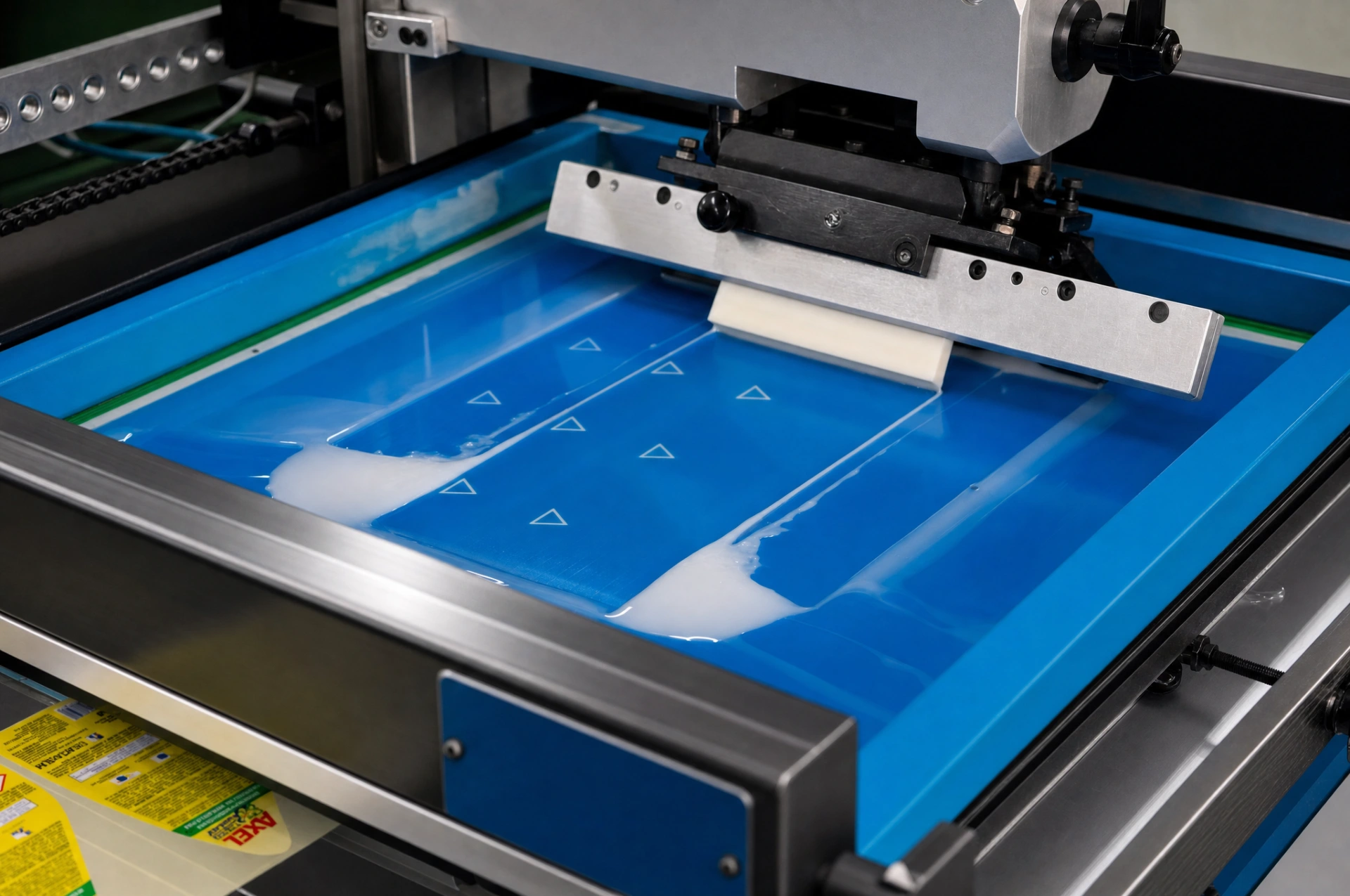
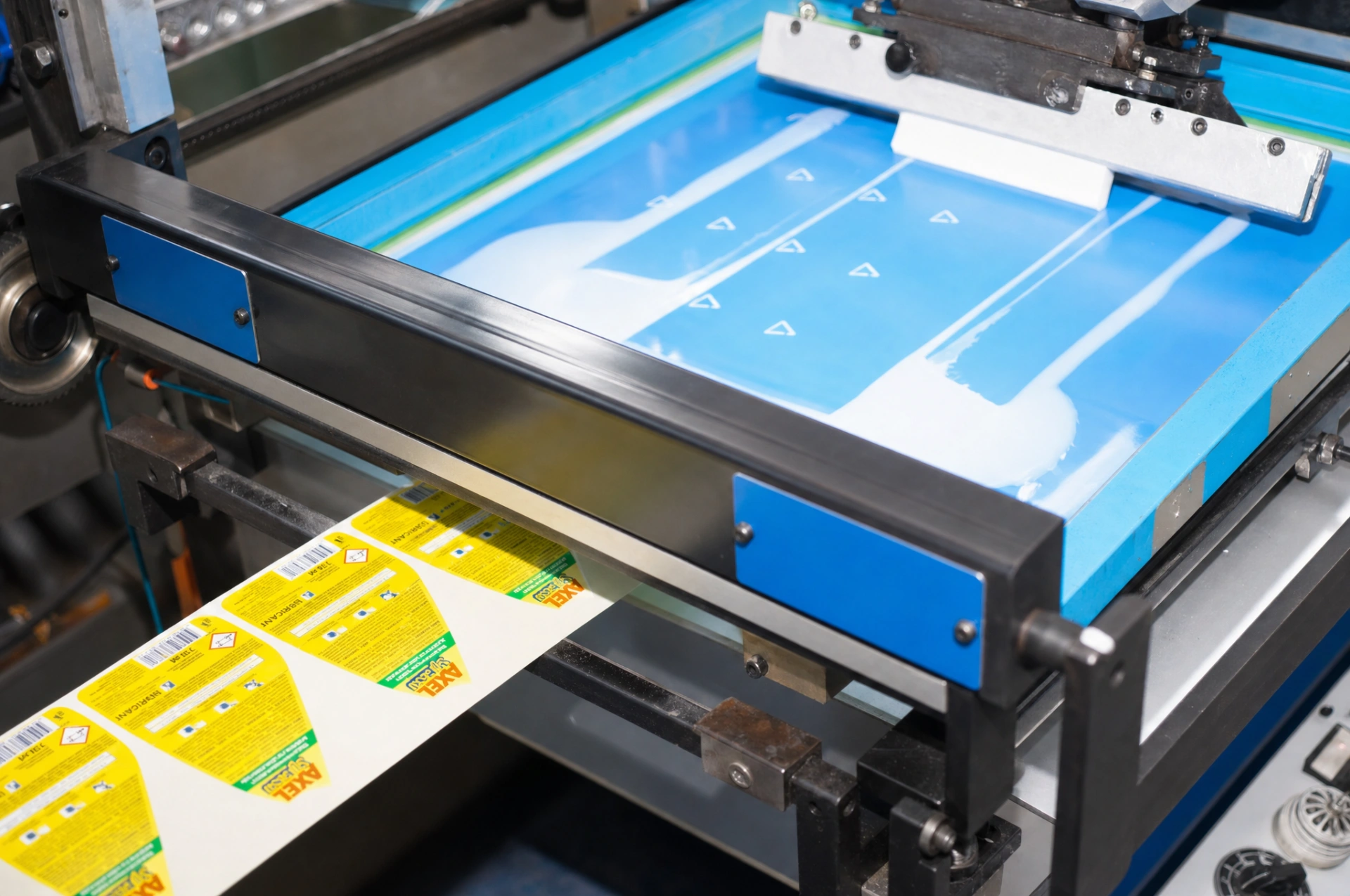
Photos from the Štamparija RP facility in Gornji Milanovac: the embossing tool, the label web in transit, the output side, and finished embossed rolls being wound.
Drag the row left or right, click an image for an enlarged view Swipe left or right, tap an image for an enlarged view
Questions our customers ask about the tactile triangle, premium embossing, materials, and the ordering process for labels with embossing.
Send us your product's safety data sheet (SDS) with the CLP classification. If the product is classified as acutely toxic, corrosive, flammable, mutagenic, carcinogenic, or toxic for reproduction and is intended for general sale, the tactile triangle is mandatory under EU CLP regulations. That includes detergents, cleaning agents, paints, varnishes, pesticides, and nicotine e-cigarettes. Our team checks the classification and gets back to you with an answer before we start on the design.
It can be either, but integrating it into the printed label is recommended. On the Frankini DMR machine, we form the embossing directly on your label, which already carries the GHS pictograms, brand design, and every other element. The result is a single roll of complete labels. There's no separate sticker to apply on the line afterward, no risk of a label shipping on the product without the triangle, and no need for a second applicator.
Yes. A tactile triangle doesn't hurt in markets where it isn't mandatory, but it satisfies the regulation in markets where it is. One label version with integrated embossing passes both domestic and EU inspection. One SKU, one stock, zero risk of shipping the wrong version to the wrong market. More economical than keeping two label versions for the same product.
Embossing on the logo or brand name gives the biggest visual and tactile impact for the smallest budget. One embossed element on an otherwise standard color label is enough to set your product apart by touch on the shelf. If your budget allows a step further, combine embossing with selective UV coating: gloss on the embossed area, matte on the background. The contrast amplifies the embossing effect without a large added cost.
Embossing raises an element above the label's surface. It's bold, noticeable, and the customer feels it right away. It's used for logos, brand names, and decorative details meant to stand out. Debossing presses an element below the surface. It's subtle, sophisticated, visible only at an angle of light. That's a blind impression, for luxury brands where less is more. Debossing is combined with foil stamping, where the foil sits into the recess for a 3D effect. Both are done on the Frankini DMR machine.
Yes. On the MPS machine we print the colors, apply cold foil for metallic accents, and add UV coating for protection and visual effect. The roll then goes to the Frankini DMR, where the embossing is formed as the final step. Three finishing techniques on one label: metallic for shine, coating for contrast, embossing for a tactile dimension. Each with its own function, all in one finished roll.
No. Embossing is done as the final step, after printing and coating on the MPS machine. The embossing is formed by precise pressure between two rotary cylinders on the Frankini DMR, with no heating. The print, GHS pictograms, UV coating, and cold foil all stay intact. The sequence of operations is designed specifically so each prior finish is protected from the next.
On every material in our range: matte, semi-gloss, and gloss paper, PP and PET synthetics, and laminated labels. The embossing depth is adjusted to the material's thickness and flexibility. On thicker papers the embossing is more pronounced, on thinner synthetics it's more subtle but still tactilely recognizable. The best results come on materials 80-120 microns thick. We'll recommend the material for your product.
Send us the label design and the CLP classification if it's for the tactile triangle. If it's for premium embossing, mark in the design which element you want embossed. Our prepress team checks the embossing position against ISO 11683 and your packaging shape, integrates the embossing zone into the file as a separate layer, and sends a Star Proof with the zone marked before printing. A quote within 24 hours of receiving the specification.
If you need the tactile triangle for EU CLP compliance, send us your product's safety data sheet. If you need premium embossing for your brand, mark the element in the design. We'll check it, recommend the position, and send a quote with a Star Proof within 24 hours.