Ibarski put 31, Nevade, 32300 G.Milanovac, Srbija
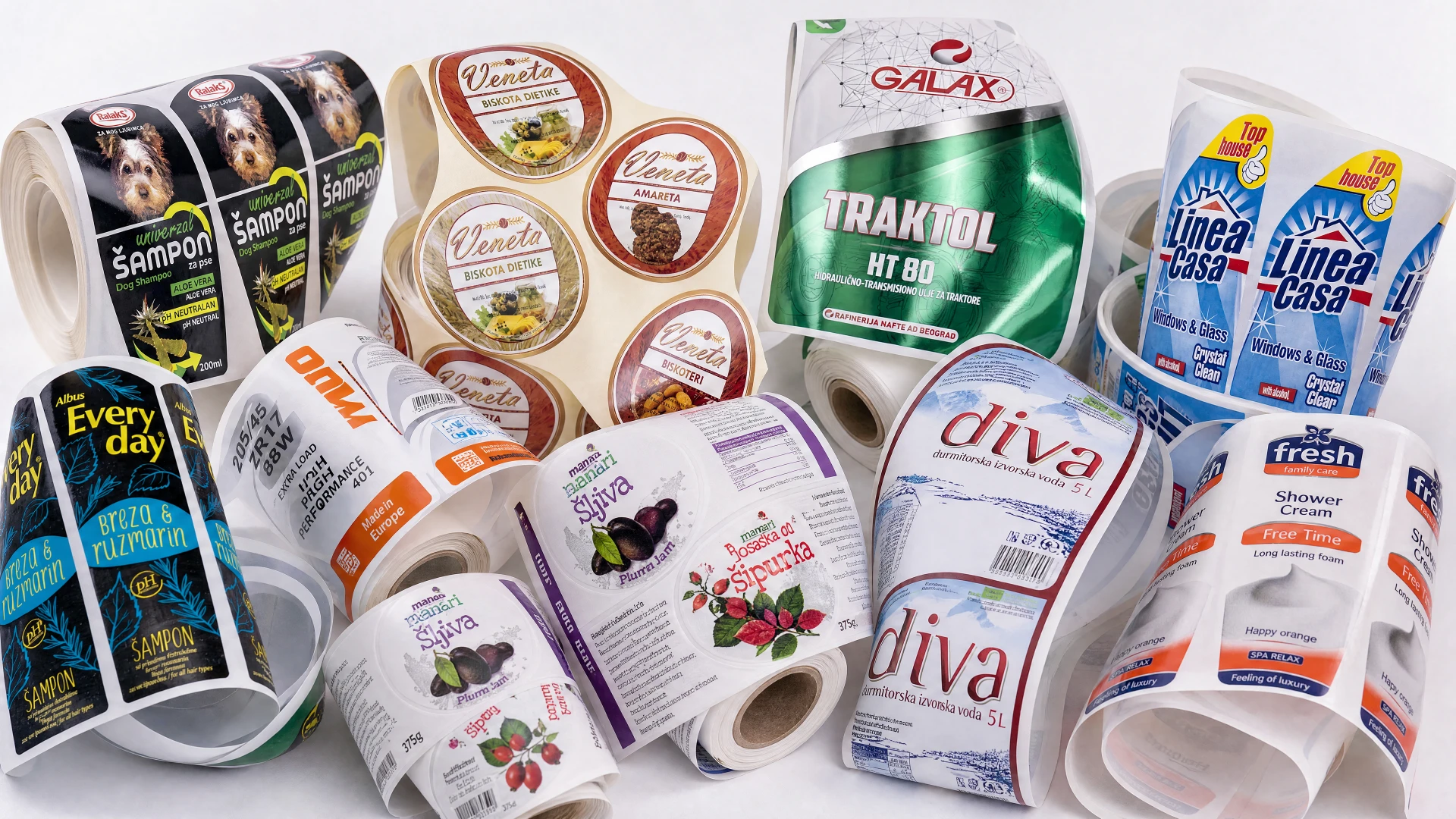
From technical prepress and printing plate production, through roll-to-roll flexographic printing in up to 9 colors with UV protective varnish, to finishing, quality control, and packing, every step in the process is designed to deliver a consistent label ready for your production line.
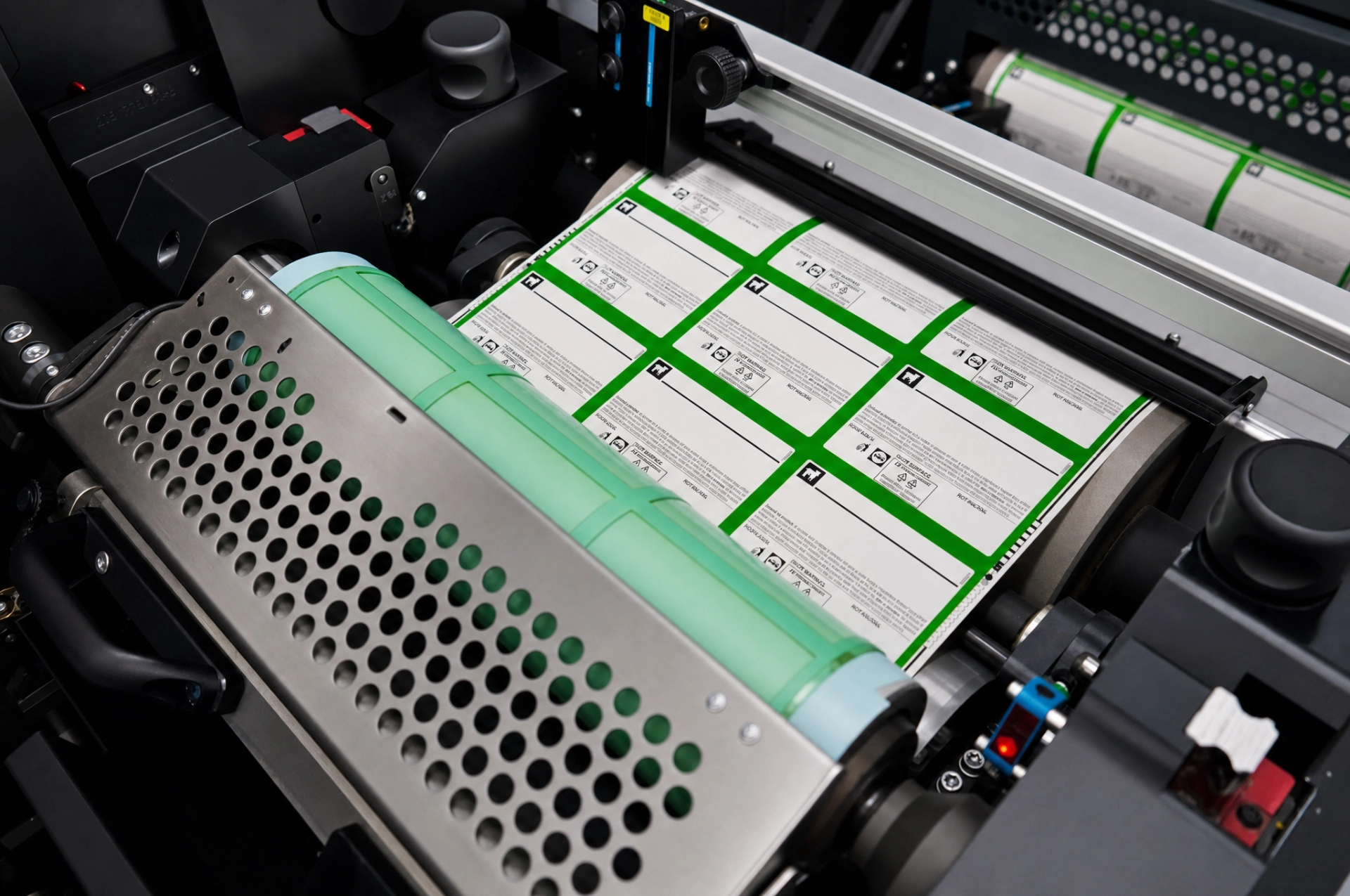
Flexible roll-to-roll printing, economical for medium and large runs, with up to 9 colors and UV protective varnish in a single pass.
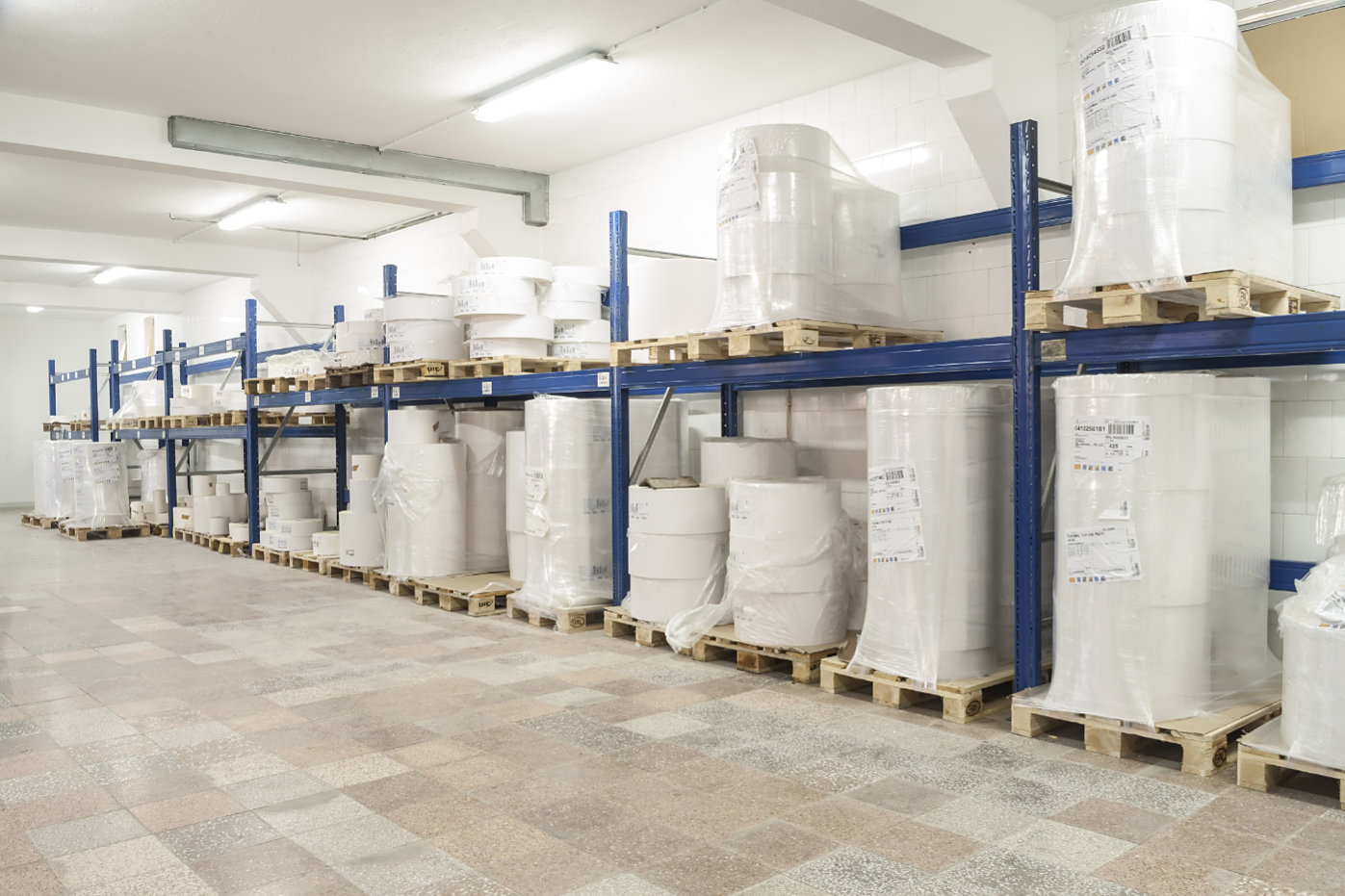
The choice of material and adhesive determines the label's performance under real-world conditions: moisture, temperature, chemicals, UV exposure.
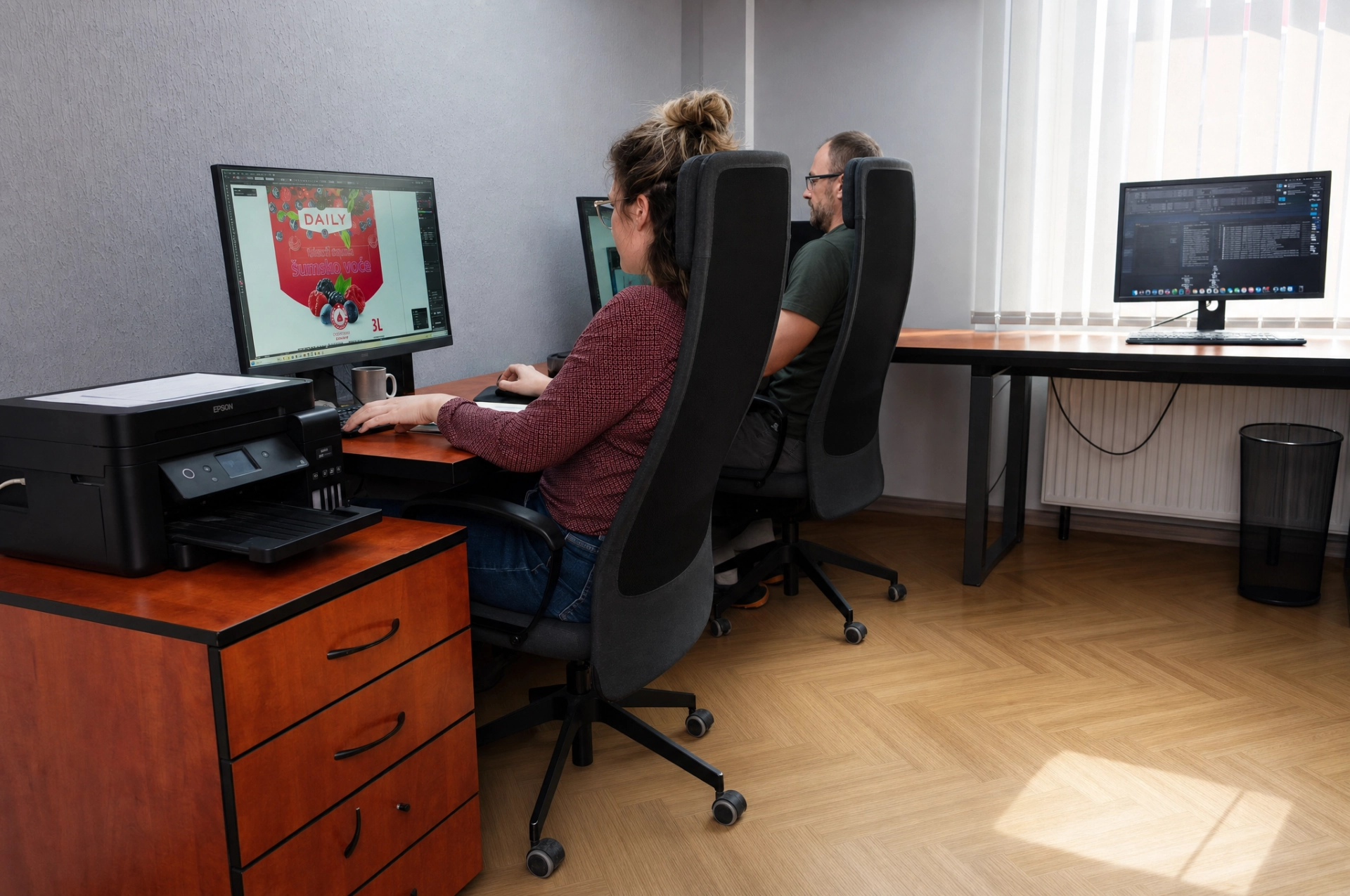
From the design file to the printing plate, every job goes through a technical review before printing.
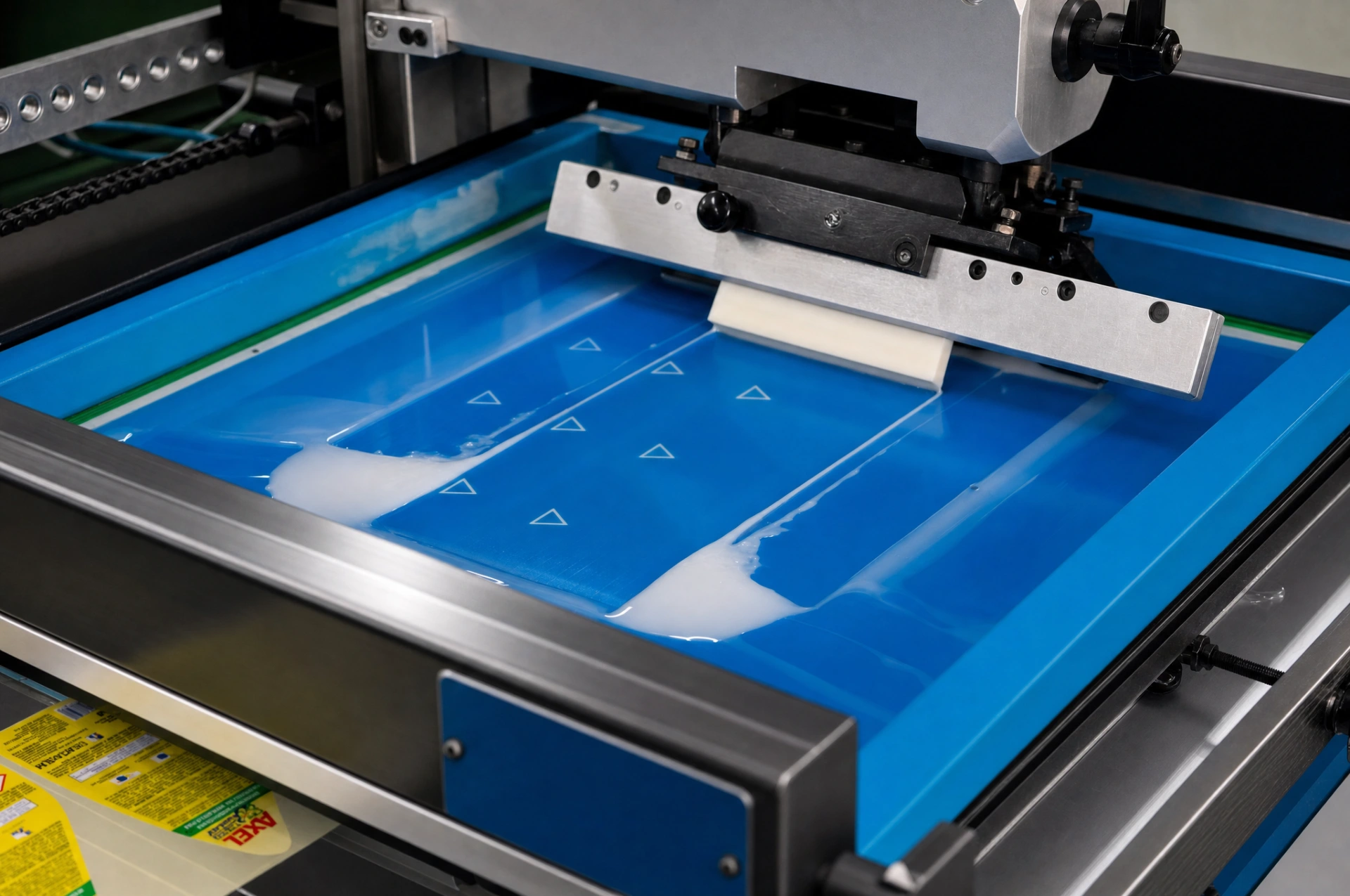
UV varnishing, hot foil stamping, embossing, lamination, and perforation, all in a single production flow.
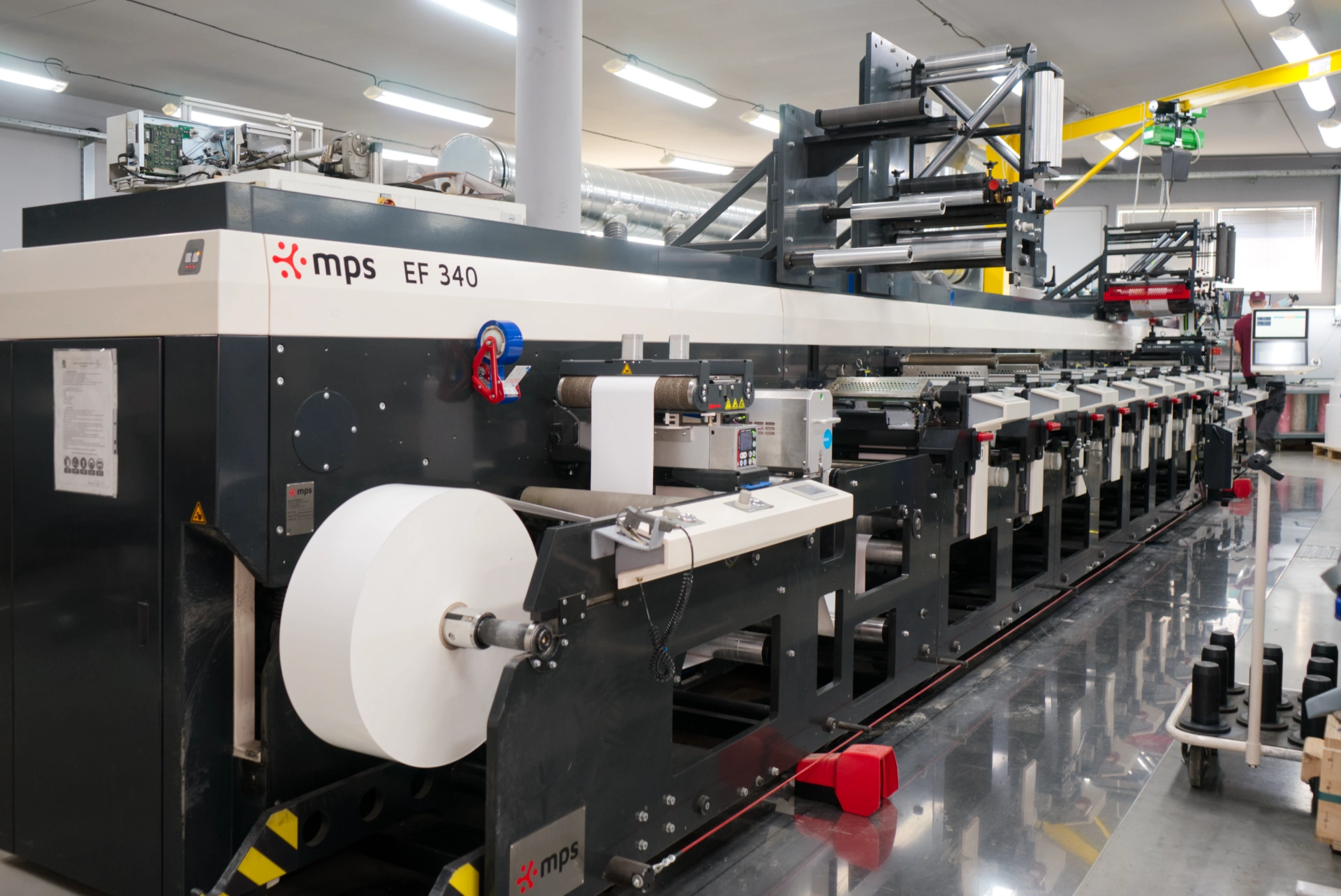
Material goes in as a roll and comes out as a finished label ready for your labeling machine.
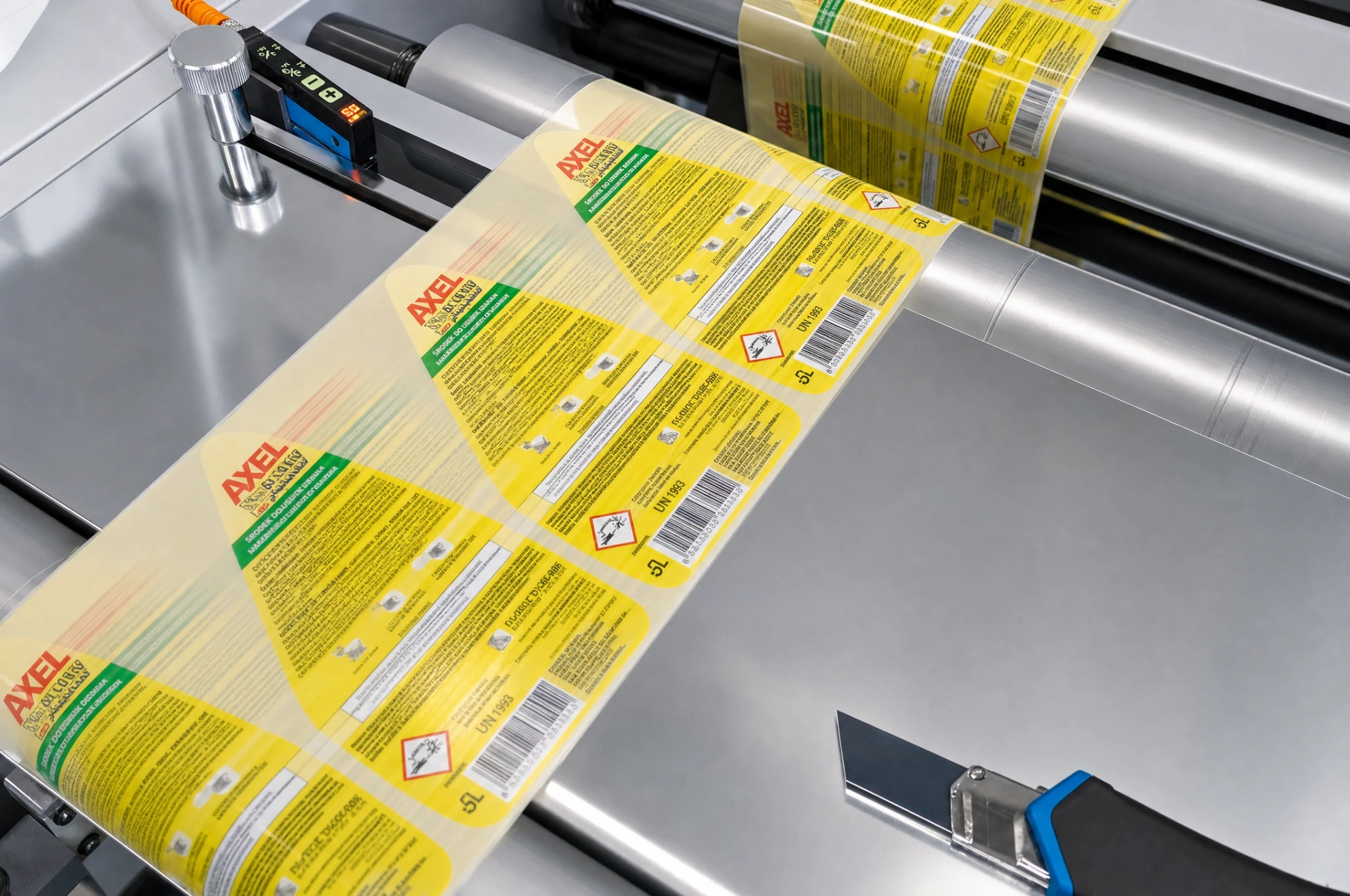
Consistent quality from the first label to the last, ISO 9001 certified processes, and 100% inspection.
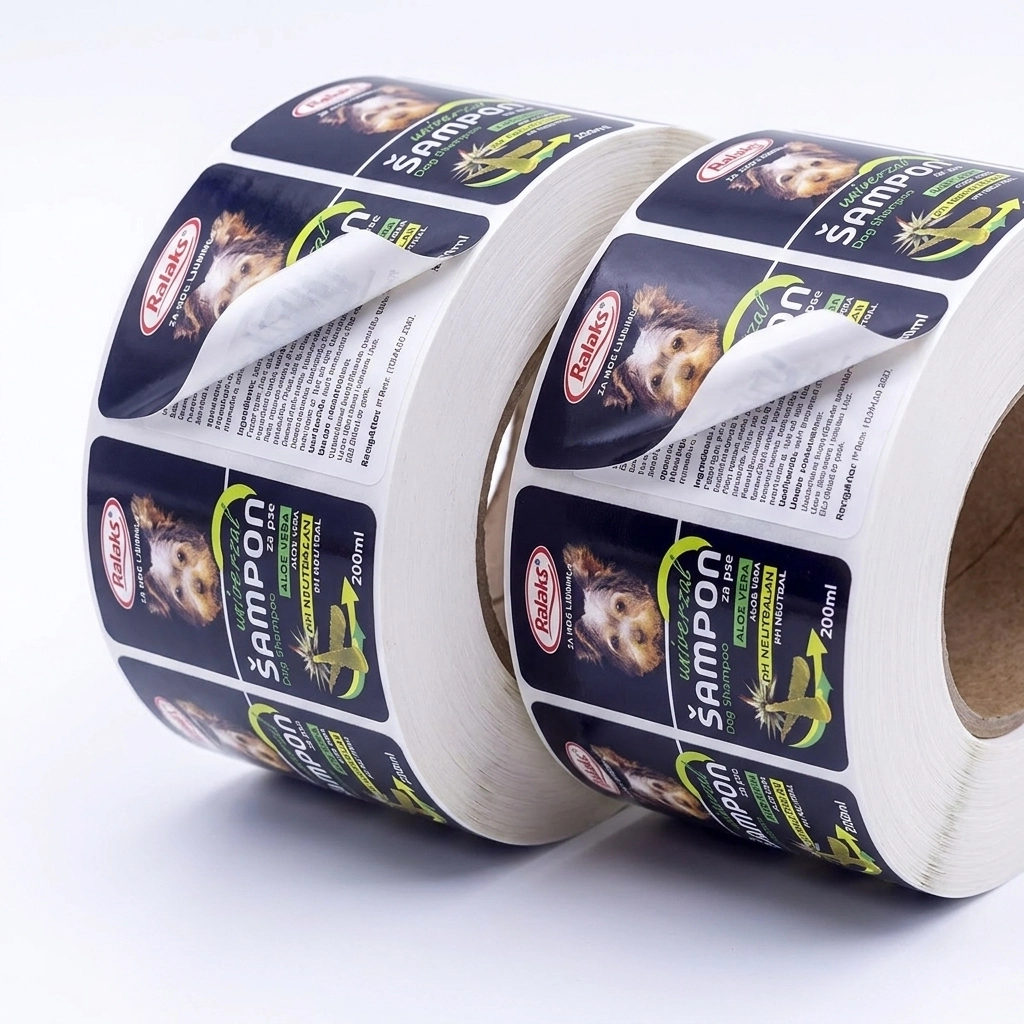
The MPS EF 340 with its Cross-Over system for delamination and relamination: multilayer peel-and-reveal labels in a single pass.
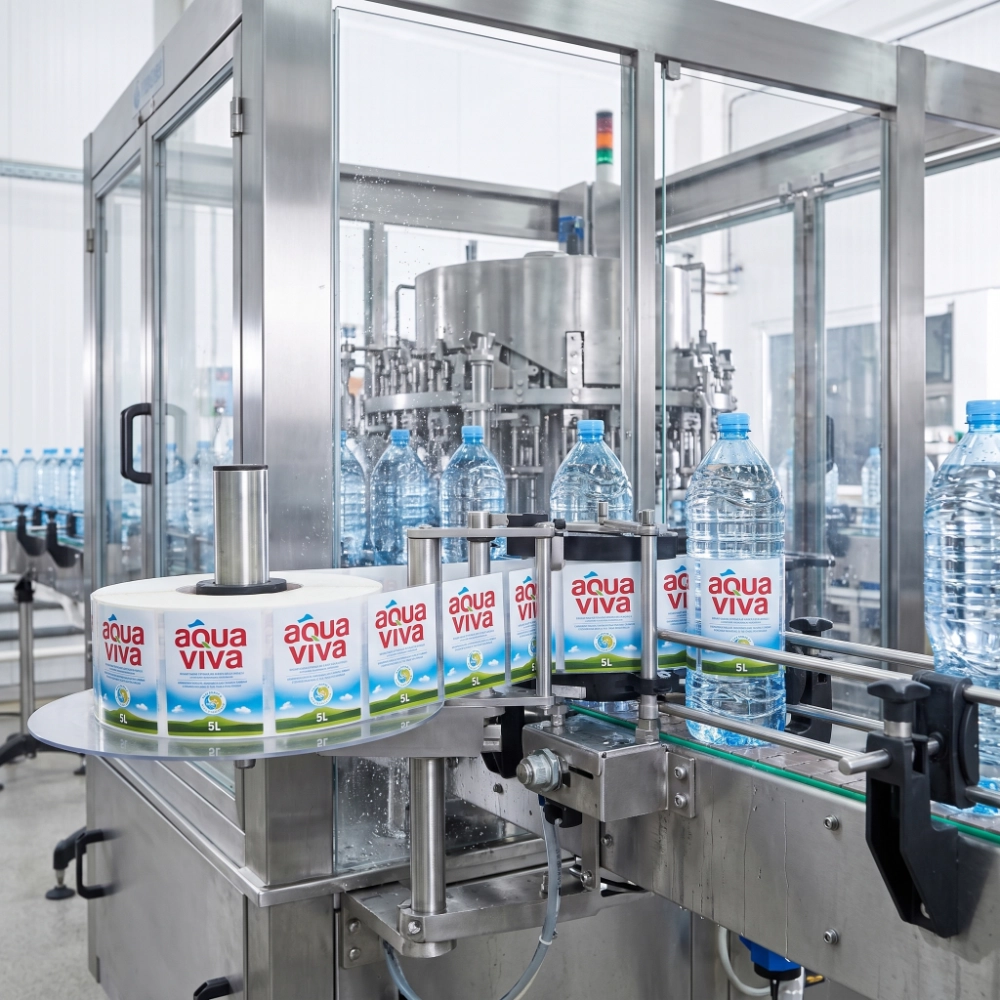
The label has to work on your machine, so we adjust the core size, winding direction, gap, and roll format accordingly.
Practical answers to the technical questions customers ask us most often, from choosing materials to delivery times.
If you need more than 5,000 labels per order, flexo is almost certainly the more economical option. Unit cost drops with every additional meter, because the biggest cost is in preparing the printing plates. Once the plates are made, the printing process itself is extremely fast. Digital printing makes sense for small runs and frequent design changes, but for runs that repeat for months or years, flexo gets you a significantly lower cost per label.
On our MPS presses you can have up to 9 colors in a single pass, or 8 colors plus UV protective varnish. That covers Pantone spot colors, the CMYK process set, and special colors (a white base on transparent material, metallic ink). If your design calls for 4 process colors, one spot color, and UV varnish, that's 6 of the possible 9 units, leaving you room for an additional color or a special effect.
On the MPS EF 340, the maximum print width is 340 mm. The maximum label length is limited by the circumference of the printing cylinder: in practice, that's typically up to 400-500 mm depending on the configuration. For labels larger than these dimensions, consult us. There's sometimes a technical way to meet the requirement, for example by rotating the label on the web.
Each Pantone color is printed as a separate separation: a separate printing plate and a separate unit on the press. In your design file, each Pantone color should be defined as a spot color with the exact Pantone code (for example, Pantone 186 C). Don't convert Pantone colors to CMYK in the file; we handle that in prepress if needed. If you're using a combination of CMYK and spot colors, clearly mark which ones are spot colors. The total number of colors can't exceed 9, including any UV varnish.
Start from the conditions the label will face, not from how it should look. If your product goes into a freezer, you need a synthetic material with an adhesive that holds at -25°C. If it's a bottle that goes through a washing tunnel, a paper label is out. If transparency matters to you, a PP or PET film is the choice. Tell us where the label will be applied, on what kind of surface, and under what conditions. We'll recommend the optimal material and adhesive for your specific case.
There are three common reasons. First: the wrong adhesive type for your surface, since a standard adhesive won't hold on greasy, wet, or cold surfaces and you need an enhanced or specialized adhesive. Second: the label was applied to a cold surface. Most adhesives require application at a temperature above +10°C, even if the label later goes into a freezer. Third: the surface it's applied to is dirty, dusty, or contaminated with oil. Tell us the exact details of the problem. In most cases, the solution is changing the adhesive type, not the entire material.
Yes. We hold the ISO 22000:2018 certification in the CAT 1 category (certificate FS-0008), which confirms that our entire self-adhesive label printing process complies with food safety requirements. We source materials from certified European suppliers (Raflatac, Fasson, Tores, and Intercoat) whose products meet the requirements of the EU framework regulation EC 1935/2004 for materials that come into contact with food.
Yes, there are two ways. The first is printing on a metallized material: you use a silver foil as the base, then print color only where you want to cover the metallic shine. Where you don't print, the metallic surface stays visible. The second way is metallic ink: Pantone Silver or Gold applied as a separate color in one of the press units. Hot foil stamping gives the most intense metallic effect, but it costs more because it requires an additional operation.
Matte UV varnish gives the label an elegant, refined look with a soft feel. It's often used for premium products in cosmetics and wines. Gloss UV varnish intensifies colors and gives a vibrant, eye-catching look. Spot varnish combines both: it applies gloss varnish only to specific design elements (a logo, a product name) while the rest stays matte. This creates a contrast that draws attention, and the difference between varnished and unvarnished areas can be felt by touch.
Embossing is a three-dimensional texture pressed into the label, where parts of the design are physically raised or recessed. On the Frankini DIE ROLL DMR machine, we produce embossing that gives the label a tactile dimension the customer can feel with their fingers. It's used for two entirely different purposes: premium labels in cosmetics, wines, and luxury products, where the texture communicates quality, and mandatory tactile hazard markings (a raised triangle) for chemical products under the EU CLP regulation and the EN ISO 11683 standard.
Yes, a multilayer peel-and-reveal label is applied on your labeling line just like any standard roll label. The difference is in the construction: it has two or three layers, and the top layer can be peeled back and returned to its place. On the MPS EF 340 with the Cross-Over module, we produce these labels in a single pass: we print both layers, delaminate, assemble, and relaminate them. A finished multilayer label on the roll looks like a slightly thicker standard label. Your labeling machine applies it the same way; just watch the pressure setting, since the label is somewhat thicker.
That's exactly what multilayer peel-and-reveal labels are for. Instead of creating five or ten separate packaging variants for each market, a multilayer label carries an extra layer with text in multiple languages within a single construction: the top layer is lifted, the additional text is read underneath, and the layer is folded back down. A single SKU can then cover multiple markets. For products going to the EU market, the EU FIC regulation (1169/2011) requires food products to be labeled in the language of the country of sale. A multilayer construction lets you do this without changing the outer label's design.
We need three things. First, a design in vector format (AI, EPS, PDF) with fonts converted to outlines and colors defined as Pantone spot or CMYK. Second, the label specification: dimensions, material (or at least the application conditions so we can recommend one), quantity, core size (40 mm or 76 mm), and winding direction. Third, it helps to tell us which labeling machine you'll be applying the labels on, since that helps us adjust the roll format. If you don't have a design in vector format, our prepress team can prepare a file based on your material.
Printing plates are photopolymer plates made separately for each color. If your label has 6 colors, that's 6 plates. Plate production is part of prepress and is usually completed within one to two business days of proof approval. The plates stay with us and are used for all repeat orders of the same design, so you only incur this cost on the first order or when the design changes.
Yes. Before production begins, we produce a proof on the Star Proof system with Actual Dot technology, which faithfully shows how the final label will look: colors, sharpness, detail. If you need a physical trial batch on the actual material, we can run a smaller trial print on the same press that will run the full production, using the same materials and colors. This gives you complete confidence before starting the large run.
The price of a label depends on several factors: dimensions, material, number of colors, type of finishing (varnish, hot foil stamping, embossing, lamination), print run, and delivery format. The larger the run, the lower the cost per label, since fixed costs (printing plates, press setup) are spread across more units. That's why we can't give a universal price without a specification. Send us the dimensions, material, number of colors, desired quantity, and finishing, and we'll deliver a detailed quote within 24 hours.
That's exactly why the proof approval stage exists before printing. Star Proof with the Actual Dot system shows you exactly how the label will look: colors, resolution, barcodes, text. Your written approval of the proof is a condition for starting production. If an error occurs on our side (a deviation from the approved proof), we take responsibility and reprint at no charge. If the error was in the approved design, the new run is charged with a discount on the plates, since they've already been made.
Our annual capacity for processing self-adhesive material is about 5,500,000 m². With six printing presses running in parallel, we can respond even to urgent requests. Delivery time depends on the complexity of the job: standard industrial labels have a shorter turnaround, while multilayer constructions require more time due to additional preparation and inspection steps. Repeat orders have a shorter turnaround because the plates already exist. You'll receive the exact timeline with your quote.
Tell us about your product, the surface the label will be applied to, and the conditions it will face. We'll recommend the optimal material, adhesive, printing technique, and delivery format. No obligation, within 24 hours.