Ibarski put 31, Nevade, 32300 G.Milanovac, Srbija
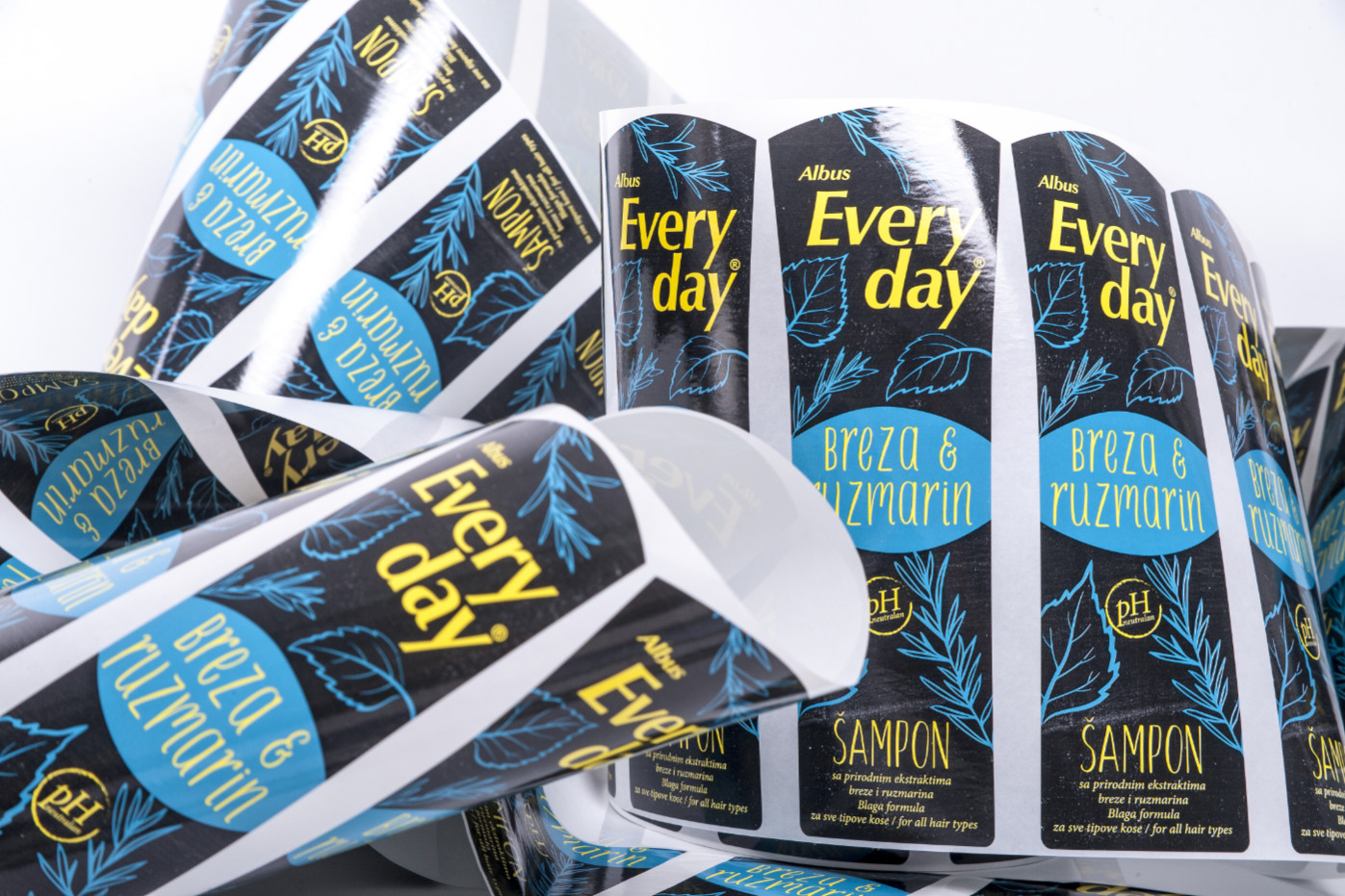
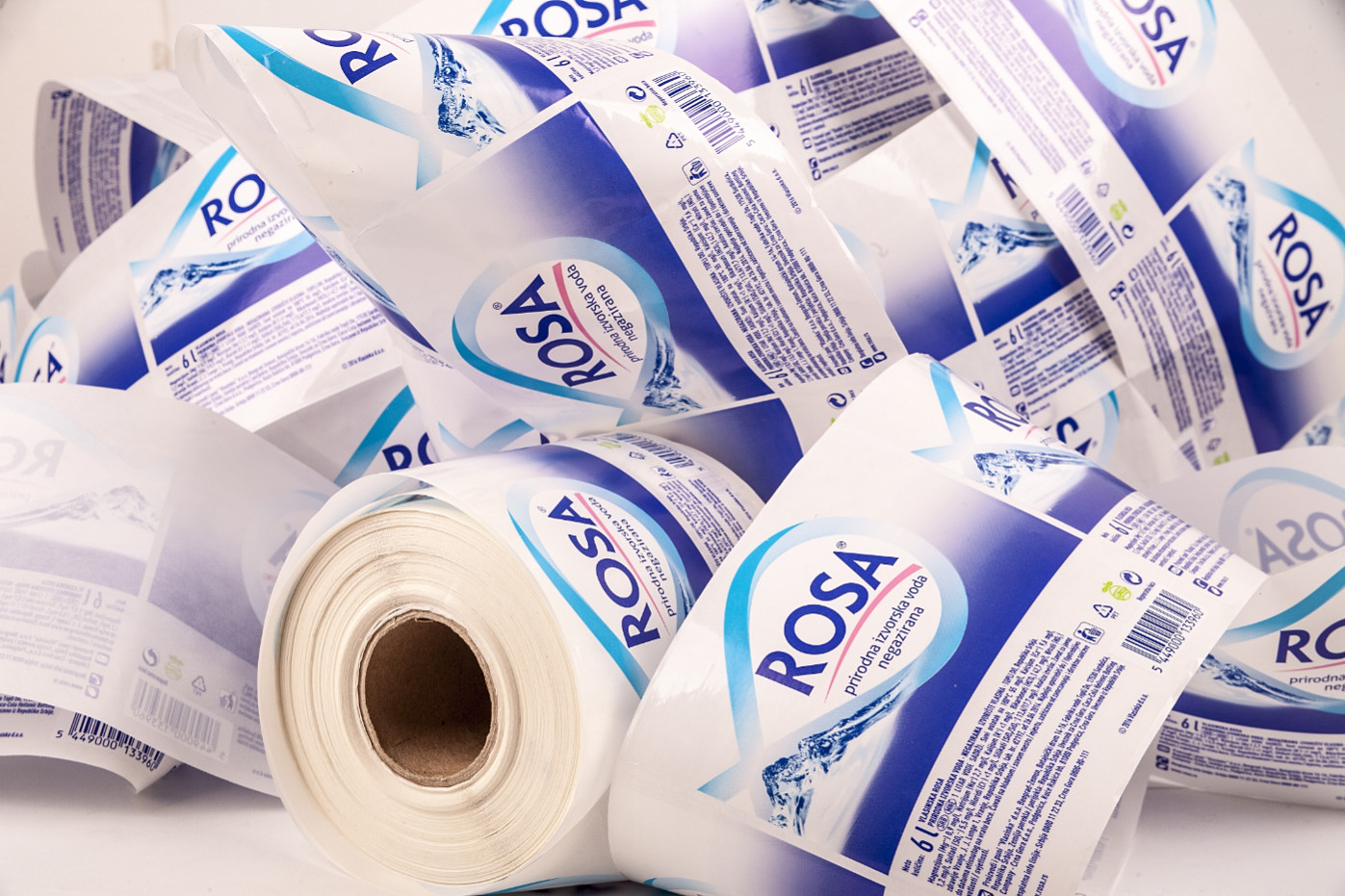
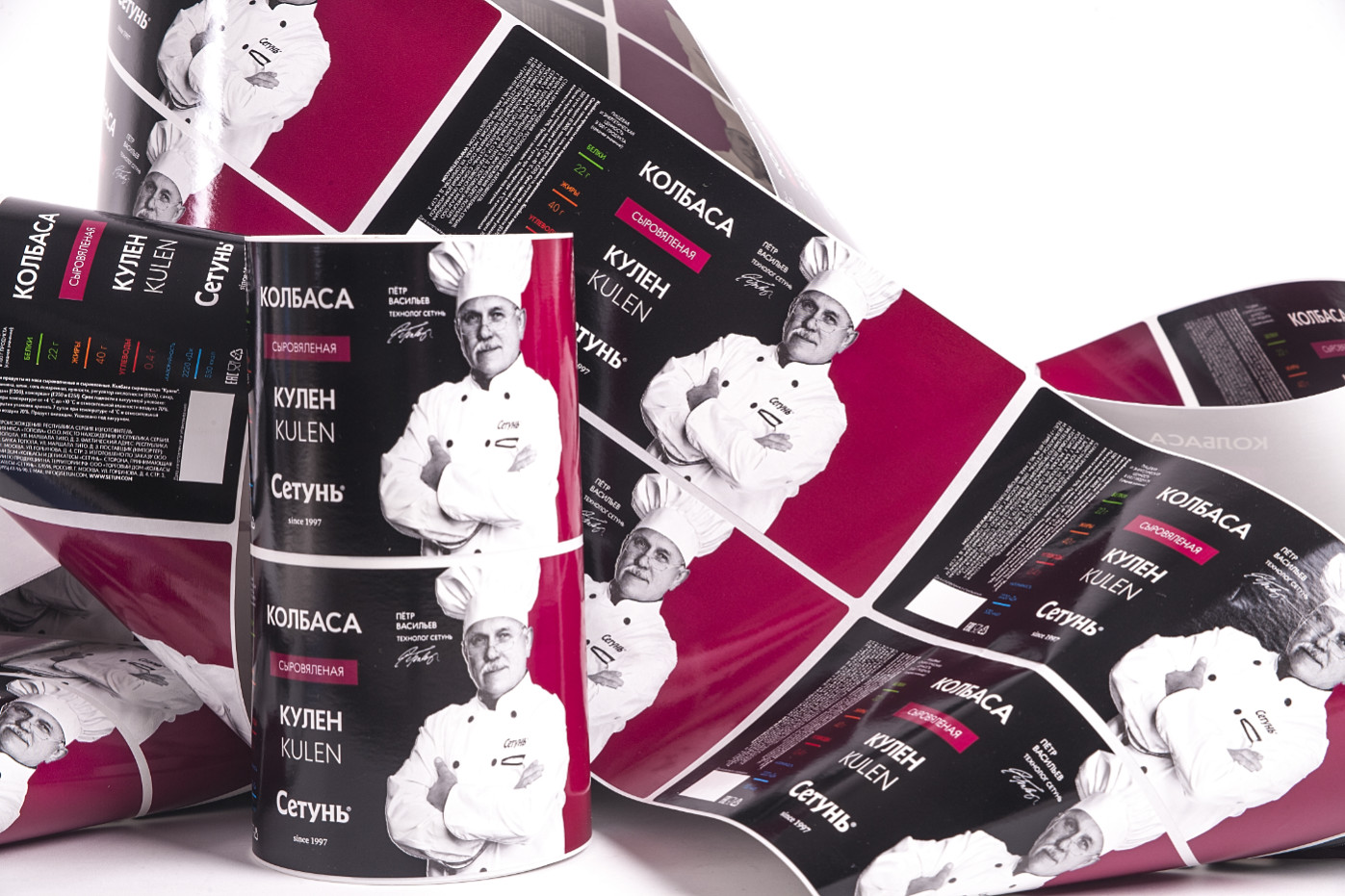
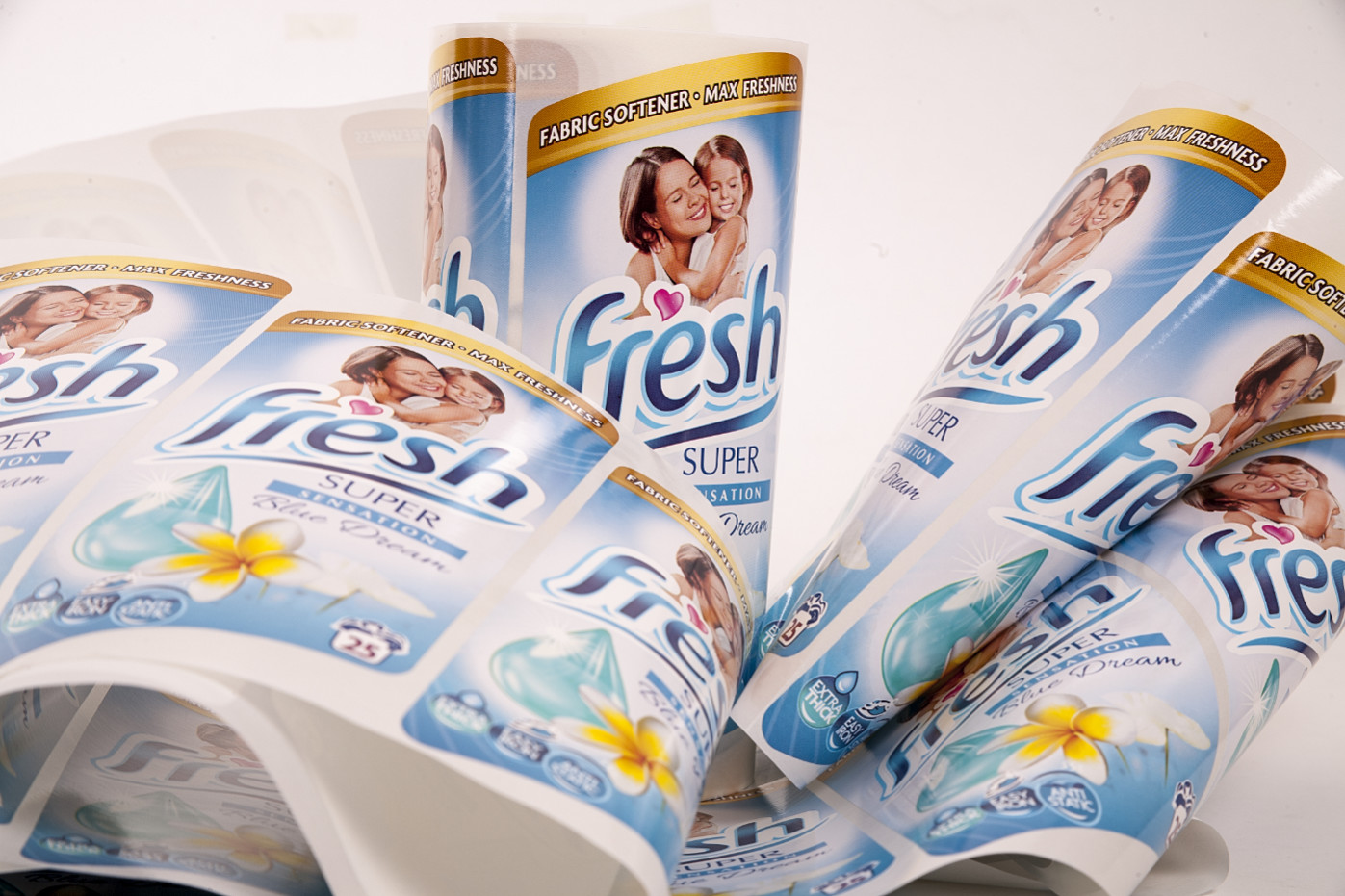
Self-adhesive labels for labeling finished products in the food, chemical, pharmaceutical, cosmetics, and rubber industries. Flexo printing in up to 9 colors, on all materials, for large and medium production runs, with a flawless, consistent print from the first label to the last.
Certified European suppliers: Raflatac, Fasson, Tores, Intercoat. FSC™-traced origin on request.
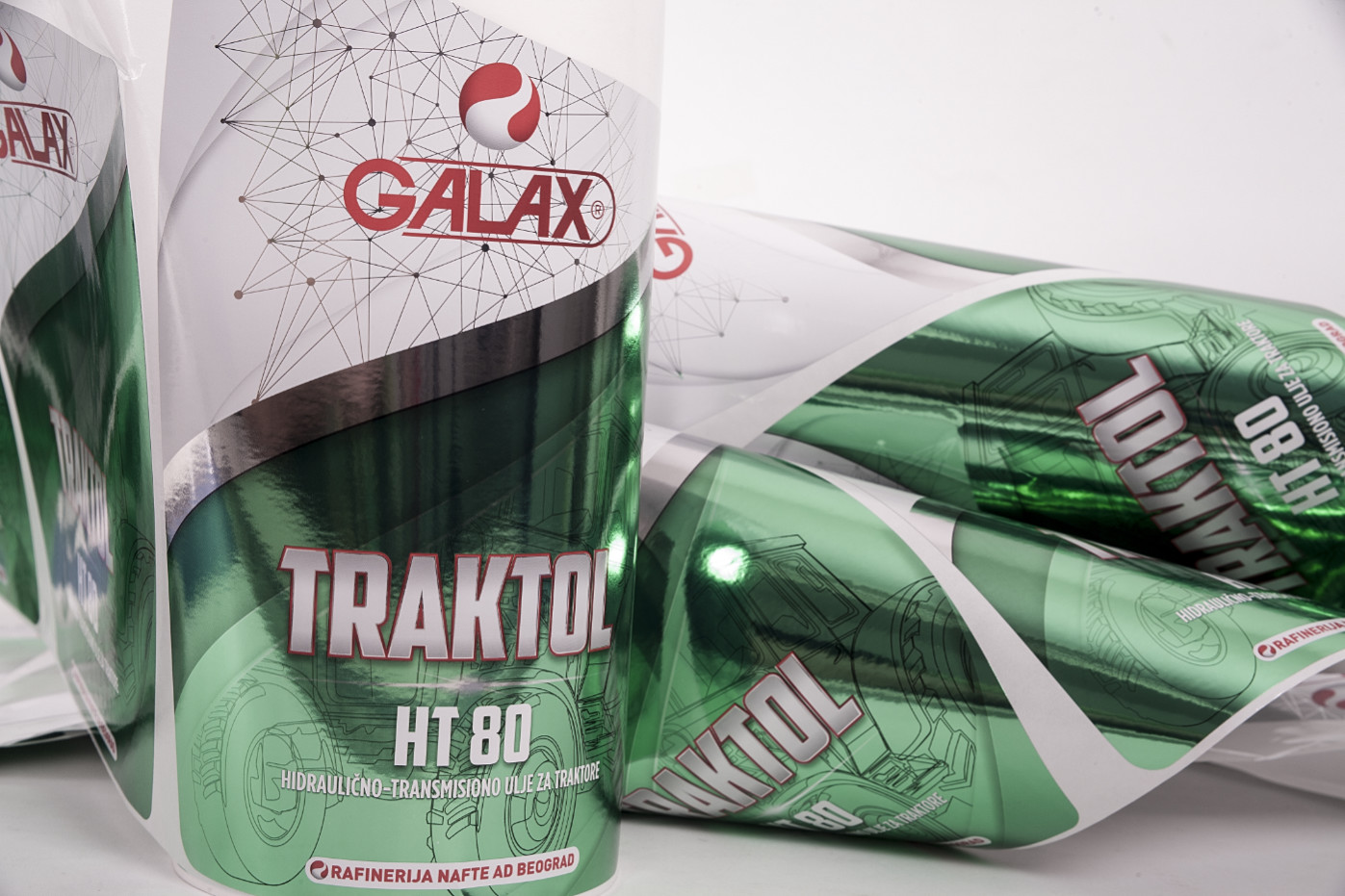
CMYK + Pantone spot colors + UV protective coating. Crisp.Dot HD for sharp detail and fine text.
Gloss and matte UV coating, hot/cold foil, embossing die (Frankini DMR), combined effects in a single pass.
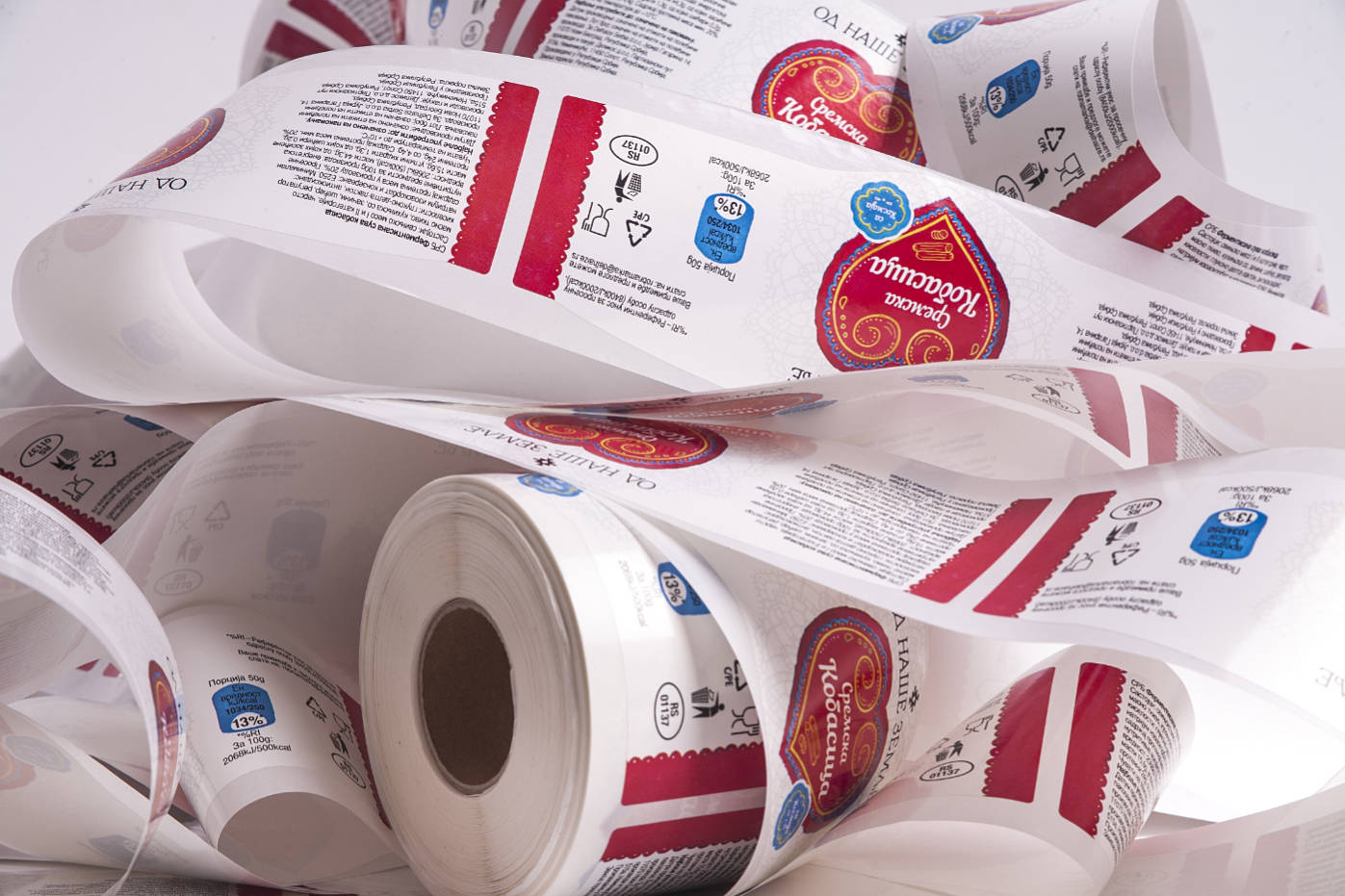
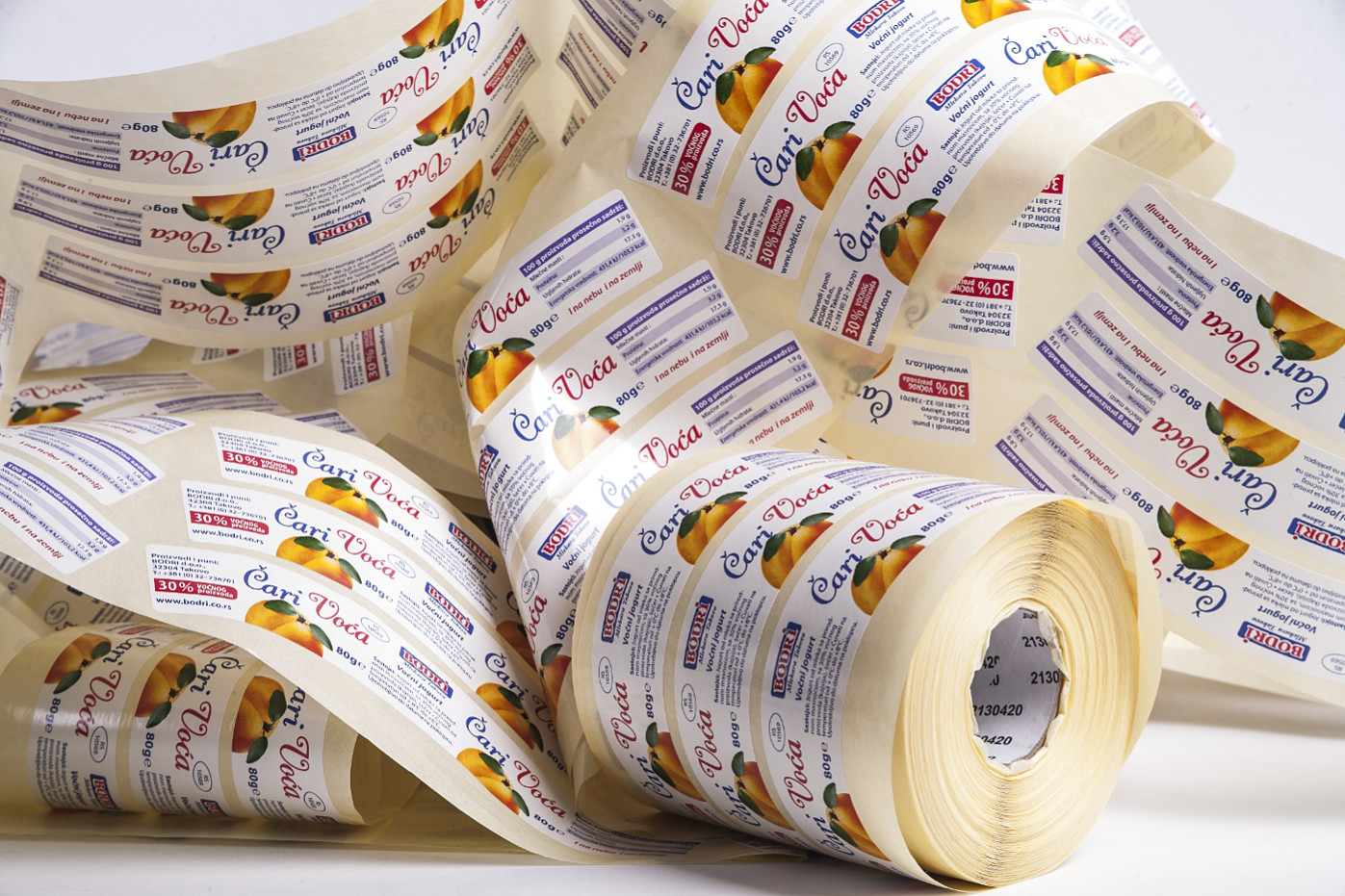
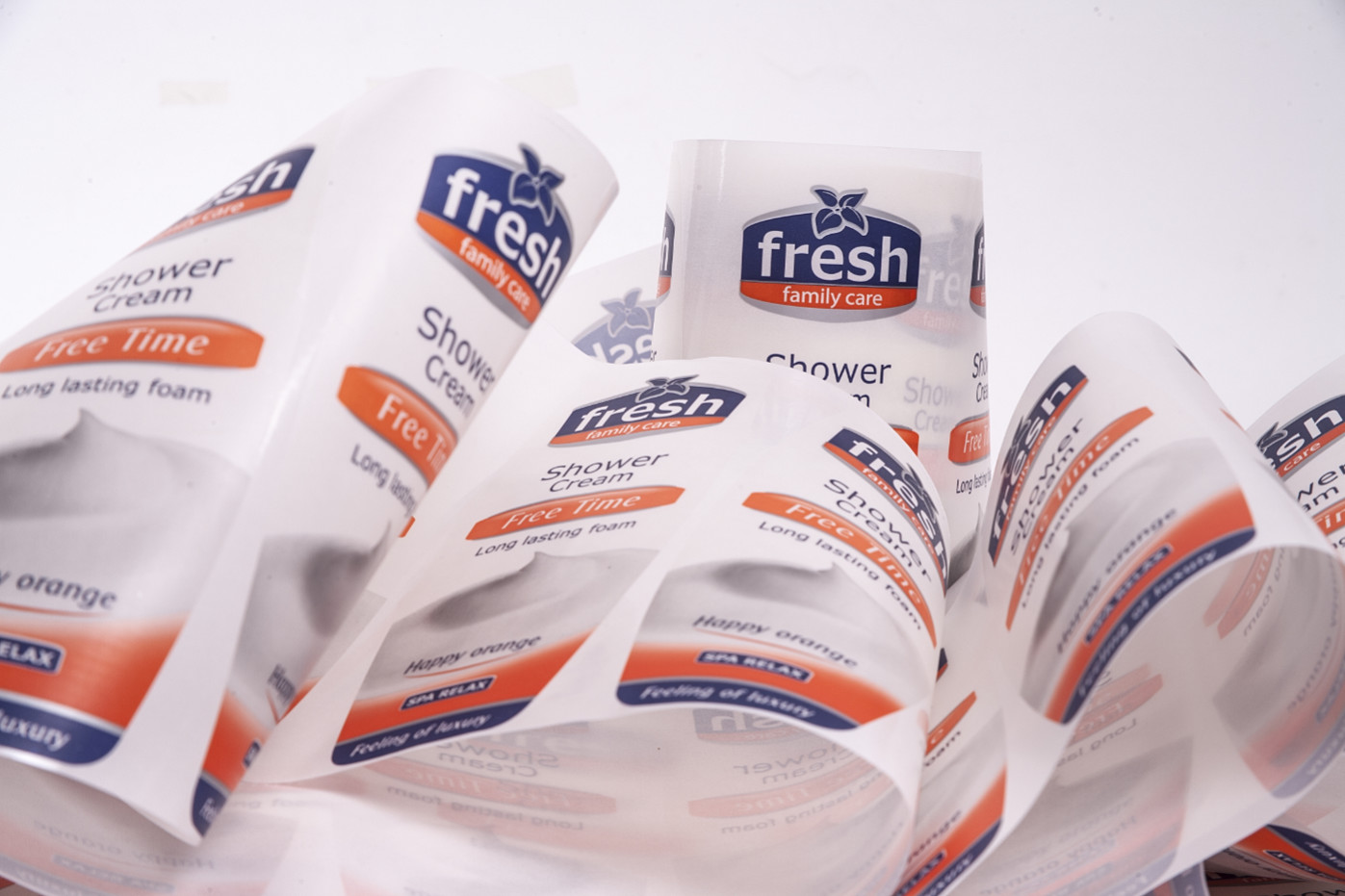
Roll-format labels ready for automatic application on the customer's line. Custom cores, unwind directions, and formats.
A complete solution for self-adhesive labels in roll form: flexo printing, finishing, and guidance on materials and specifications for your industry.
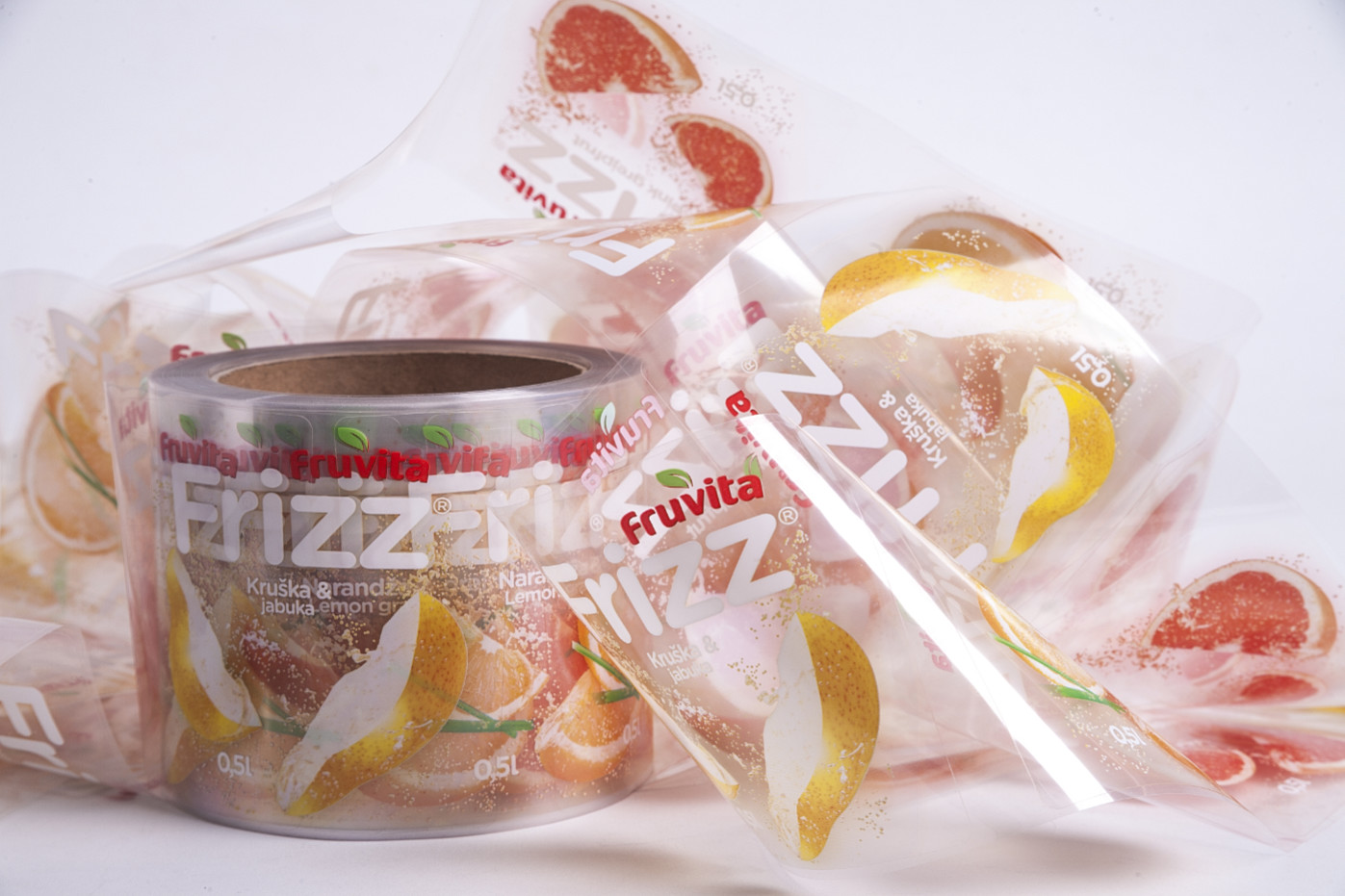
The surface that gets printed and what the customer sees on the shelf. It determines the label's appearance, resistance, and durability.
Invisible but critical. It determines what the label sticks to, how long it holds, and whether it can be removed.
A protective silicone backing that holds the label until the moment of application. It's separated at the labeling machine and sent for recycling.
Every industry has specific requirements: material, adhesive, resistance, and regulatory obligations vary from product to product. The label from our roll reaches your product through an automatic labeling machine on the production line.
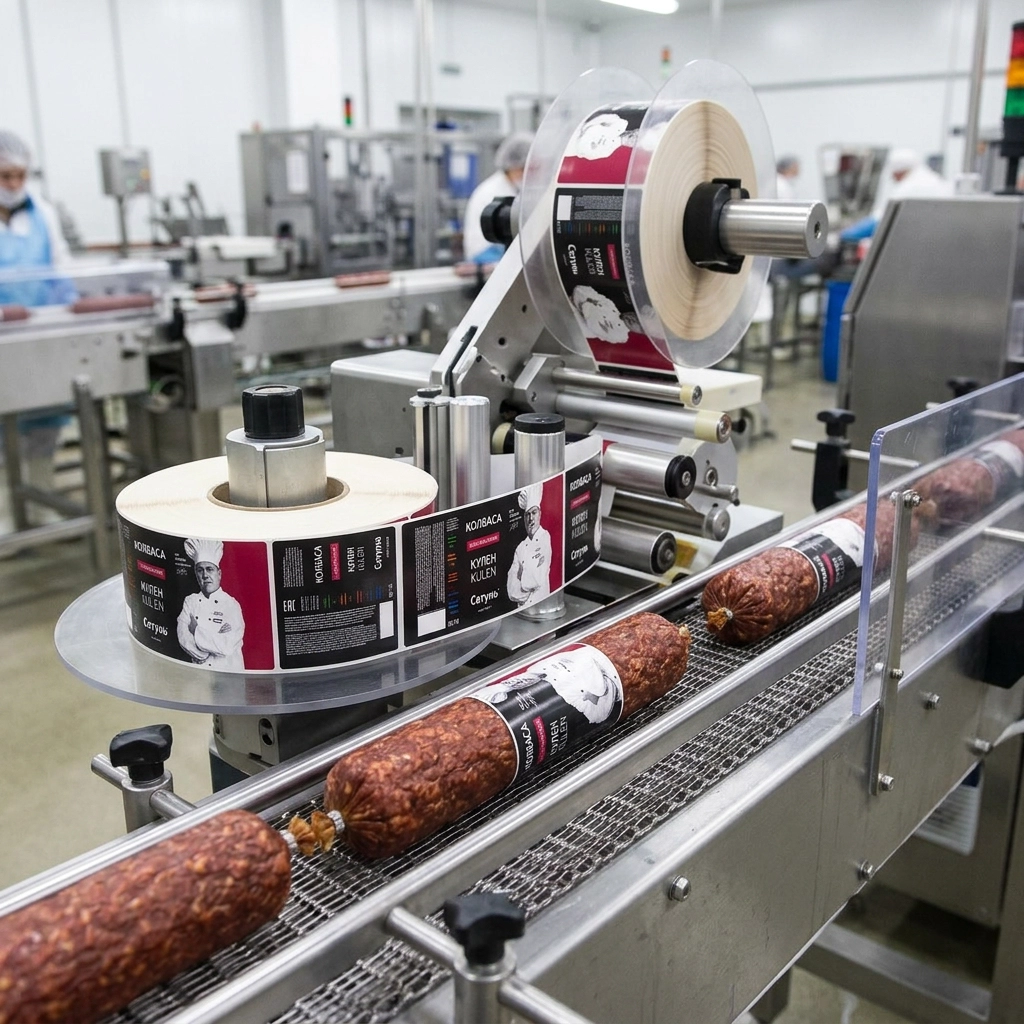
Labels for labeling finished food products. ISO 22000-certified process. Materials compliant with EC 1935/2004. Resistance to moisture and the cold chain.
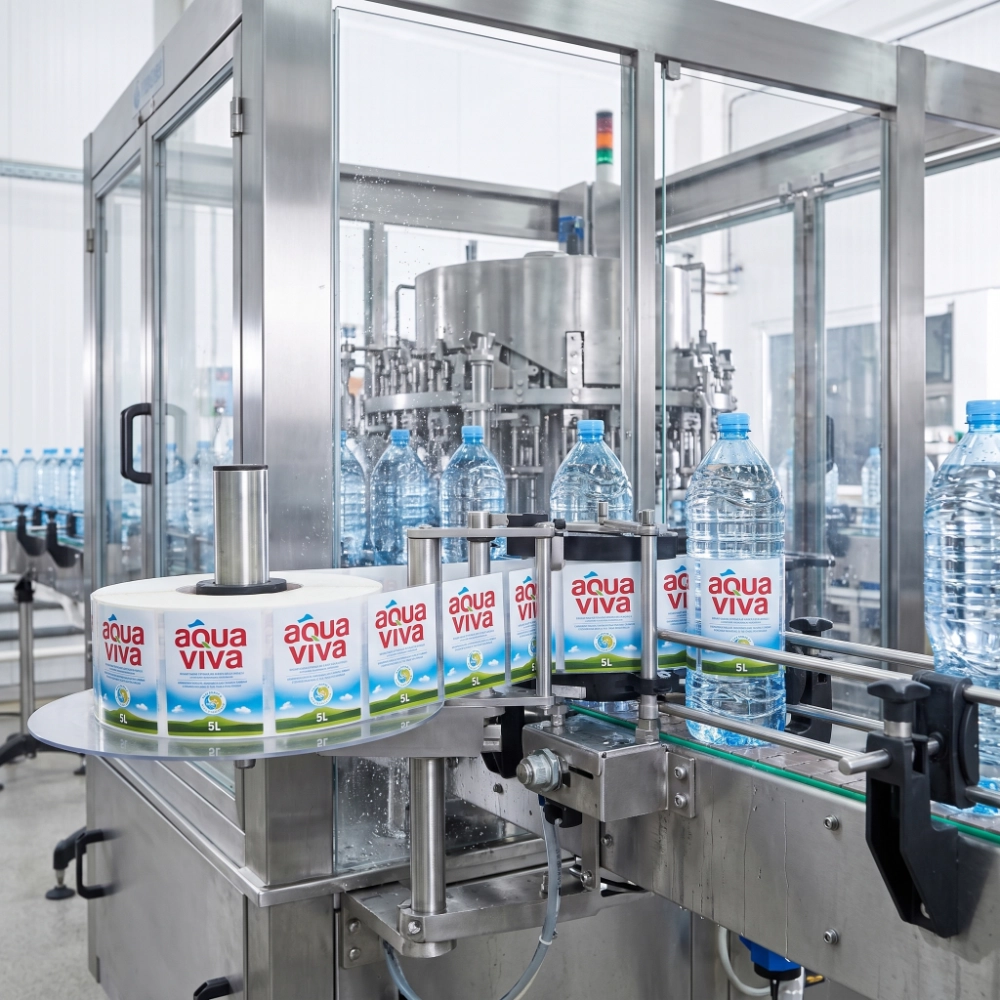
Bottles, cans, cartons. Labels for wet environments: condensation, ice, refrigeration. Transparent materials for a no-label look. Precise application on cylindrical packaging.
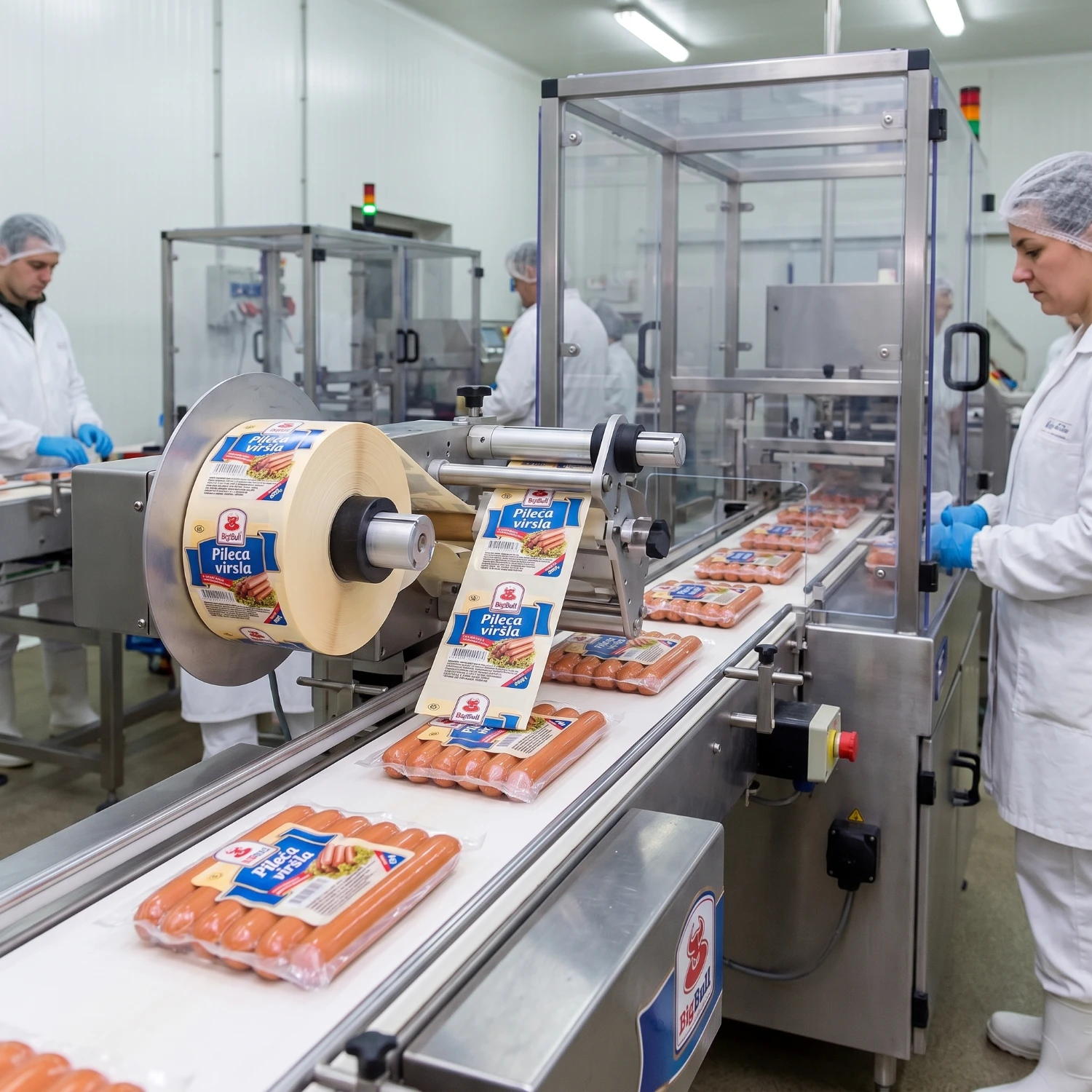
Hermetically sealed vacuum packs, trays, heat-shrink packaging. Adhesive that holds in cold, damp conditions. Resistance to grease. Fine print with regulatory information.
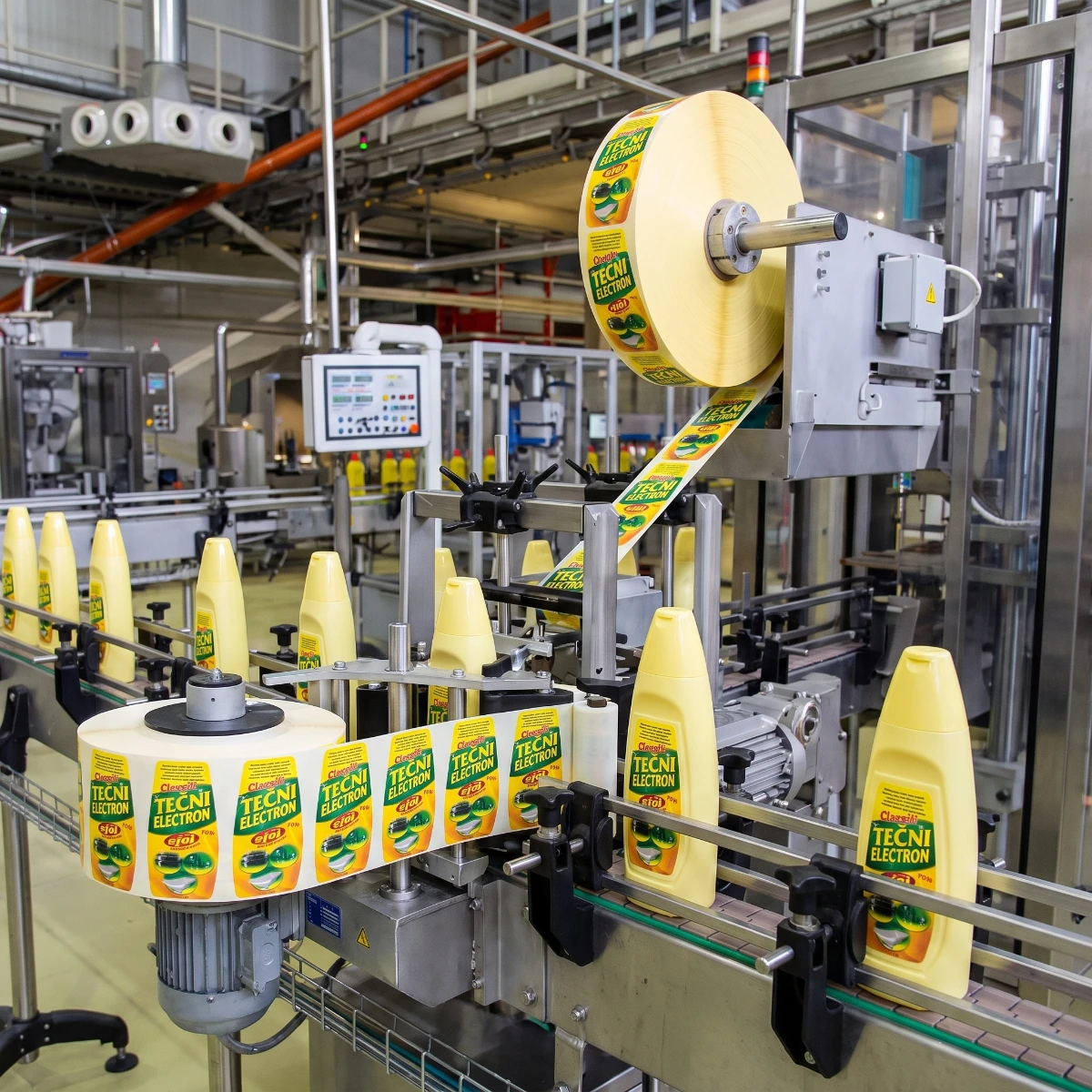
Synthetic materials resistant to chemicals, solvents, and aggressive substances. Tactile markings for the blind and visually impaired (EU CLP / EC 1272/2008). Embossing on the Frankini DMR machine.
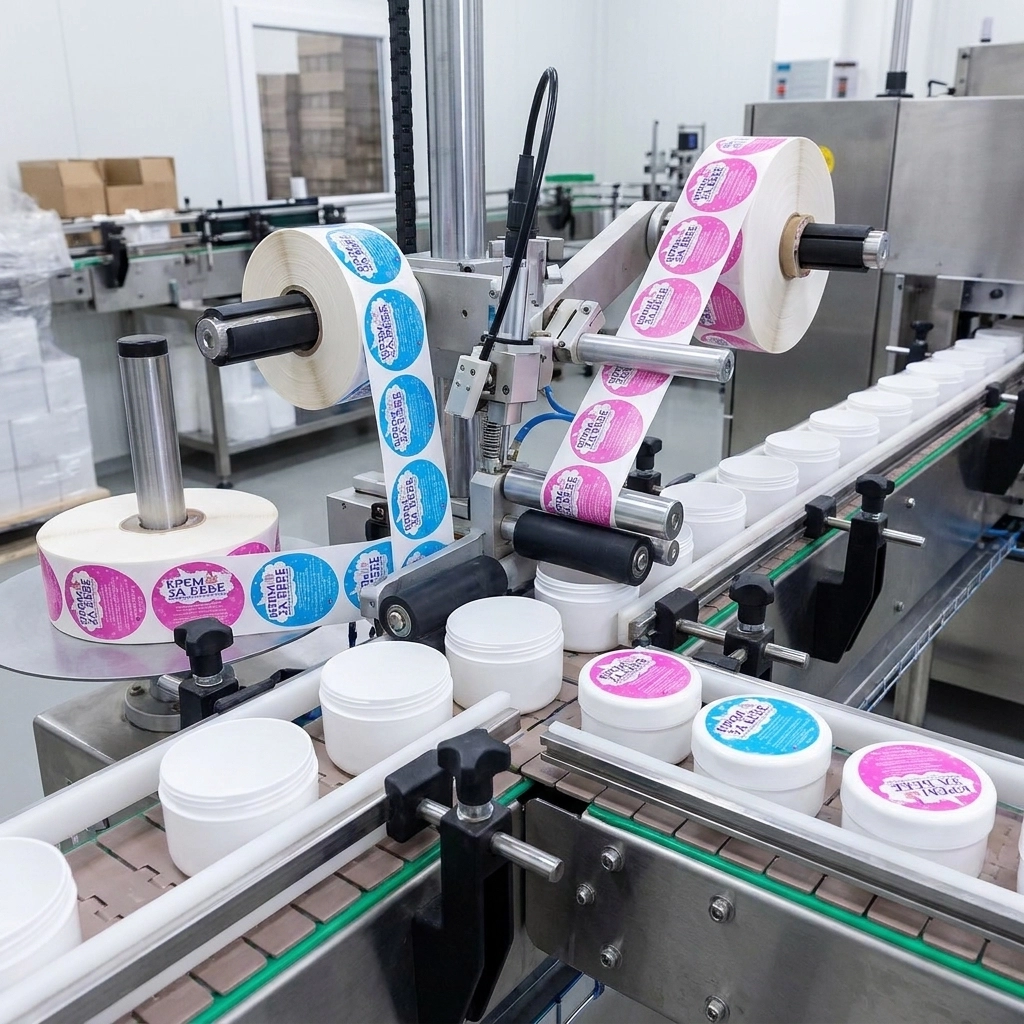
A premium finish is a must: gloss and matte UV coating, hot/cold foil, embossed elements, combined effects. Transparent and metallized materials. Small formats on curved bottles.
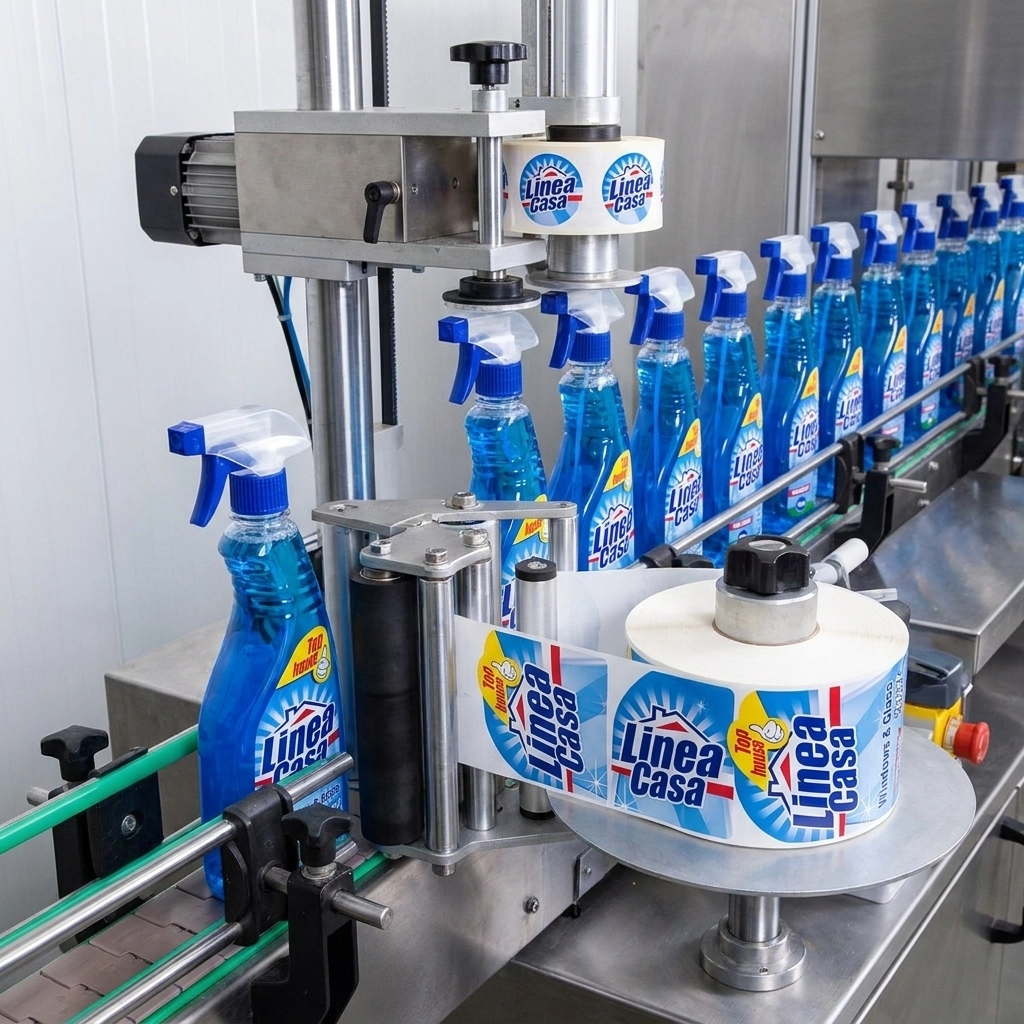
Detergents, cleaners, disinfectants. Synthetic labels resistant to product leaking onto the label. Adhesive that withstands contact with alkaline and acidic agents. Large surfaces with full coverage.
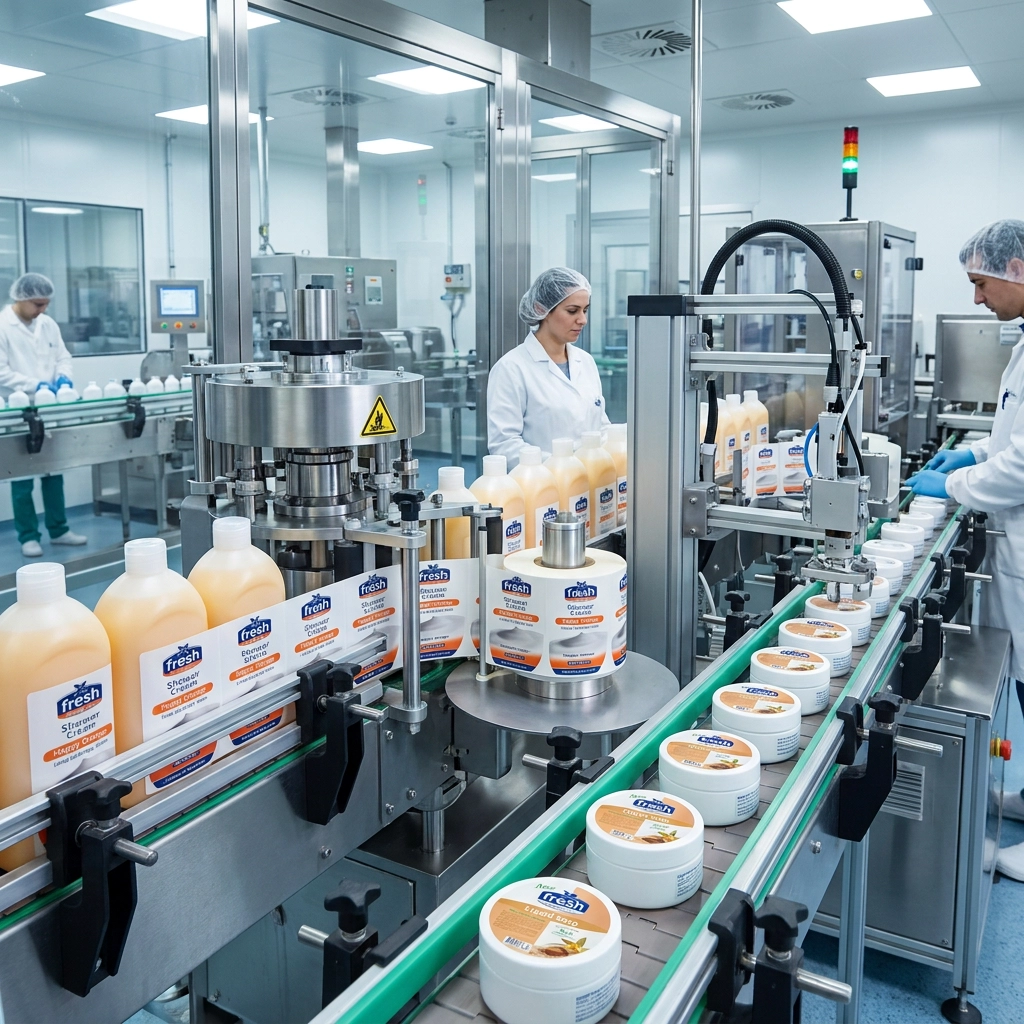
Small formats on vials and blister packs. Multilingual declarations: multilayer labels. Strict regulatory requirements. Fine print that must remain legible. Variable data.
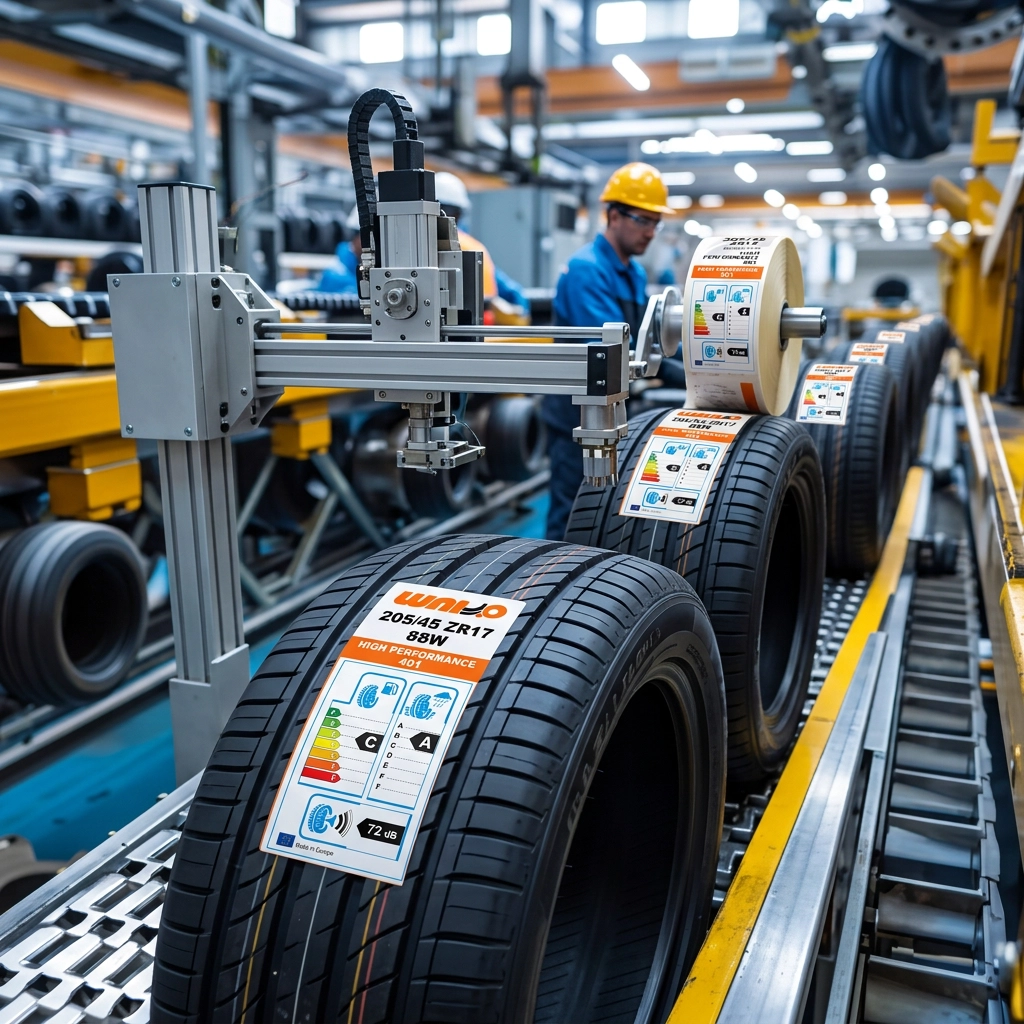
Labels for tires, technical products, and industrial parts. Durability in outdoor conditions: UV exposure, temperature, mechanical loads. Permanent adhesive on uneven surfaces.
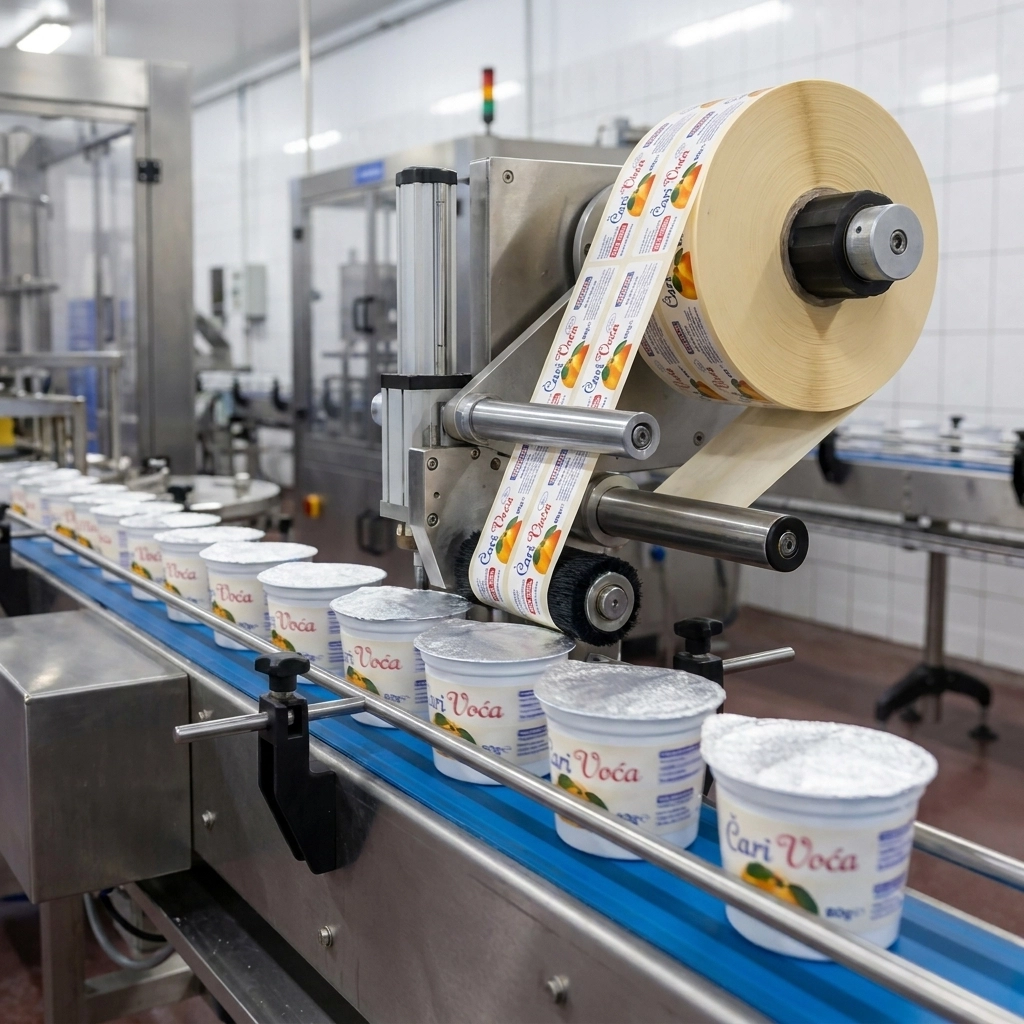
Cups, jars, lids, yogurt packaging. Adhesive suited to the cold chain: from production through transport to the shelf. ISO 22000 process. Machine application on high-speed lines.
Don't see your industry? Contact us. We produce labels for every industry that uses self-adhesive labels in roll form. Every combination of material, adhesive, and finishing is its own story.
Request a QuoteBy an industrial printed label, we mean any self-adhesive label in roll form used to mark or declare a finished product entering the open market. These are products that communicate directly with consumers, so print quality and the faithful, real-world execution of the designer's concept are extremely important.
For mass-consumption products, this usually means large production runs where the print must be flawless and consistent: from the first label in the roll to the last, and from the first production run of the year to the last.
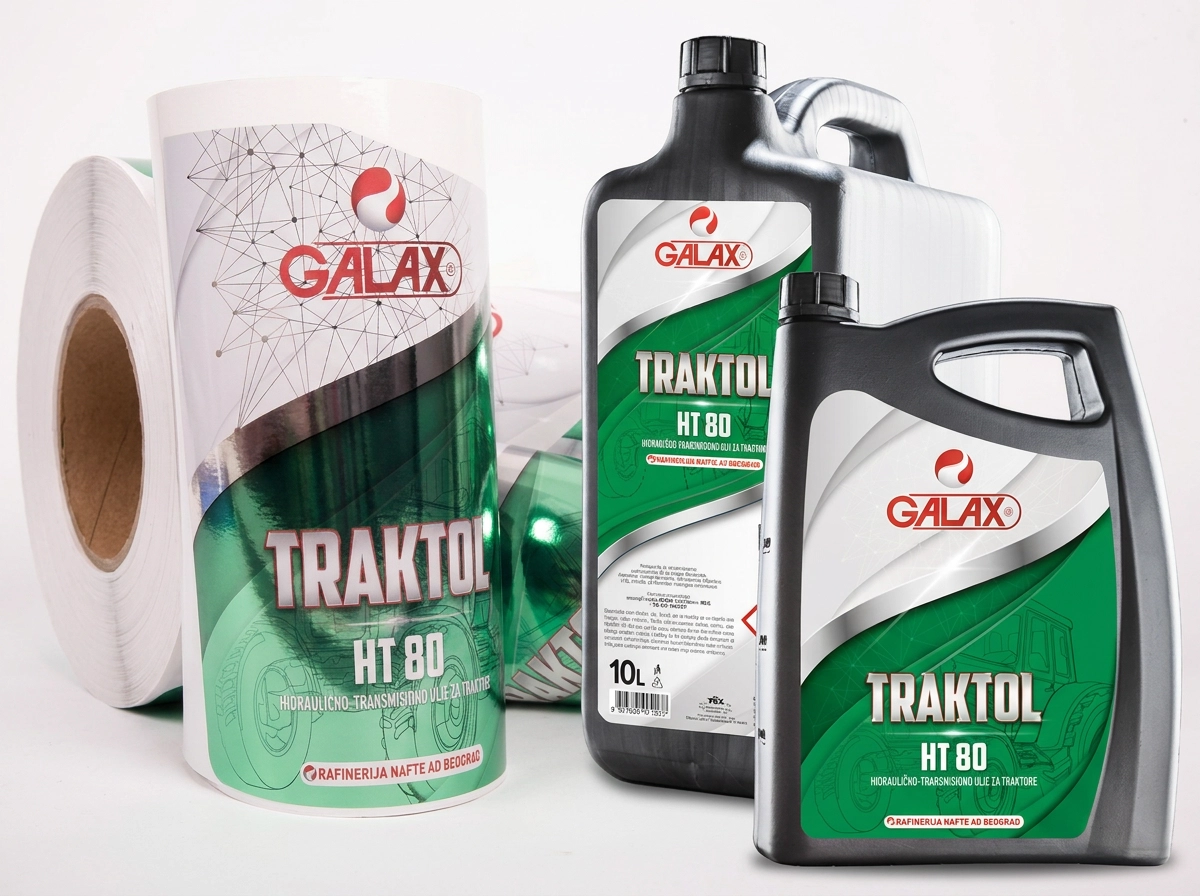
The choice of material isn't an aesthetic decision, it's a technical one that depends on the packaging the label sticks to, the environment the product lives in (cold, damp, chemically aggressive), and how the label is applied. We work with materials from leading European manufacturers that cover the full spectrum of applications.
Printing provides color and information. Finishing provides texture, shine, depth, and a tactile experience. UV coating protects the print and gives it a gloss or matte effect. Foil adds metallic accents. Embossing creates a three-dimensional quality the consumer can feel with their fingers. All of this is done in one or two passes through the machine.
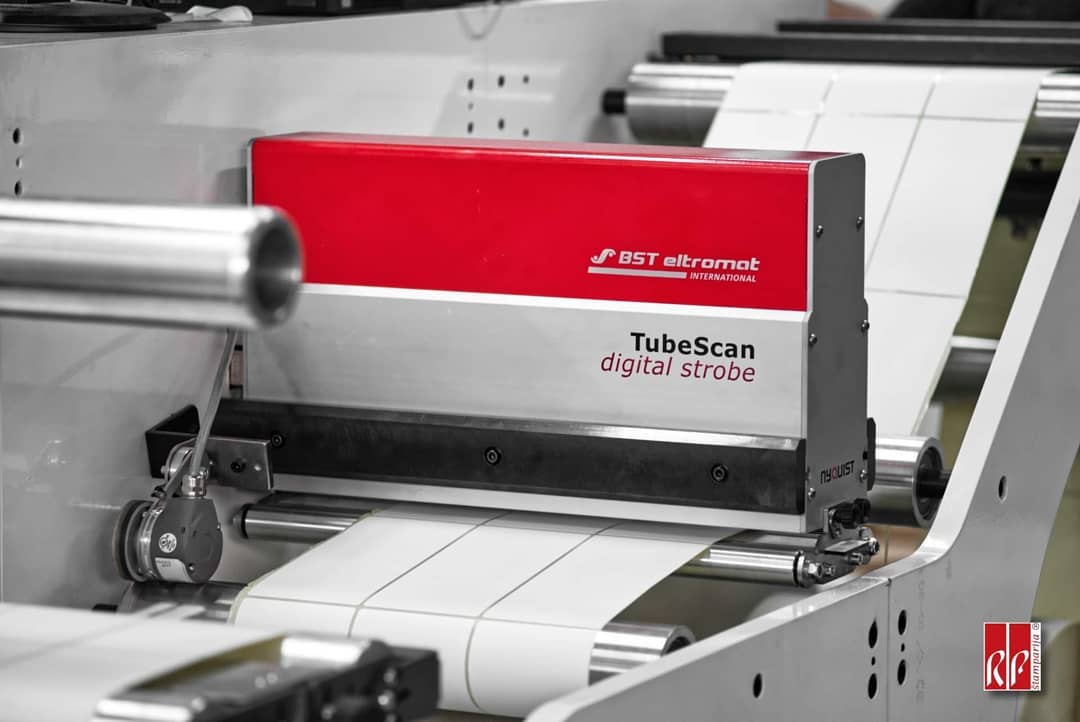
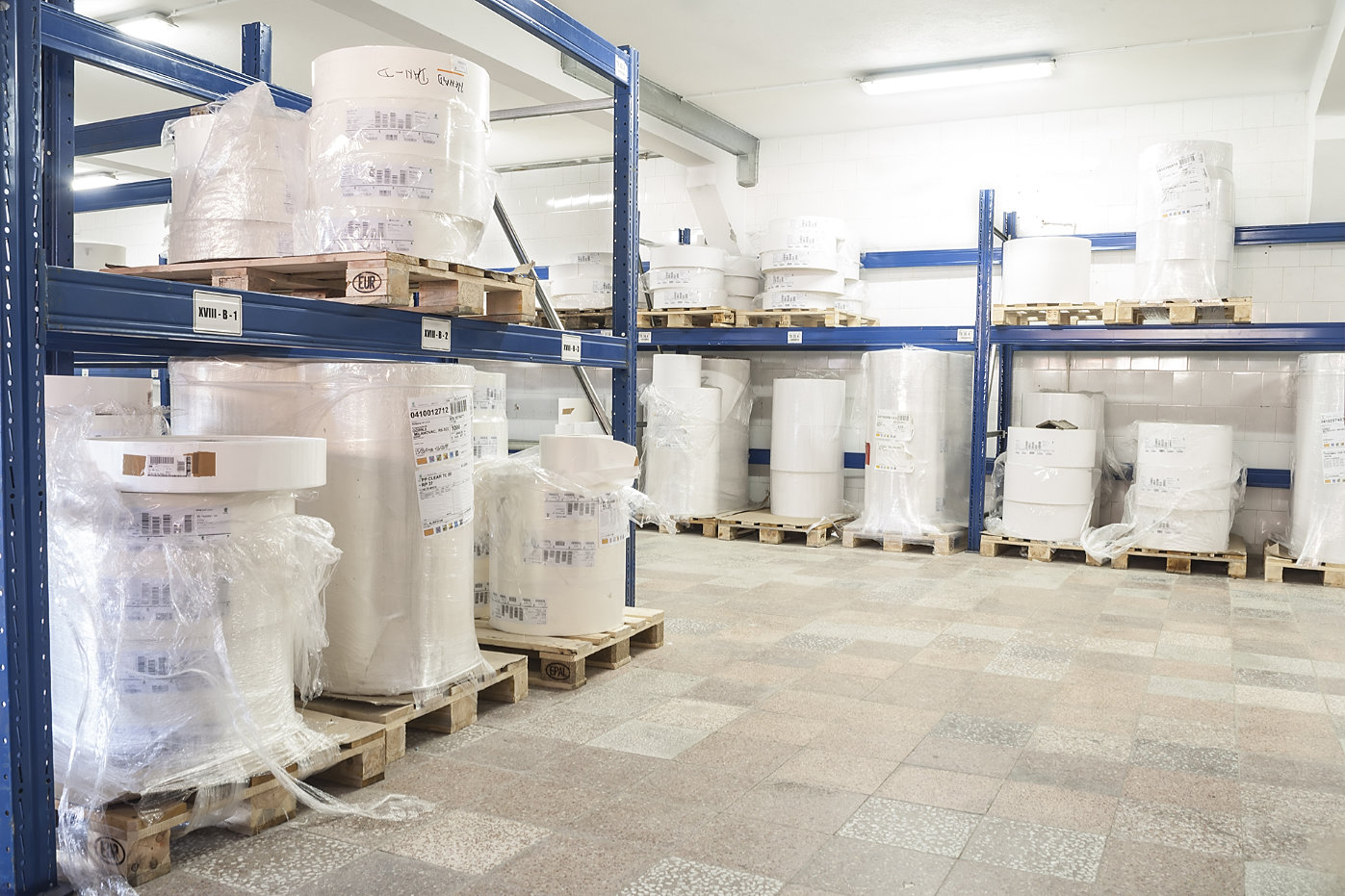
The most beautiful label in the world is useless if it can't be applied on the customer's line without stoppages. That's why the delivery format matters just as much as print quality: the core, roll diameter, unwind direction, label spacing, and sensor mark position all have to match the specific labeling machine on your production line.
Answers to the questions procurement teams, brand managers, and technologists most often ask us before their first order.
Flexo printing is cost-effective for medium and large production runs. The minimum quantity depends on the label's dimensions and number of colors, since a smaller label with fewer colors has a lower minimum. Contact us with your specific requirements (dimensions, material, number of colors, approximate quantity) and you'll get an exact quote within 24 hours. For small batches below the economical minimum, we'll discuss the options openly.
Ideally: a design file in vector format (AI, EPS, PDF), the label dimensions, the material you want (or a description of the product and packaging, and we'll recommend one), an approximate quantity, the core and unwind direction, and your desired delivery time. If you don't have all of this information, send us what you have. Even if all you have is an idea and nothing more, reach out and we'll help you define the specification step by step. You'll get a quote within 24 hours.
As a rule, it costs less. Prepress preparation is no longer needed, since all files, separations, and parameters are stored in our ERP system. For the same design and the same quantity, a repeat order costs less and has a shorter lead time, because you skip preparation, proof approval, and tooling all over again. If you want a small correction to an existing design (a text change, a barcode, an expiration date), we start from the saved file, not from scratch.
It depends on three things: what the label sticks to (glass, plastic, cardboard, metal, an uneven surface), the environment the product lives in (dry, damp, cold, chemically aggressive, exposed to UV), and how the label is applied (by hand or by machine on a fast line). Paper for dry environments and cost-efficiency. PP synthetic for moisture. PET for chemical resistance and durability. Tell us what your product is and where it ends up, and we'll recommend the optimal material and adhesive with no obligation.
Yes. We hold an FSC™ Chain of Custody certificate (BV-COC-221179, Bureau Veritas, valid through October 2030) that covers the purchase and sale of FSC Mix and FSC Recycled materials. If you need the FSC mark on the label for your customer or for the EU market, mention it in your inquiry and we'll deliver the labels with an FSC declaration on the shipping documentation, which entitles you to use the FSC mark on your product.
Up to 9 colors in a single pass, which includes CMYK process colors, Pantone spot colors, a white underprint on transparent material, and UV protective coating. In practice, most industrial labels use 5–7 separations. If your design requires more than 9, contact us for a consultation, since it's often possible to optimize the number of separations without losing visual quality.
Yes. Rotary die-cutting on the machine cuts the label into any shape: rectangle, oval, circle, or a completely irregular shape following your design's contour. For standard shapes, we use existing dies from our tooling library; for non-standard shapes, we make a new die to your specification. The cost of a new die is one-time, and for repeat orders we use the same die at no additional cost.
All finishing is done on the machine, most of it in the same pass as printing. UV coating (gloss, matte, or selective) doesn't slow production down and doesn't add significantly to the cost. Hot foil and cold foil add metallic accents: gold, silver, hologram. Embossing (embossing/debossing) is done on the Frankini DMR machine and adds a tactile dimension. For the chemical industry, tactile markings are a regulatory requirement (EU CLP). Mention the finishing you need in your inquiry and we'll include it in the quote with an exact price.
For repeat orders with saved parameters, the standard lead time is 5–7 business days from order confirmation. For new designs that require prepress preparation and proof approval, add 2–3 business days. For urgent orders, call us (+381 32 720 120) and we'll arrange priority production if capacity allows. We plan delivery in advance through our ERP system, so transport is scheduled before the labels come off the machine.
Tell us the type of labeling machine, the core (most often 40 mm or 76 mm), the maximum roll diameter, and the unwind direction. If you're not sure about these parameters, send us a photo of your existing roll and your labeling machine, and we'll work out the specification. For new customers or new formats, we recommend a trial roll before the full production run, so you can test the application on your line, and only once you confirm everything works without stoppages do we start full production.
Send us the dimensions, material, approximate quantity, and design file. You'll get a quote within 24 hours. If you don't have all the details, tell us what you have and we'll help you define the specification.