Ibarski put 31, Nevade, 32300 G.Milanovac, Srbija

Request a Quote
SR | EN
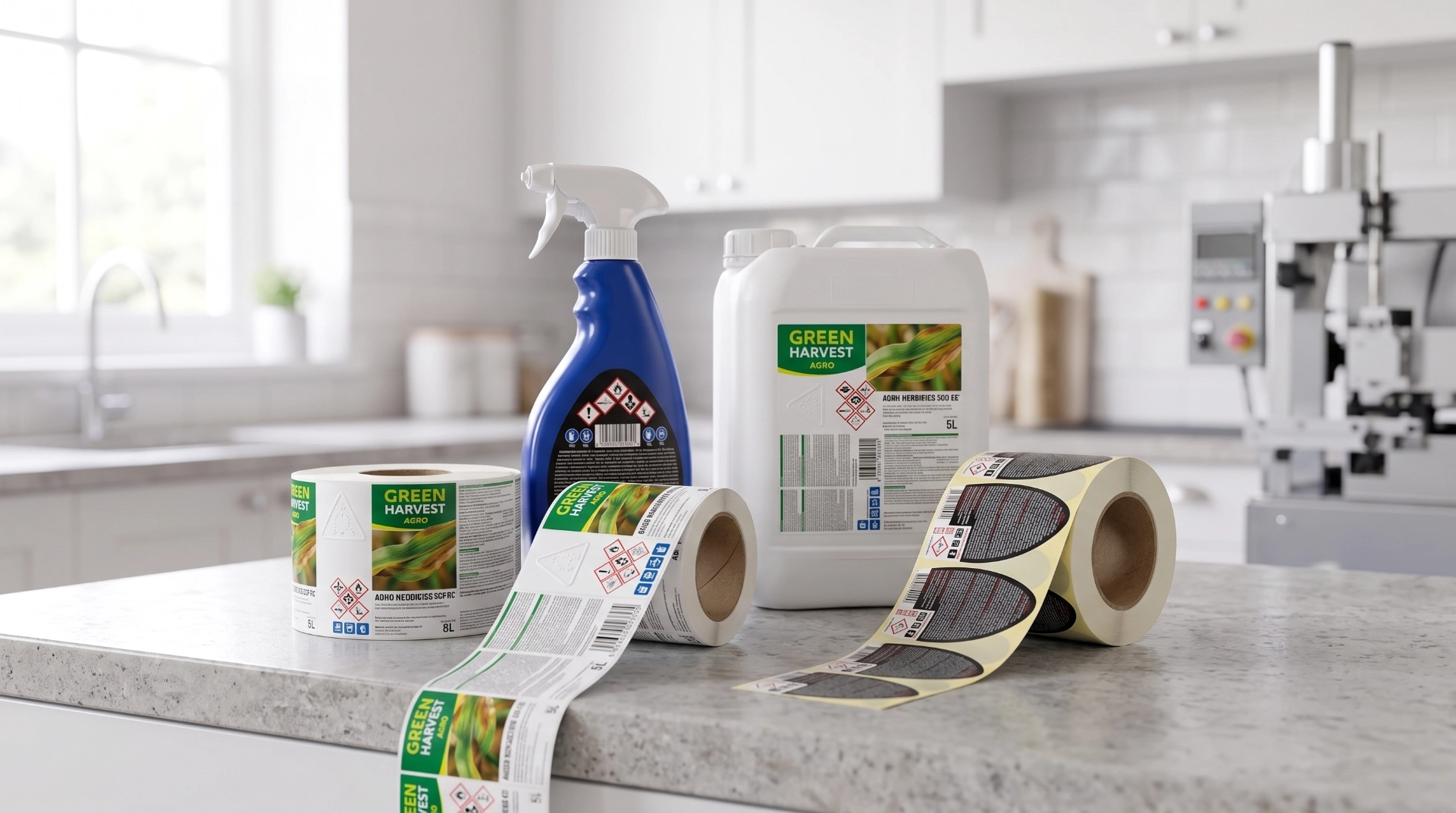
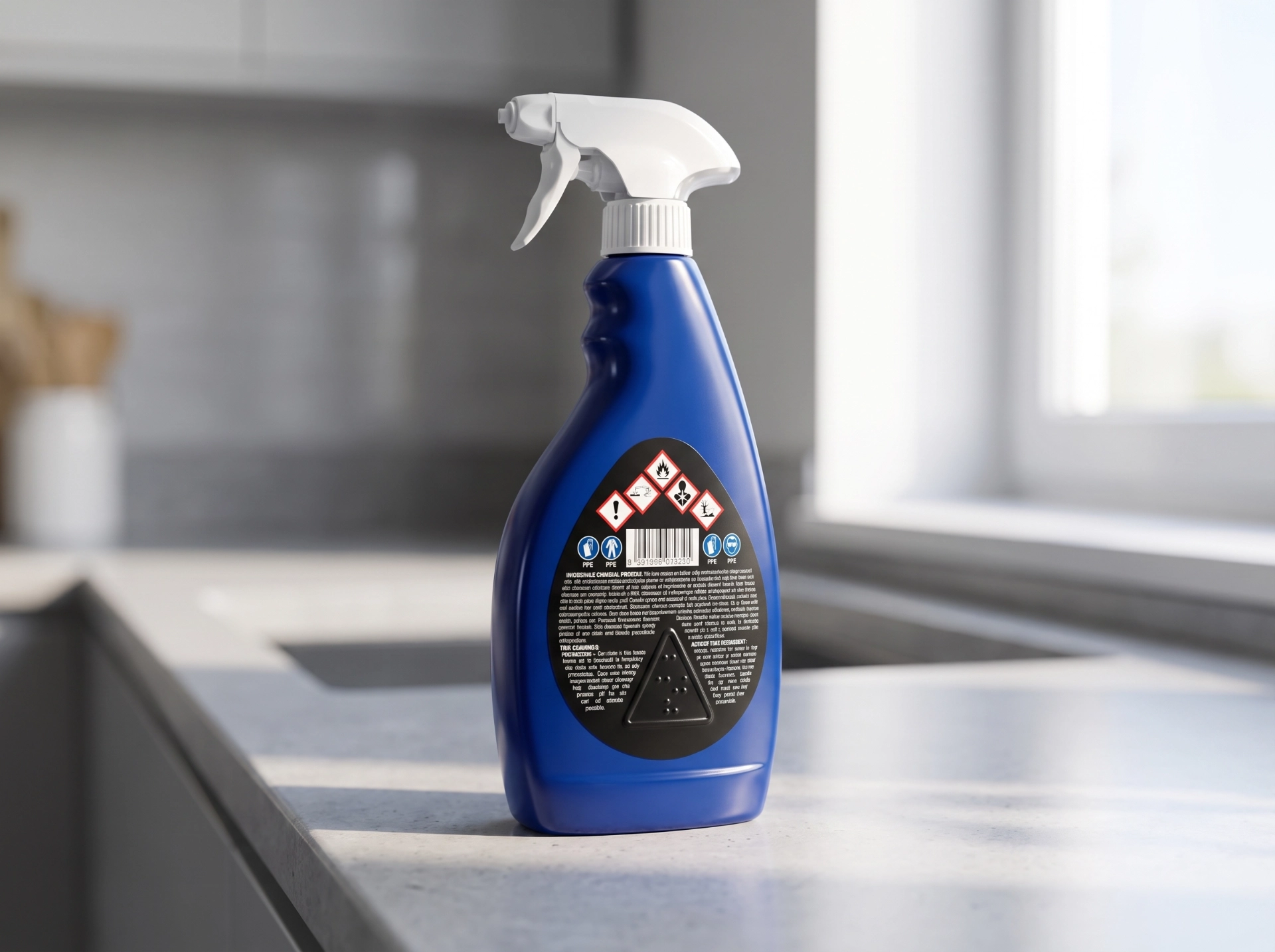
Label with a tactile warning triangle and an embossed stamp on a chemical product
Tactile Markings and Embossing

Special labels with embossed markings

Labels with tactile markings for the chemical industry. Embossed markings (embossing and debossing) on the Frankini DIE ROLL DMR machine, a tactile warning triangle per the EU CLP Regulation and the ISO 11683 standard. Raised and recessed markings that blind and visually impaired users can recognize by touch, while manufacturers meet the legal requirement for labeling hazardous substances.

ISO 11683 Standard for Tactile
Warning Markings
EU CLP Regulation
Tactile Triangle

A raised equilateral triangle (16-20 mm) per ISO 11683, mandatory on all hazardous chemical products sold to the general public. The embossed height is 0.25-0.5 mm above the label surface.

Frankini DIE ROLL DMR
Rotary Embossing

An electromechanical machine for precise embossed markings on roll-fed labels. Embossing (raised) and debossing (recessed) with controlled depth and detail sharpness across the full run.

Applications
Chemicals · Household Chemicals · Agrochemicals

Detergents, cleaning agents, pesticides, paints and varnishes, industrial chemicals, nicotine e-cigarettes. Any product classified as hazardous under CLP must carry a tactile marking.

Integration into the Label
Embossing + Printing + GHS

The tactile triangle is integrated directly into the printed label along with GHS pictograms and H and P statements. One label, full compliance, with no separate tactile sticker to apply afterward.

EU CLP and ISO 11683

The Marking the Customer Feels With Their Fingertips

The EU CLP Regulation (Regulation EC 1272/2008) requires all chemical products classified as hazardous and intended for sale to the general public to carry a tactile warning marking. A raised triangle that blind and visually impaired users recognize by touch, warning them that they are handling a hazardous product.

1

What the Law Requires and What It Looks Like

The tactile warning triangle (TWD, Tactile Warning of Danger) is mandatory on all chemical products for general sale that are classified as acutely toxic, corrosive, flammable, mutagenic, carcinogenic, or toxic to reproduction. The ISO 11683 standard precisely defines the shape, dimensions, embossed height, and position on the packaging. Non-compliance results in a ban on sale in the EU market.

1
Product Classification

The manufacturer classifies the chemical product under the CLP Regulation. If the product is classified under acute toxicity (H300-H312), corrosivity (H314), flammability (H224, H225, H228), mutagenicity, carcinogenicity, or reproductive toxicity, the tactile marking is mandatory on every package intended for general sale.

2
Tactile Triangle per ISO 11683

A raised equilateral triangle inside a frame: the standard size is 16-20 mm per side, frame thickness 1.5-1.9 mm, embossed height 0.25-0.5 mm above the surface. A reduced variant exists for smaller packages: 8-10 mm per side, 0.8-1.2 mm frame. The triangle's corners must be as sharp as possible to be recognizable by touch.

3
Position on the Packaging

On packaging with a base (bottles, canisters), the triangle must be on an upright handling surface, close to the edge, with its apex within 50 mm of the bottom of the package. On tubes and cartridges, the position is on the shoulder around the opening. On aerosols, next to where the finger is placed to activate the spray. It must be recognizable by touch without being confused with other embossed elements.

Mandatory for all CLP-classified products sold to the general public
Embossing integrated into the label, no need to apply it separately afterward
Recognizable by touch throughout the product's shelf life
2

Two Embossing Directions, Different Applications

Embossing
Raised Embossing Above the Surface

The material is raised upward, detectable by touch

A rotary tool on the Frankini DIE ROLL DMR machine raises the label material upward and forms a raised surface. This is the required technique for the tactile warning triangle per ISO 11683, since the customer must be able to feel the embossing by touch. The height of the raised area is precisely controlled per the standard's requirements (0.25-0.5 mm). Works on both paper and synthetic materials.

Embossing DirectionUpward, above the label surface
Height0.25-0.5 mm (ISO 11683)
Regulatory UseCLP tactile triangle, mandatory
Decorative UseLogos, text, decorative elements
For CLP tactile markings and premium raised elements
Debossing
Recessed Embossing Below the Surface

The material is pressed downward, for a sophisticated look

A tool on the Frankini DMR presses the material downward and forms a recessed surface. It looks sophisticated and discreet since the embossing does not rise above the label. Used for decorative elements on premium labels: a debossed logo, text, frame, or graphic motif. Can be combined with hot foil stamping for a 3D effect, where the foil settles into the recess and enhances contrast.

Embossing DirectionDownward, below the label surface
DepthControlled, adapted to the material
Regulatory UseNot suitable for tactile markings
Decorative UsePremium logos, blind embossing, decor
For premium decorative embossing and combination with hot foil stamping

Not sure whether your product requires a tactile marking? Tell us your product's CLP classification (the H and P statements from the safety data sheet). We will check whether the tactile triangle is mandatory, propose a position on the label per ISO 11683, and integrate the embossing into the printed label together with complete GHS labeling in a single step.

01Chemical Industry and Household Chemicals

A label that warns by touch before the customer reads the text

In the chemical industry, a label is not just a declaration, it is a legally defined safety measure. The EU CLP Regulation requires every package containing a hazardous substance intended for general sale to carry a tactile warning triangle, GHS pictograms, a signal word (danger or warning), H hazard statements, and P precautionary statements. All of this must be on a single label, legible, durable, and compliant with the regulation.

On the Frankini DIE ROLL DMR machine, the tactile triangle is formed as an integral part of the printed label. There is no need to apply a separate tactile sticker afterward, which simplifies the process on your filling line and reduces the risk of a missed marking.
Label with a tactile warning triangle for a household chemical product
Detergents and cleaning agentsProducts for washing dishes, floors, bathrooms, and glass that are classified as irritant or corrosive require a tactile triangle. The label must withstand contact with wet hands, spray, and product droplets without degrading the print or the embossing. Synthetic materials (PP) with reinforced adhesive for the curved surfaces of bottles.
Industrial chemicals and solventsAcetone, thinners, acids, bases, industrial lubricants. The label must resist chemical contact with the product itself, since spills happen in practice. PET material with a RESIN coating, lamination for extra protection, and adhesive resistant to solvents. The tactile triangle must remain recognizable by touch throughout the product's shelf life.
Paints, varnishes, and coatingsFlammable and harmful substances with an H224, H225, or H228 classification. A large label format with a lot of regulatory text (H and P statements, EUH phrases, UFI code). The tactile triangle must be positioned where it does not interfere with the text and where it is accessible to the customer's touch, often on the side of the canister, near the bottom.
E-cigarettes and nicotine productsNicotine is classified as a toxic substance under the CLP Regulation. All packages of nicotine-containing e-liquid for general sale must carry a tactile triangle and a "Toxic" marking (H301, H311, H331). Small package formats require the reduced triangle version (8-10 mm), which remains recognizable by touch even in a small space.
02Agrochemicals and Pesticides

Herbicides, insecticides, and fungicides with complete regulatory labeling

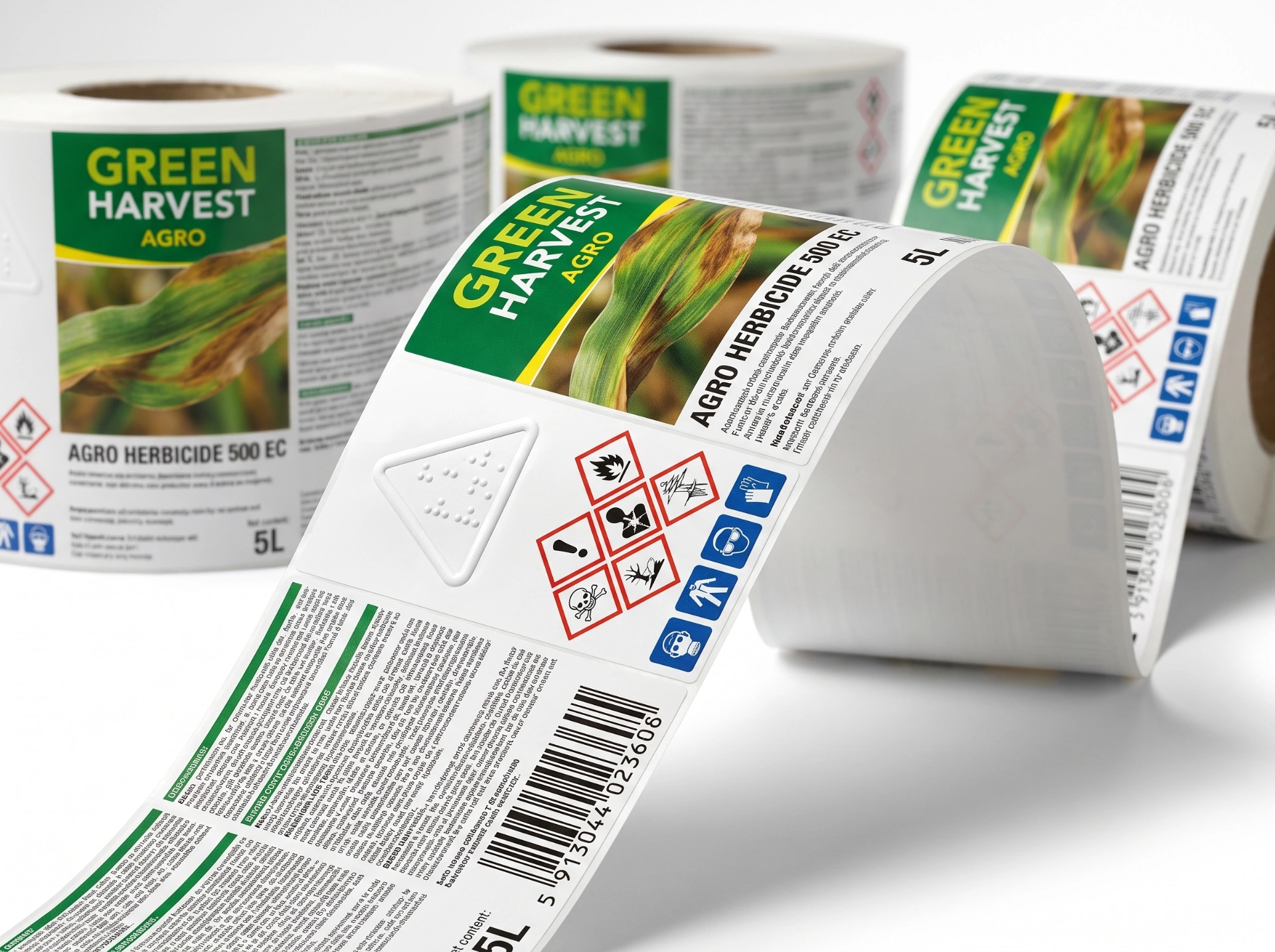
Plant protection products are among the most strictly regulated products on the market. In addition to the CLP requirement for a tactile triangle, these products require specific regulatory information for every export country: registration number, active substance, application dose, pre-harvest interval, operator protection measures. For export products, all of this appears in multiple languages on the same label.

Label with an embossed tactile triangle on a plant protection product package
A large volume of regulatory text on a small packagePesticide labels often contain more text than a standard label can hold. Active substance, concentration, instructions for use, doses per crop, pre-harvest interval, personal protection measures, first aid, ecotoxicological data. For products like these, a multilayer label is a common choice, since a standard label cannot legibly fit all the information.
Multilingual declarations for export marketsProducts exported to the EU must carry a declaration in the language of the country where they are sold. A herbicide sold in Serbia, Croatia, Hungary, and Romania requires the same label in 4 languages. A multilayer peel-and-reveal construction provides 4 printed surfaces for multilingual versions on a single package.
Resistance to storage and field conditionsAgrochemical products are stored in unheated warehouses and used outdoors. The label must withstand temperature extremes (-20°C to +50°C), direct sunlight, rain, moisture, and mechanical damage during handling. A synthetic material with UV-stable inks and lamination is the standard choice for this category.
Tactile triangle on large-format canisters and bottlesPesticides for professional use come in canisters from 1L to 20L. On large packages, the tactile triangle must be on an upright handling surface, within 50 mm of the bottom. On the Frankini DMR machine, the embossing is formed on the label before it is applied to the canister, eliminating the need to apply a separate tactile element on the filling line afterward.
03Frankini DIE ROLL DMR

Rotary embossing from the roll, precise depth on every label across the full run

The Frankini DIE ROLL DMR Elettromeccanica is a machine specialized for rotary embossing and debossing on self-adhesive roll-fed labels. It works as a separate operation after flexo printing: the label unwinds from the roll, passes through the embossing station, the relief is formed by precise pressure between two rotary tools, and it winds back onto the roll, ready for delivery or further finishing.
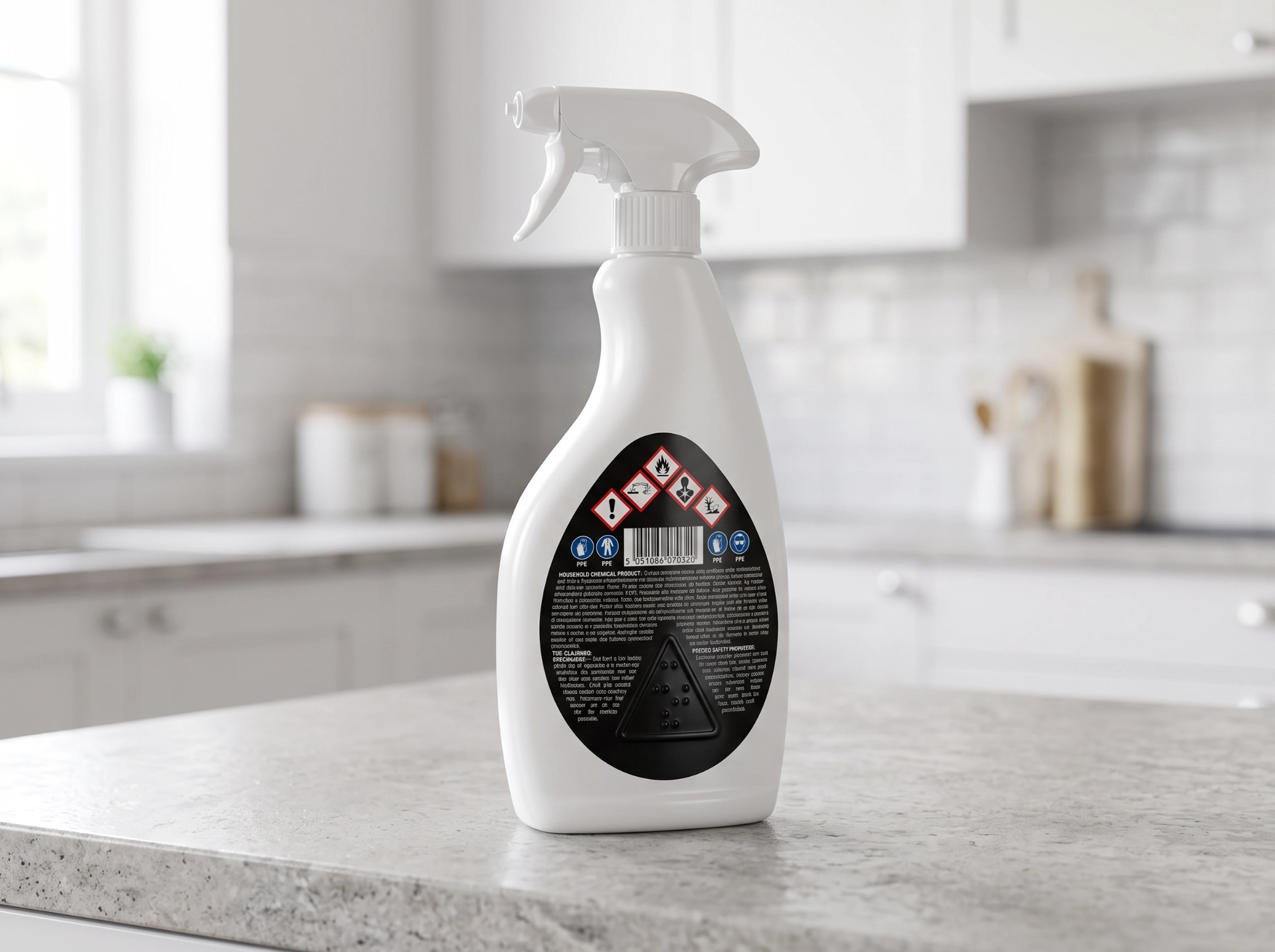
Embossed tactile triangle on a self-adhesive roll-fed label
Rotary principle for consistent embossingUnlike flatbed embossing, which uses a flat die with pressure applied from above, rotary embossing uses cylindrical tools that rotate together with the label web. The result is constant pressure and embossing depth on every label in the run, without the variation that occurs with the flatbed method on large runs.
Embossing depth control for ISO 11683 complianceISO 11683 requires the tactile triangle's embossed height to be between 0.25 and 0.5 mm above the label surface. The Frankini DMR allows precise adjustment of the pressure between the two cylinders, giving tight control over the embossing depth. Once set, the parameter stays stable through the entire run without further correction.
Position in the production flowThe label is first printed on an MPS machine (flexo printing up to 9 colors, UV coating, and die-cutting). The printed roll then goes to the Frankini DMR for the embossing operation. The embossing is formed as the last finishing step before final inspection and packing. This sequence ensures that the embossing pressure does not damage the existing print and that the embossing is the last element applied to the finished label.
Compatibility with all materials in the programThe Frankini DMR works on paper materials (matte, semi-gloss, gloss), synthetic materials (PP, PET, PE), and laminated labels. The embossing depth is adapted to the thickness and flexibility of the material. On thinner materials the embossing is more discreet; on thicker papers it can be more pronounced. The optimal result is achieved on materials 80-120 microns thick.
04Integration Into the Printed Label

One label with complete GHS labeling and a tactile triangle, not two elements

Many manufacturers still use two separate elements today: a printed label with GHS markings and a separate transparent sticker with a tactile triangle applied afterward. This approach slows down the filling line, increases the risk of a missed application (a label without a triangle means non-compliance), and requires two suppliers. An integrated approach solves everything in a single step.
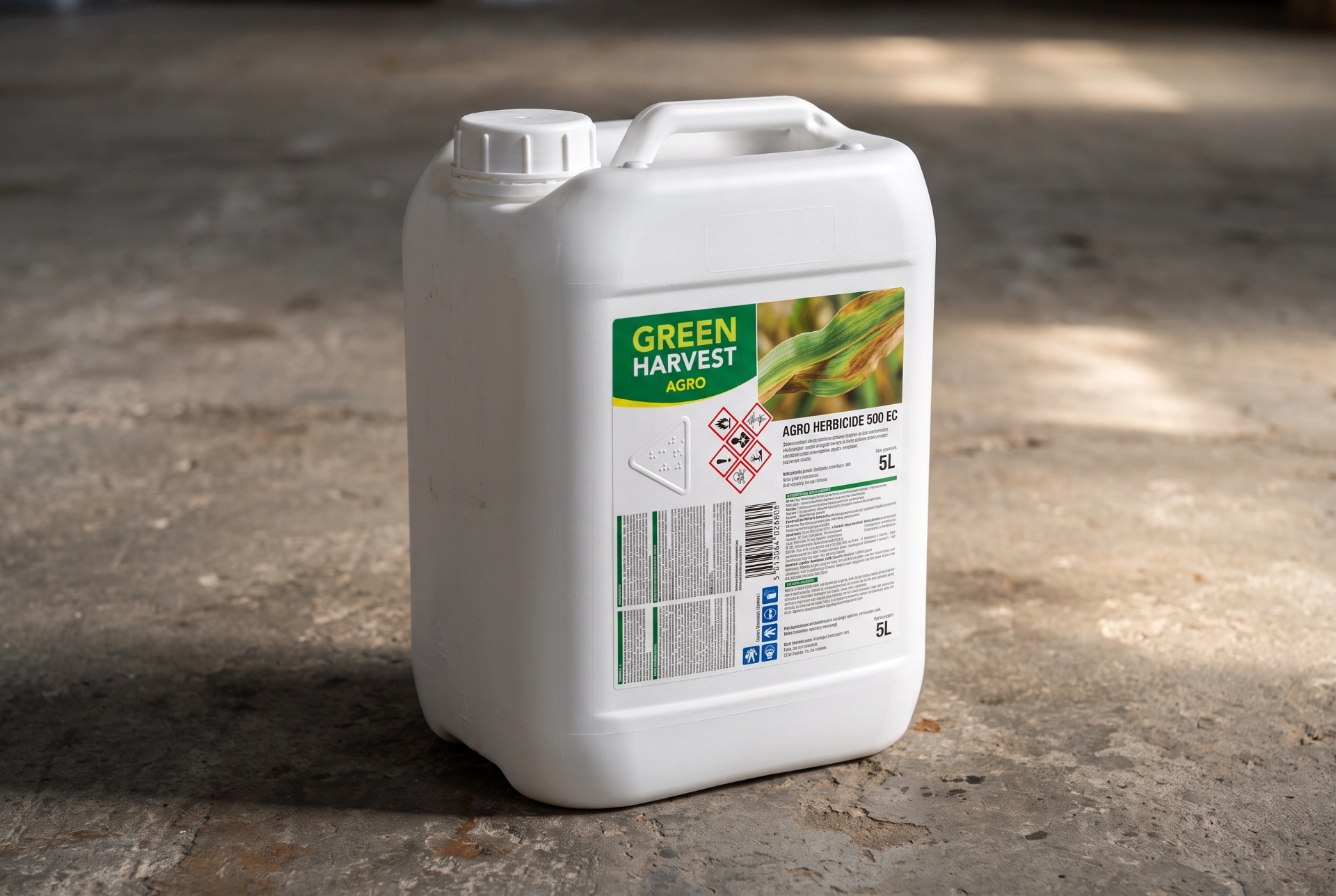
Printed label with an integrated tactile triangle and regulatory markings
Printed label plus GHS pictograms plus embossing in one rollOn the MPS machine, the complete printed label is produced: brand design, color GHS pictograms (a red diamond on a white background), the signal word, H and P statements, UFI code, and the manufacturer's contact details. After printing, the roll goes to the Frankini DMR, where the tactile triangle is formed at a predefined position. The result: a single roll with complete labels, ready for application on your line.
Positioning the triangle per ISO 11683 in the design fileThe position of the tactile triangle on the label is planned at the design stage. The triangle must be placed where it will meet the standard's requirements once applied to the package: near the bottom on an upright handling surface for bottles and canisters, on the shoulder for tubes. The design file marks the embossing zone as a separate layer, similar to hot foil stamping. Our prepress team checks that the position works for both the package and the standard.
Eliminating the separate tactile stickerA separate transparent sticker with the triangle requires a second roll, a second applicator on the line, or manual application. The risk of a miss increases with line speed. With the integrated approach, every label in the roll already has the tactile triangle. It is not possible for a label to reach the product without the triangle. One element, one application, zero risk of non-compliance.
Combination with UV coating and hot foil stampingThe tactile triangle can be combined with other finishing techniques on the same label. UV coating protects the print and the GHS pictograms from wear and chemicals. Hot foil stamping highlights the logo or brand name for a premium look. Embossing adds the tactile dimension for regulatory compliance. Three finishing techniques on one label, each with its own function: protection, branding, and regulatory compliance.
05Video

Embossing is not judged on a screen, but on the finished label

The tactile triangle is the only element of a label that does not communicate visually. Its function is checked with the fingers: in a dark cabinet, without glasses, in a situation where the customer is not reading the declaration. Because of this, the quality of the embossing is hard to convey through a photograph, since a depth of three tenths of a millimeter barely exists in a static image.

The video below supplements the technical description on this page. What does not show in a photograph becomes clear as the light angle changes and the label is in motion.

Opening frame of the video about tactile labels with an embossed warning triangle
Video · 1:04
Standard Requirement 0.25-0.5 mm Embossed height of the tactile triangle above the label surface, per ISO 11683. Below the lower limit it cannot be reliably felt; above the upper limit it interferes with application and packaging.
Rotary Principle Same depth across the entire run The embossing is formed between two cylindrical tools that rotate together with the label web, so the pressure stays constant on both the first and the last label in the run.
Place in Production The last finishing step First flexo printing and die-cutting on the MPS machine, then embossing on the Frankini DMR. This sequence means the embossing pressure does not damage the existing print.
Česta pitanja

Taktilne oznake, pre nego što naručite

Odgovori na pitanja koja nam proizvođači hemikalija, kućne hemije i agrohemijskih proizvoda najčešće postavljaju o taktilnim oznakama, EU CLP regulativi i reljefnom žigu.

Kategorije
Pošaljite CLP klasifikaciju
Proverićemo da li je taktilni trougao obavezan za vaš proizvod.
Pošaljite upit

Svi hemijski proizvodi namenjeni opštoj prodaji koji su klasifikovani kao akutno toksični (kategorije 1-4, oznake H300-H312), korozivni (H314), zapaljivi (H224, H225, H228), mutageni, karcinogeni, toksični za reprodukciju ili štetni za aspiraciju moraju imati taktilnu oznaku upozorenja. U praksi to znači deterdženti, sredstva za čišćenje, boje i lakovi, pesticidi, rastvarači, e-cigarete sa nikotinom i sve druge opasne materije za maloprodaju. Obaveza važi za svako pakovanje, bez obzira na zapreminu.

Proizvod koji je klasifikovan kao opasan po CLP regulativi, a nema taktilnu oznaku upozorenja, nije usklađen sa zakonom i podleže zabrani prodaje na tržištu EU. Inspekcija može povući proizvod sa polica, izreći novčane kazne proizvođaču ili uvozniku i zahtevati povlačenje celokupne serije. Troškovi povlačenja, pretiketiranja i ponovnog stavljanja na tržište su višestruko veći od troškova pravilnog obeležavanja u fazi proizvodnje etiketa.

Da. ISO 11683 zahteva da taktilna oznaka ostane prepoznatljiva dodirom tokom celog očekivanog perioda upotrebe pakovanja u normalnim uslovima rukovanja. To znači da reljef ne sme da se izravna, izliza ili postane neprepoznatljiv usled skladištenja, transporta ili svakodnevne upotrebe. Na Frankini DMR mašini se dubina reljefa kontroliše tako da bude dovoljno izražena za trajnost, a izbor materijala (debljina, elastičnost) igra ključnu ulogu u zadržavanju oblika reljefa kroz vreme.

Standardna veličina je jednakostranični trougao u okviru sa stranicom 16-20 mm i debljinom okvira 1.5-1.9 mm. Visina reljefa mora biti 0.25-0.5 mm iznad površine etikete. Uglovi trougla moraju biti što oštriji da bi bili taktilno prepoznatljivi. Za manja pakovanja gde standardni trougao ne staje, postoji smanjena varijanta sa stranicom 8-10 mm i okvirom 0.8-1.2 mm. Alternativno, tri ispupčene tačke u obliku trougla.

Na pakovanjima sa bazom (boce, kanisteri), trougao mora biti na uspravnoj površini za rukovanje, blizu ivice, sa vrhom unutar 50 mm od dna pakovanja. Na tubama i kertridžima pozicija je na ramenu oko otvora tube. Na aerosolima pored mesta gde se prst postavlja za aktiviranje spreja. Trougao ne sme biti u zoni gde drugi reljefni elementi (šrafura, logo u reljefu) mogu izazvati zabunu kod slepog ili slabovidog korisnika.

Embossing podiže materijal etikete prema gore i formira ispupčenu površinu koju kupac oseća dodirom. To je obavezan smer za taktilni trougao upozorenja po ISO 11683, jer oznaka mora biti taktilno prepoznatljiva. Debossing utiskuje materijal prema dole i formira udubljenu površinu sa sofisticiranim, diskretnim izgledom. Debossing se koristi za dekorativne elemente na premium etiketama (blindruk) i može se kombinovati sa zlatotiskom za 3D efekat gde folija ulazi u udubljenje.

Reljefni žig se radi na Frankini DIE ROLL DMR Elettromeccanica mašini, specijalizovanoj za rotacioni embossing i debossing na samolepljivim etiketama iz rolne. Rotacioni princip (cilindrični alati koji se rotiraju zajedno sa trakom etiketa) obezbeđuje konstantan pritisak i dubinu reljefa na svakoj etiketi u tiraži, bez varijacija koje se javljaju kod flatbed metode. Dubina reljefa se precizno kontroliše podešavanjem razmaka između dva cilindra.

Da. Na istoj etiketi se mogu kombinovati flekso štampa sa GHS piktogramima (MPS mašina), UV lak za zaštitu otiska od habanja i hemikalija (inline na MPS), zlatotisak za brend akcentne detalje (hot foil ili cold foil na MPS) i embossing za taktilni trougao (Frankini DMR kao poslednja operacija). Tri tehnike dorade na jednoj etiketi, svaka sa svojom funkcijom: zaštita otiska, brending i regulatorna usklađenost.

Može i jedno i drugo, ali integracija u grafičku etiketu je preporučljiva. Zasebni transparentni stiker zahteva drugu rolnu, drugi aplikator na liniji ili ručno lepljenje, i povećava rizik da etiketa ode na proizvod bez trougla. Sa integrisanim pristupom, na Frankini DMR mašini formiramo reljefni trougao direktno na grafičkoj etiketi koja već sadrži GHS piktograme, H i P oznake i brend dizajn. Svaka etiketa u rolni već ima trougao, nula rizika od propuštanja.

Pošaljite nam dizajn etikete i CLP klasifikaciju vašeg proizvoda (H i P oznake sa bezbednosnog lista). Naš prepress tim proverava da li je taktilni trougao obavezan, predlaže optimalnu poziciju na etiketi prema ISO 11683 u skladu sa oblikom vašeg pakovanja i integriše zonu za embossing u grafičku etiketu sa kompletnim GHS obeležavanjem. Dobijate Star Proof sa označenom zonom za reljef pre pokretanja štampe. Ponuda u roku od 24 sata.

Pošaljite CLP klasifikaciju

Usklađenost sa
EU CLP u jednoj etiketi

Pošaljite nam dizajn etikete i bezbednosni list (SDS) vašeg proizvoda. Proverićemo da li je taktilni trougao obavezan, predložićemo poziciju na etiketi prema ISO 11683, integrisaćemo reljef u grafičku etiketu sa kompletnim GHS obeležavanjem. Jedna etiketa, jedna aplikacija, kompletna usklađenost.

Star Proof sa označenom zonom reljefa Ponuda u roku od 24h Prepress provera CLP usklađenosti
Taktilni trougao integrisan u grafičku etiketu Reljef direktno na etiketi sa GHS piktogramima, H i P oznakama i brend dizajnom. Bez naknadnog lepljenja zasebnog stikera, bez rizika od propuštanja na liniji.
Frankini DIE ROLL DMR za precizni reljef Rotacioni embossing sa kontrolisanom dubinom 0.25-0.5 mm po ISO 11683. Konstantna preciznost na svakoj etiketi u tiraži, bez varijacija od prve do poslednje.
Kompletno GHS obeležavanje na jednoj etiketi GHS piktogrami u boji, signal reč, H i P oznake, UFI kod, kontakt podaci, brend dizajn i taktilni trougao. Sve u jednoj rolni, spremno za aplikaciju na vašoj liniji.
Kombinacija sa zlatotiskom i UV lakom Zaštita otiska UV lakom, brend akcentni detalji zlatotiskom i taktilna usklađenost embossingom. Tri funkcije dorade na jednoj etiketi, svaka opravdana.
ISO 11683 Standard za taktilne
oznake upozorenja
CLP EU regulativa za
opasne materije
24h Ponuda nakon
prijema upita
1 Etiketa za kompletno
GHS obeležavanje
35+ Godina iskustva
u flekso štampi