Ibarski put 31, Nevade, 32300 G.Milanovac, Srbija
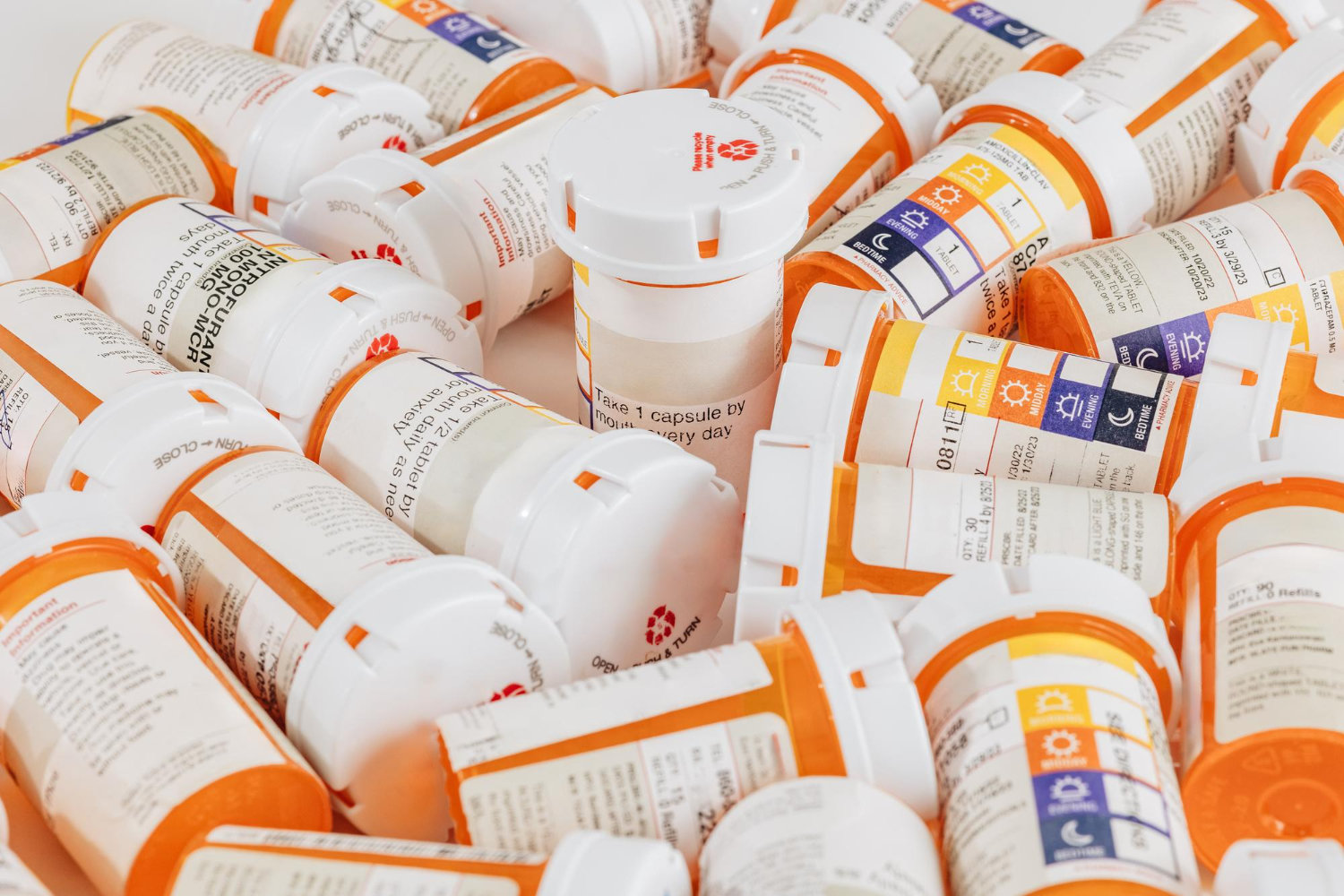
Every piece of data on the label has to be legible, accurate, and durable.
A pharmaceutical product label has to meet strict accuracy requirements: small print legible at a glance, a barcode that scans without error, and identical colors from the first label to the last in a print run of a million units. A multilayer label with a duplex or triplex construction provides an additional layer of space for the package insert and reduces the need for a separate leaflet in the packaging. Servo registration on the MPS machines and 100% inspection on the Rotoflex machines guarantee the precision the pharmaceutical industry requires.
Zero tolerance for error. Every piece of data, every barcode, and every label in the print run has to be identical and legible.
Crisp.Dot HD flexo technology on the MPS machines reproduces text below 6pt with sharp edges. Servo registration keeps color positioning constant across the whole print run. Every label passes visual inspection on a Rotoflex DSI-330 with cameras that detect defects, shifted barcodes, and missing labels.
A multilayer label with a duplex or triplex construction adds an extra layer of space directly on the bottle, using a Cross-Over system for delamination and relamination on the MPS EF 340. Part of the insert content can fit in that extra layer, reducing the need for a separate leaflet in the packaging. The patient opens the extra layer of the label, reads the text, and puts it back in place.
A multilayer label with a duplex or triplex construction lets you add one additional language to a single label alongside the primary one, instead of a completely separate version for each market. The medication name, active substance, and barcode on the outside stay unchanged. The extra layer carries the text in the added language, which reduces the number of separate label versions and simplifies warehouse operations.
Questions about print precision, multilayer PIL solutions, material resistance, and the ordering process.
Crisp.Dot HD flexo technology reproduces text below 6pt with sharp edges. Star Proof before printing shows the actual appearance. Servo registration keeps the position constant. 100% inspection on a Rotoflex DSI-330 detects any legibility defect.
Yes. Two Rotoflex DSI-330 machines with the URC 2.0 system and cameras check every label. MMLD detection catches missing and shifted labels. Defective ones are removed automatically. Up to 305 m/min with no compromise on precision.
Yes. Servo registration automatically corrects color position in real time. The first label is identical to the millionth. iControl continuously monitors print quality. 100% inspection on the Rotoflex machines removes every defective label before delivery.
Yes, partly. A multilayer label with a duplex or triplex construction adds an extra layer of space directly on the bottle, which can hold part of the PIL content, for example the active substance, dosage, and key warnings. Whether the extra layer can fully replace a separate leaflet depends on the length of the PIL text and the applicable regulations for the specific product and market, and we check this case by case.
A multilayer label has a duplex (2-layer) or triplex (3-layer) construction, a significantly smaller capacity than a full folded PIL insert. In practice, that fits the core declaration plus one additional language or a shortened warning text, and the exact amount depends on font size and text length for the specific product. The MPS EF 340 with the Cross-Over unit integrates the extra layer into the label in a single pass.
Partly. A multilayer label with a duplex or triplex construction can add one additional language alongside the primary one, which reduces the number of separate versions for markets with similar regulatory requirements. For five fully distinct markets and languages, you'll still realistically need more than one label, but fewer versions than today. An open-close label is an alternative when you only need a short amount of additional text in one language.
Yes. PP or PET with a UV coating and lamination withstands wiping with alcohol and contact with disinfectants. The print doesn't fade, and the adhesive doesn't fail. For autoclaving, we use PET with a specialty high-temperature adhesive.
Yes. Supplements and OTC products have specific regulatory requirements: health claims, dosage, warnings, allergens. A multilayer label is an option when you need extra space for part of that content without a separate leaflet. Premium options (embossing, cold foil, spot varnish) are available to stand out on the pharmacy shelf.
Standard printed labels, 5-7 business days. Multilayer labels, 10-14 business days. Repeat print runs, 3-5 business days. Six machines in operation and two Rotoflex inspection machines provide capacity with no waiting.
The type of product (medication, supplement, OTC, veterinary), the packaging type (bottle, tube, carton), the label dimensions, whether you need a multilayer label with an extra layer for PIL content, the number of languages, whether you need pre-printed labels for variable data (expiration date, lot, serial number), the print run, and the deadline. You'll receive a quote within 24 hours.
Describe your product, packaging, and regulatory requirements, and we'll deliver legible text, a scannable barcode, and a consistent look across every label in the run. A multilayer label with a duplex or triplex construction adds extra space for PIL content and an additional language. Every label goes through 100% inspection before delivery.