Ibarski put 31, Nevade, 32300 G.Milanovac, Srbija
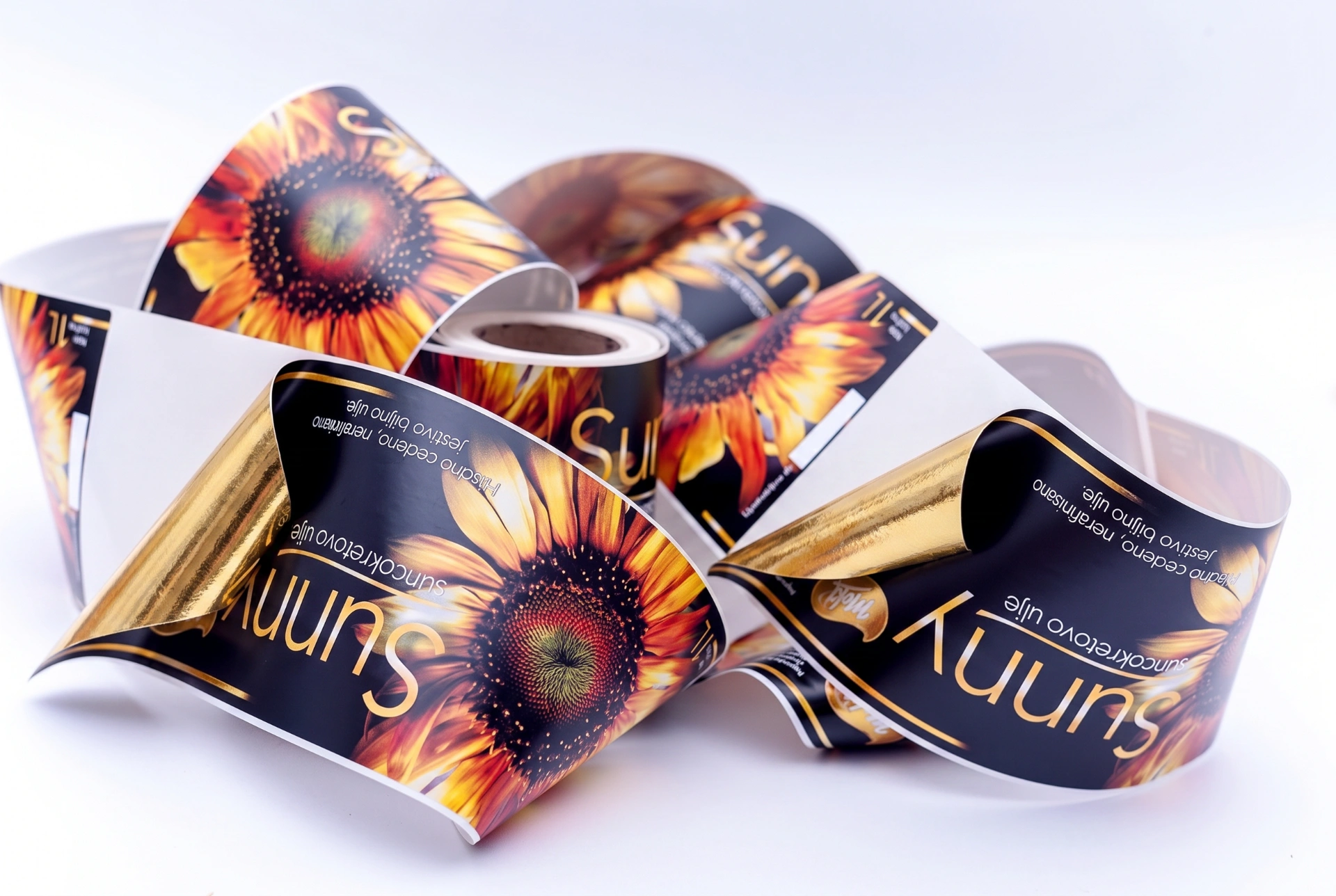
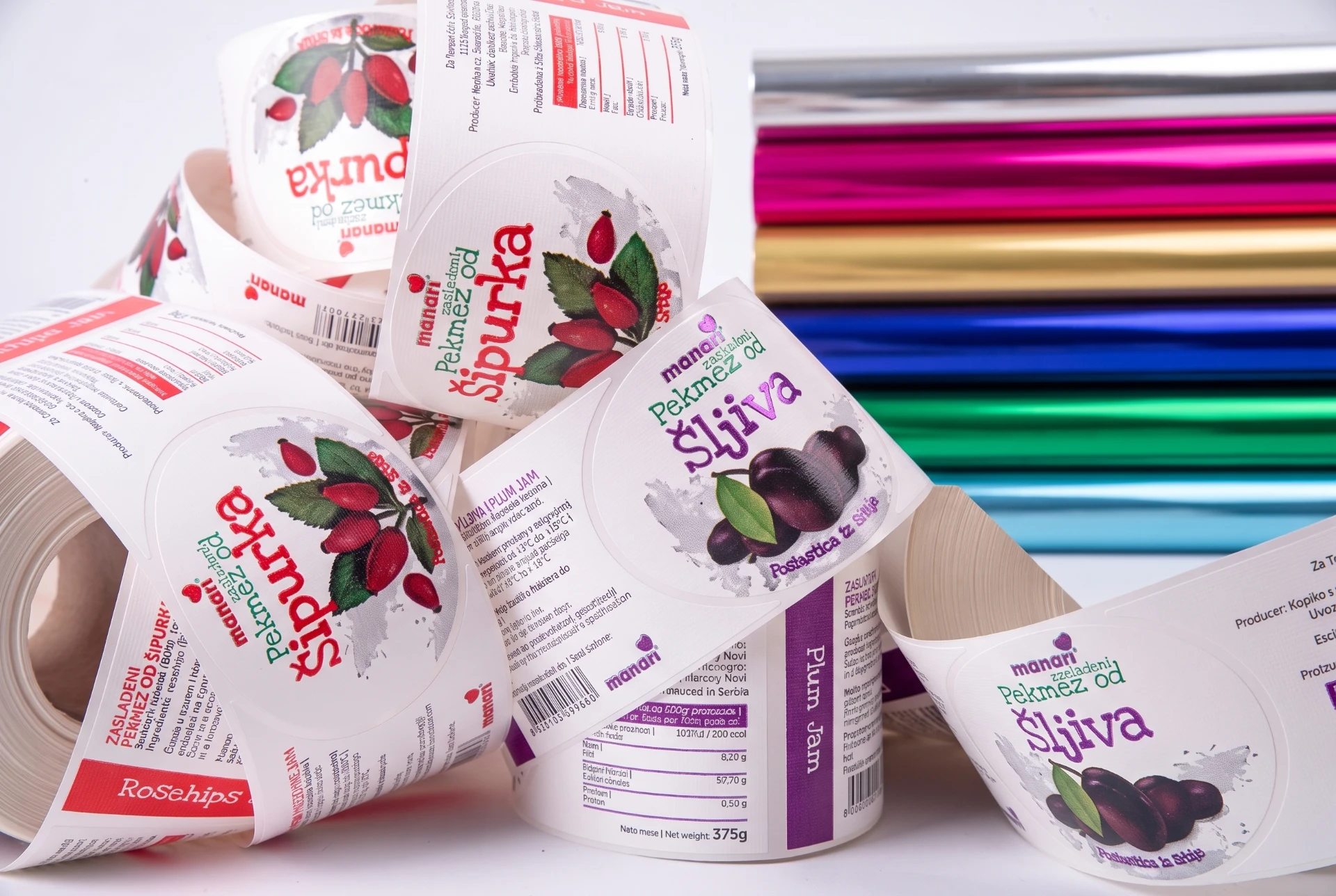
Graphic self-adhesive labels with foil stamping and advanced finishing that set a product apart on the shelf. Hot foil for a classic metallic shine in gold, silver, or copper. Cold foil for inline application with no tooling and the ability to print over the foil. UV coatings for a gloss/matte contrast you can see and feel under your fingers. Holographic foils for protection and a visual effect that catches the eye.
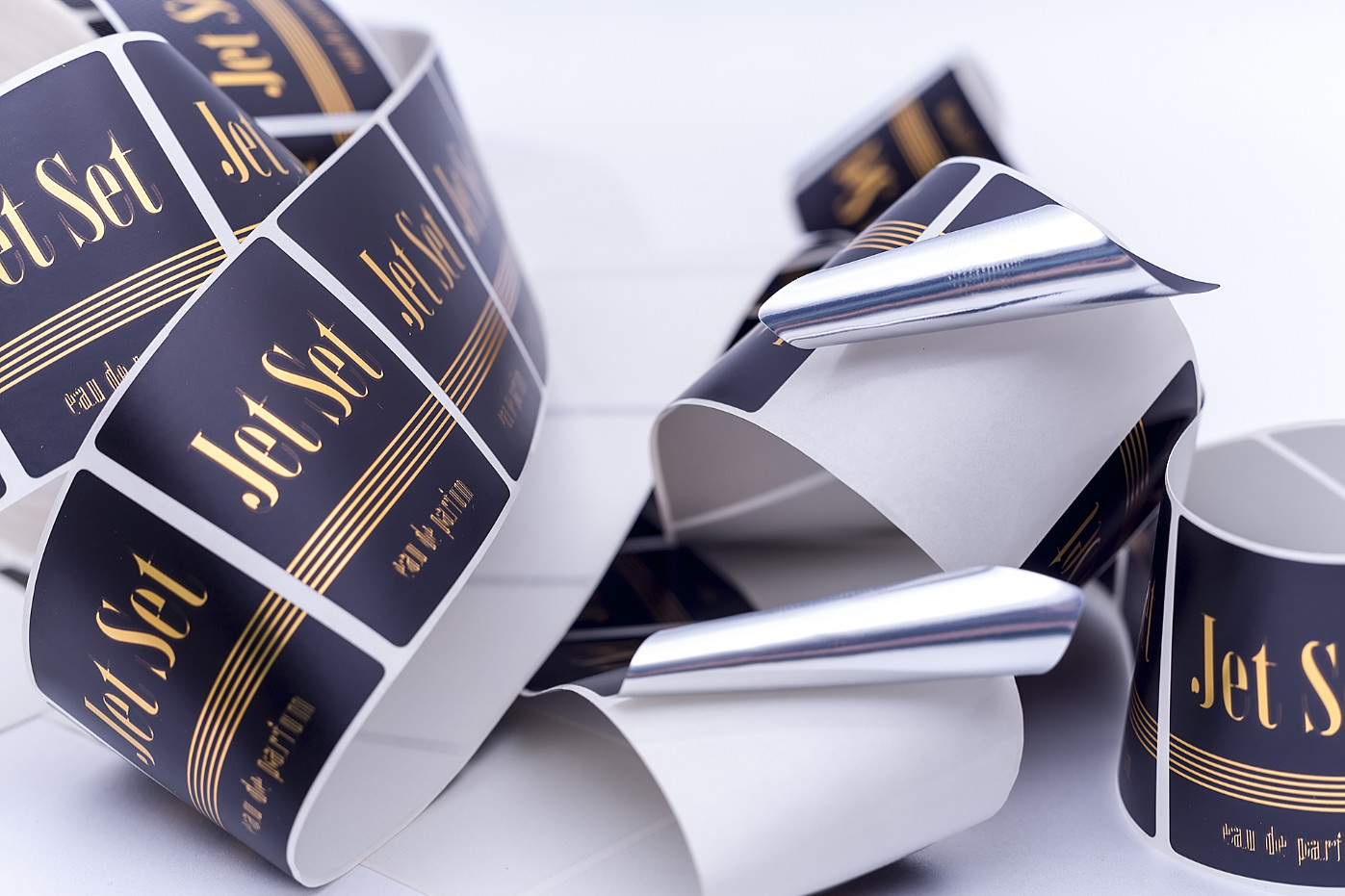
Classic foil stamping via thermal transfer of metallic foil. Intense shine and color depth that standard inks cannot achieve. For logos, borders, accent elements, and premium details.
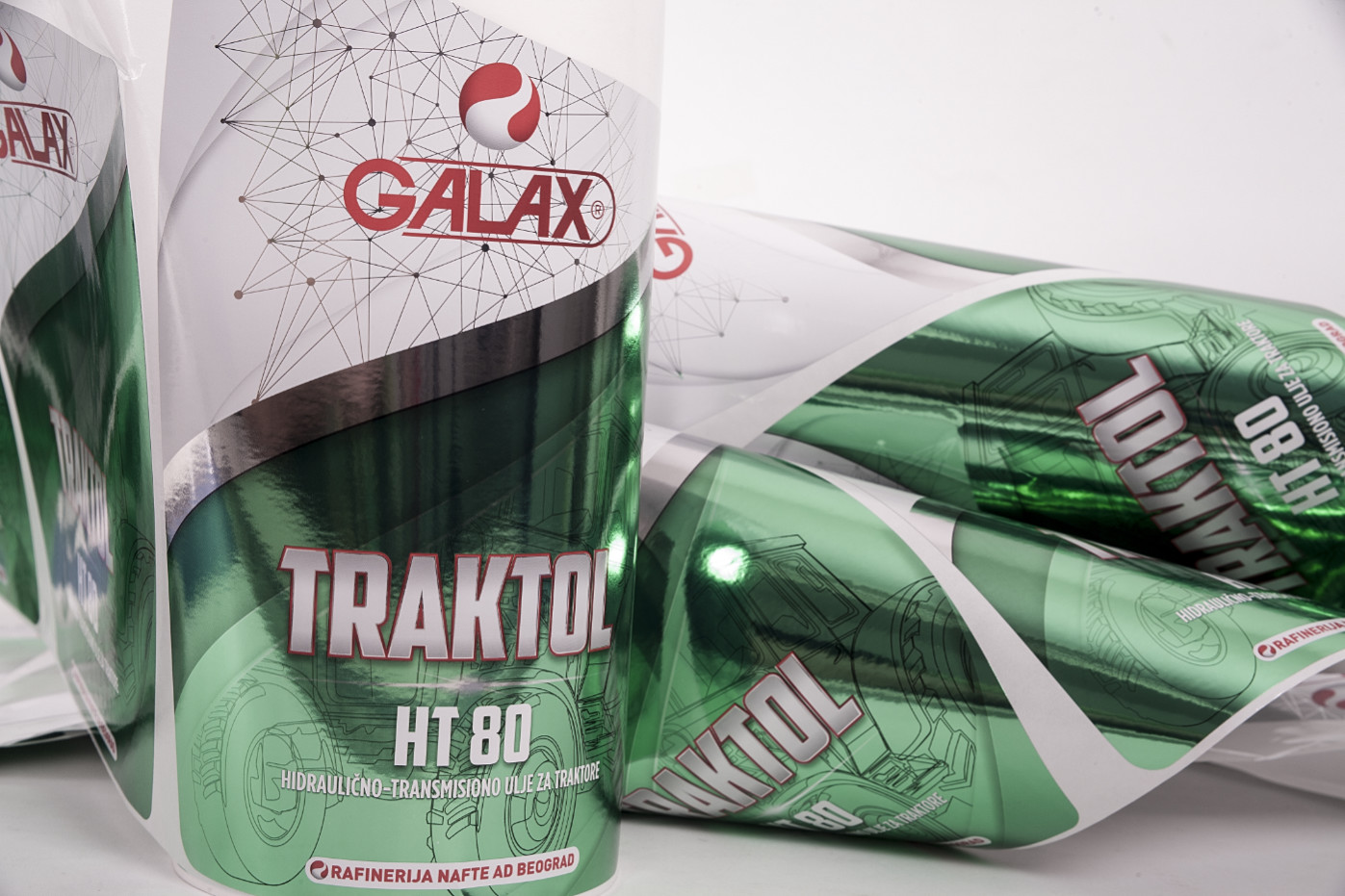
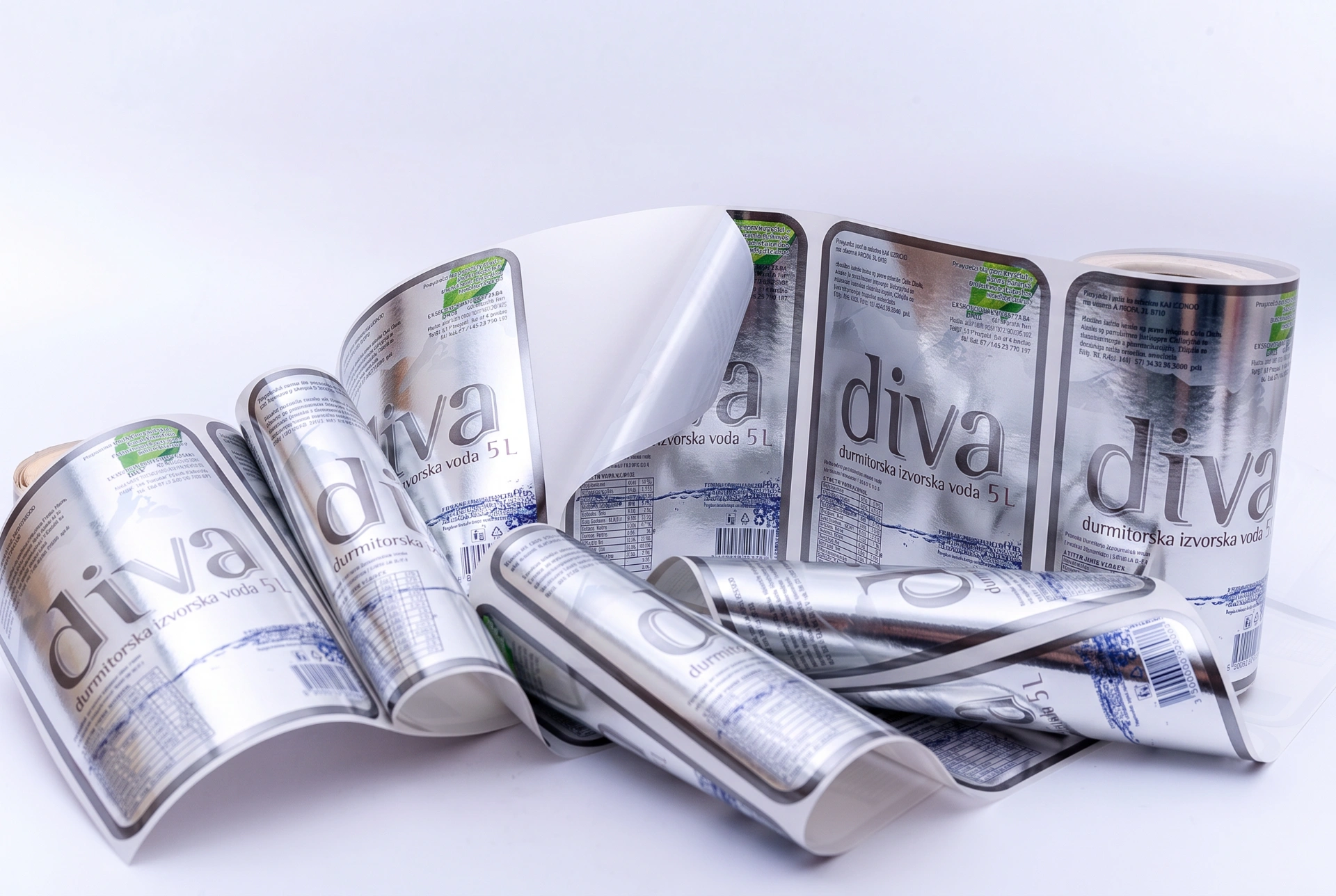
The foil is applied with adhesive on press, with no heat and no special tooling. Printing over the foil creates colored metallic effects: gold-red, silver-blue, hologram with color. Faster and more economical than hot foil for larger print runs.
Full gloss coating for an intense shine, matte coating for a premium texture, and spot UV coating that highlights the logo with a gloss/matte contrast on the same label. Soft-touch coating for a velvety feel under your fingers.
Holographic foils create an effect that shifts color depending on the angle of the light. They catch the eye on the shelf while also making counterfeiting harder. For premium brands, alcohol, cosmetics, and pharmaceuticals.
Foil stamping is a technique that transfers metallic foil onto a label, giving it a shine, depth, and prestige that standard inks cannot achieve. Combined with UV coating and spot effects, the label becomes a sales tool you can see and feel on the shelf.
Foil stamping (hot foil), cold foil, and UV coating can be used on their own or combined on the same label. Each technique brings a different visual and tactile effect. On MPS presses, multiple techniques are combined in a single pass, with no loss of register and no outside operations, which shortens production time and ensures consistency across the entire print run.
A metal die heated to a high temperature transfers metallic foil onto the label under pressure. The result is an exceptionally intense shine and reflection that is impossible to achieve with standard inks or metallic inks. Foils are available in gold, silver, copper, black metallic, hologram, and hundreds of other shades and effects.
Silver or holographic foil is applied with adhesive directly on press, with no heat and no special die-cutting tooling. The key advantage: printing happens over the foil in the same pass, so CMYK inks over the silver foil create colored metallic effects, gold-red, silver-blue, green metallic, hologram with a brand color.
Gloss UV coating gives an intense shine and color depth. Matte UV coating gives a premium texture and a soft feel. Spot coating combines gloss and matte on the same label, where the logo has a gloss finish while the background stays matte, or the other way around. Soft-touch coating gives a velvety feel under your fingers. All coatings are applied inline in the same pass as printing.
Thermal transfer of metallic foil under pressure
A heated metal die transfers the foil onto the label. The most intense reflection and the deepest metallic effect of all the techniques. The foil comes in a finished color (gold, silver, copper, black metallic, hologram) and cannot be recolored afterward. It requires making a die (tooling), but delivers unmatched prestige.
Foil applied with adhesive on press, printing over the foil
Silver foil is applied with adhesive inline, with no heat and no special tooling. The key advantage: CMYK inks are printed over the silver foil in the same pass, producing colored metallic effects in any shade. One silver foil, an unlimited range of metallic colors. More economical for larger print runs since there is no die cost.
Hot foil, cold foil, or UV coating? Send us your design file and describe the effect you want. We'll recommend the optimal technique or combination based on your design, material, print run, and budget. Many premium effects are more affordable than you'd think, especially cold foil for larger runs.
UV coating is the most accessible and most commonly used finishing technique. It's applied inline on an MPS press in the same pass as printing, so it doesn't extend lead time and has minimal impact on price. At the same time, it makes a dramatic difference in the label's visual and tactile impression. Full gloss coating deepens the colors and creates a wet-glass effect. Matte coating tones down the shine and gives a soft, sophisticated feel. Spot coating combines both effects on the same label.
A metallic effect on a label signals premium quality and sets a product apart on the shelf. Hot foil and cold foil are the two main techniques, each with specific advantages. Besides foils, metallic effects can also be achieved with metallic inks and metallized papers as more economical alternatives for print runs with a limited budget.
Foil stamping and advanced finishing have the greatest business impact in industries where the visual impression on the shelf directly influences the purchase decision. A consumer doesn't read the specification before picking up a product; the consumer sees the label first. If the label communicates premium quality through shine, metallic accents, and tactile texture, the product has an advantage before the consumer reads even the first line of text.
Foil stamping and UV coating require precise file preparation because the foil and the coating are applied as separate separations. An error in preparation means a misplaced foil element, coating bleed, or poor registration between the print and the foil. Here is what you need to know before you send your design.

Answers to the questions brand managers, designers, and procurement most often ask us about hot foil, cold foil, UV coatings, and holographic foils.
Hot foil uses a heated metal die that transfers metallic foil onto the label under pressure. It gives the most intense shine and the sharpest edges, but requires making a die for the design. Cold foil is applied with adhesive inline on press, with no heat and no die, and allows CMYK inks to be printed over the foil for colored metallic effects. Hot foil is the choice for premium logos and smaller print runs, cold foil for larger surface areas and larger print runs, where it's more economical.
Spot UV coating is applied only to selected elements of the label, while the rest stays matte or uncoated. The contrast between the gloss and matte surfaces highlights the logo, product name, or a graphic accent without extra colors or materials. The effect is visible at an angle to the light and can be felt under your fingers. It makes the strongest impression on a matte-coated background, where the gloss element literally jumps out of the label.
Yes, and it gives the most striking result. A logo in gold foil with a gloss spot coating over it, on a matte-coated background, creates three layers of visual contrast: metallic shine, gloss coating, and a matte surface. The combination is done in the same pass on an MPS press, with no extra cycles and no extended lead time.
Standard gold, silver, copper, and bronze, plus matte and gloss variants of each shade. Colored foils are also available (red, blue, green, black metallic), as well as holographic foils with an effect that shifts color depending on the angle of the light. With the cold foil technique, printing CMYK inks over silver foil produces a practically unlimited number of metallic shades tailored to your brand.
On coated papers, both gloss and matte, on PP and PET synthetics, as well as on textured and kraft papers. The structure of the substrate significantly affects the look: on smooth coated paper the foil is sharp and at its most reflective, on textured paper it feels more artisanal and warmer. For unusual materials, we run a test before full production to confirm foil adhesion.
Hot foil requires a metal die made to your design. This is a one-time cost; the die is kept and used for all future print runs of the same design at no extra charge. Cold foil doesn't require a die, since the foil is applied with adhesive over zones defined during prepress, which makes it better suited to designs that change often.
Define the elements that go to foil as a separate spot color on their own layer, in vector format (AI, EPS, or PDF with vectors). Leave a minimum of 1.5 to 2 mm of spacing between the edge of the print and the edge of the foil, because of a registration tolerance of about one millimeter. The same applies to spot coating zones. If you're not sure how to prepare the separations, send us the design as you have it; our prepress team will prepare them for you.
Yes. You receive a Star Proof with the foil and coating zones clearly marked. Foil is shown on the proof as a simulation, since a digital printer cannot reproduce metallic reflection, but on it you check the position, size, and relationship of the foil elements to the print, as well as the spacing that affects registration. Production starts only after your written approval.
It depends on the technique, the surface area covered by the foil, and the print run. Hot foil has a one-time die cost plus the price of the foil per piece, so the larger the print run, the lower the per-piece cost. Cold foil has no tooling cost, but requires a cold foil unit on the press and pays off on larger surface areas. UV coating is the most economical finish, since it's done inline in the same pass as printing. Send us your specification and you'll get an exact per-piece calculation for each option.
For a first order with hot foil, plan on additional time for making the die for your design. For cold foil and UV coating, the lead time is the same as for standard labels, since the finish is applied inline in the same pass as printing. For repeat orders, the lead time is shorter, since the die, cutting die, and prepress preparation already exist. If you're working against a tight deadline, mention it in your inquiry so we can align the production schedule.
Send us your design file and describe the effect you want: classic gold, pink metallic, hologram, a spot gloss/matte contrast, or a combination of all of them. We'll recommend the optimal technique based on your design, material, print run, and budget. You'll get a quote within 24 hours.