Ibarski put 31, Nevade, 32300 G.Milanovac, Srbija
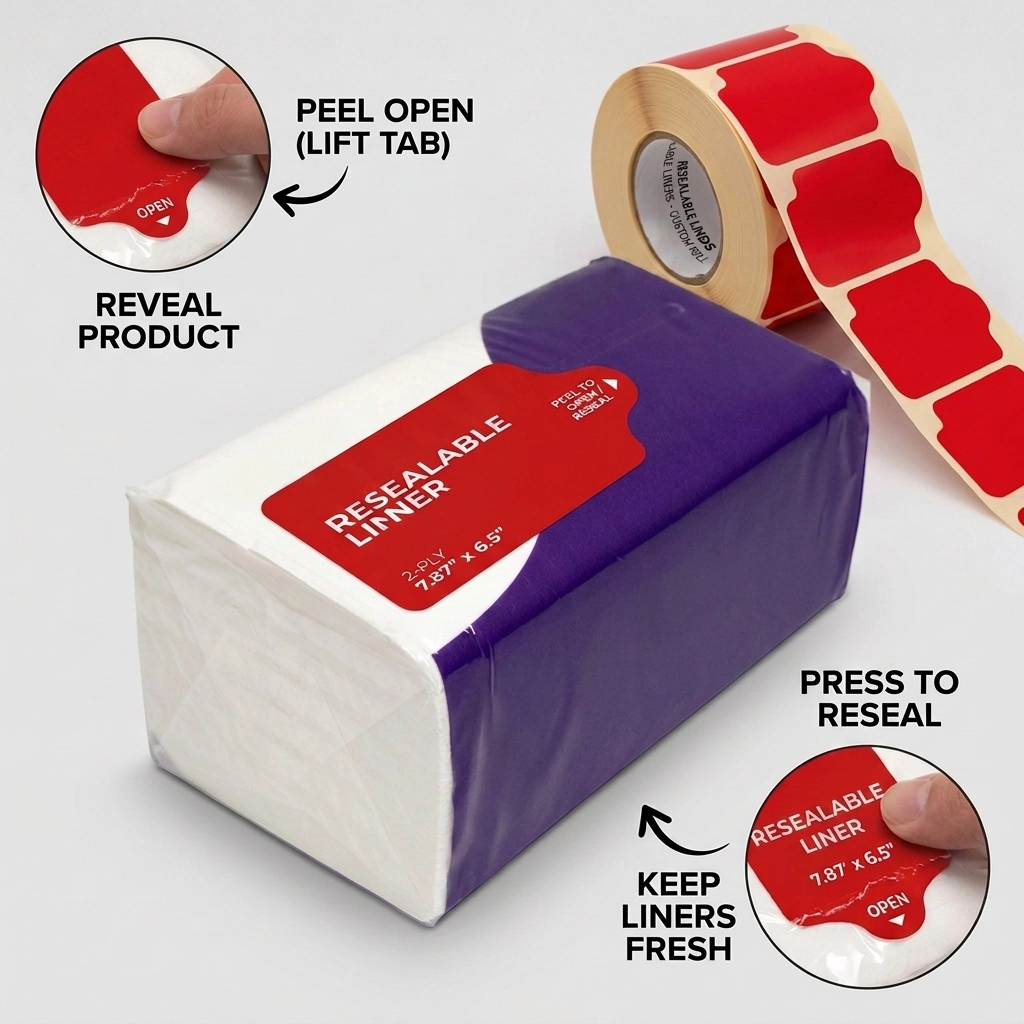
Functional self-adhesive labels that serve as a package closure. The consumer lifts the label, accesses the product, puts it back, and reseals the package. Hundreds of opening and closing cycles without losing tack, a replacement for plastic lids and zip closures.
Reclosure adhesive for repeated opening without losing tack. Preserves freshness, moisture, and package seal integrity throughout the product's shelf life.
Less mass, less plastic, simpler application on the line. Mono-material packaging for easier recycling under EU regulations.
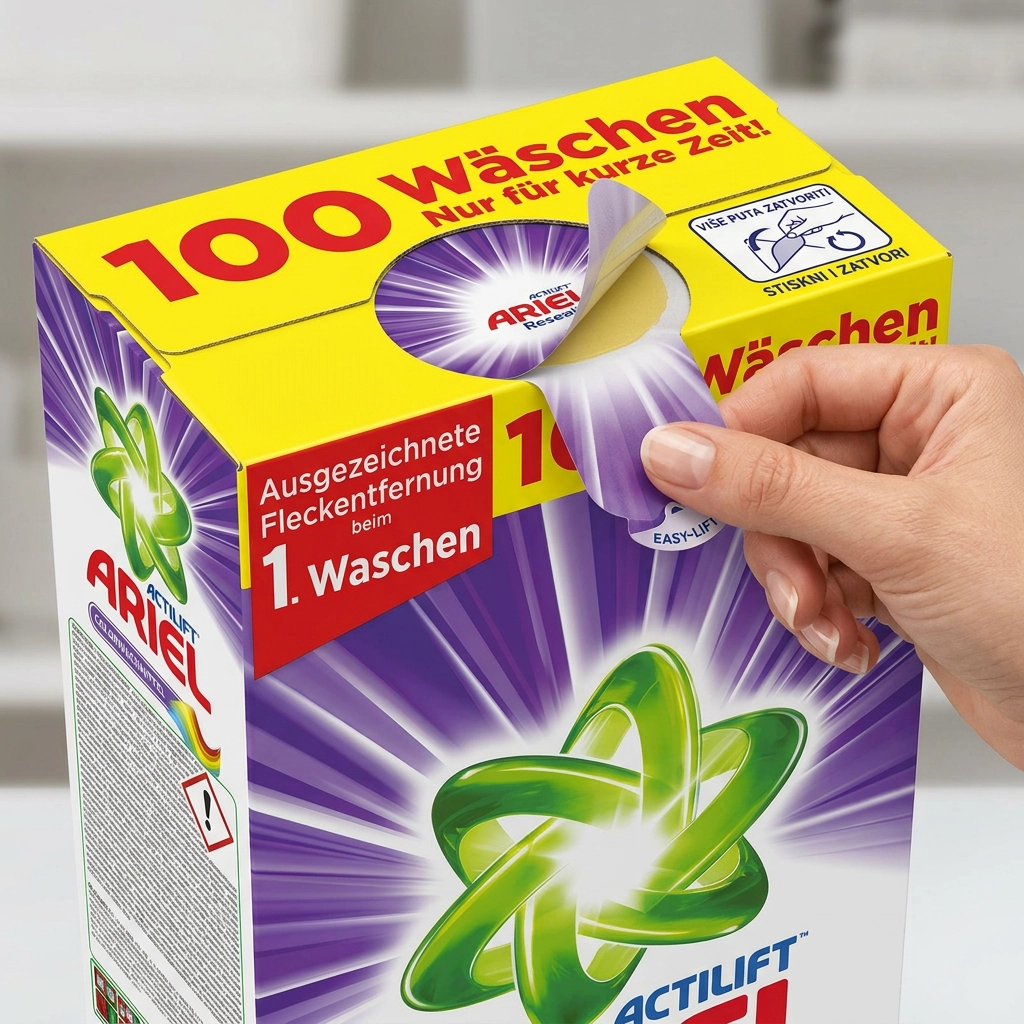
Wet wipes, snacks, coffee, pasta, confectionery, household chemicals. Wet and dry applications, different adhesive formulations.
Flexo printing with your logo, design, and brand messaging. The consumer sees your brand every time they open it. Tamper evidence available on request.
Four components make up the open-close system: a tear-resistant facestock film, a reclosure adhesive for repeated closing, a pull tab for intuitive opening, and a precise die-cut that defines the package opening.
Open-close labels cover two basic packaging types: wet products (wipes, medical materials) and dry products (food, coffee, snacks). The construction is adapted to the requirements of each mode.
| Feature | Wet Application | Dry Application |
|---|---|---|
| Typical Products | Wet wipes (hygiene, baby, cleaning), medical swabs, cosmetic wipes, industrial cleaning cloths | Whole bean and ground coffee, snacks, nuts, pasta, cereal, confectionery, dried fruit |
| Key Function | Prevents the contents from drying out, keeps wipes moist throughout the package's shelf life | Preserves freshness, keeps out moisture and air, extends shelf life |
| Adhesive Requirement | Resistant to moisture and liquids, does not lose tack in contact with wet contents, high resistance to curling | Resistant to greasy and powdery residue, retains tack on dry surfaces after repeated opening |
| Film Requirement | High resistance to tearing and puncturing, a moisture barrier, flexibility for frequent bending | Mechanical durability, an optional transparent window (product display), an aesthetic finish |
| Seal Integrity | Critical, any moisture leak shortens the usable life | Important for aroma retention (coffee) and freshness, less critical for dry snacks |
| Replaces | Plastic rigid lids on wipes packaging | Zip closures, clips, wire ties, tear-strip aluminum foil |
| Environmental Advantage | Mono-material packaging (film and label from the same material), easier to recycle than a plastic-plus-lid combination | Less plastic than zip closures, smaller packaging, reduced waste |
Both modes, one printer. Whether you are packaging wet wipes or dry food, the specification starts from the same place: describe the product, the packaging, and the expected number of openings, and we will recommend the construction.
An open-close label is not just a sticker with a special adhesive. It is a functional system in which the film, the adhesive, the pull tab, and the die-cut have to work together through hundreds of opening cycles. A flaw in any one component means a package that does not hold, contents that dry out, or a frustrated consumer.
The reclosure adhesive is the key component. Unlike a permanent adhesive that holds forever or an easy-release adhesive meant to come off once, reclosure adhesive has to work in both directions: it separates cleanly when the consumer opens the label and bonds reliably when the consumer closes it, hundreds of times, without degrading.
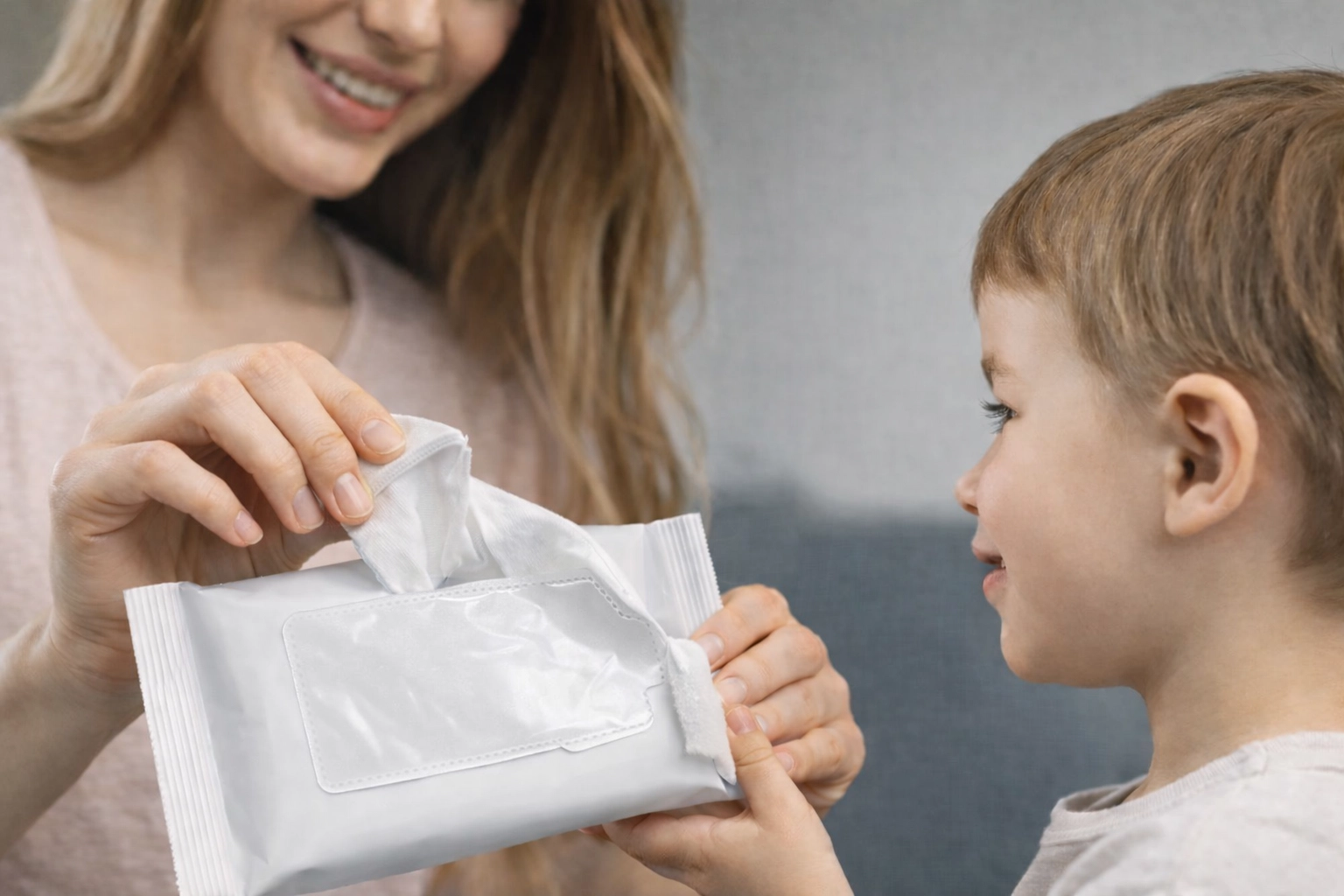
Wet wipes are the largest market for open-close labels. Every wipe that dries out before use is a lost product and a frustrated consumer. A quality reclosure label prevents moisture from evaporating throughout the package's shelf life, even when the package is opened several times a day.

For food products consumed over multiple servings, an open-close label replaces zip closures, clips, and tear-strip aluminum foil. The consumer opens the package, takes a portion, closes the label, and keeps the rest fresh. No extra tools, no transferring contents into another container.
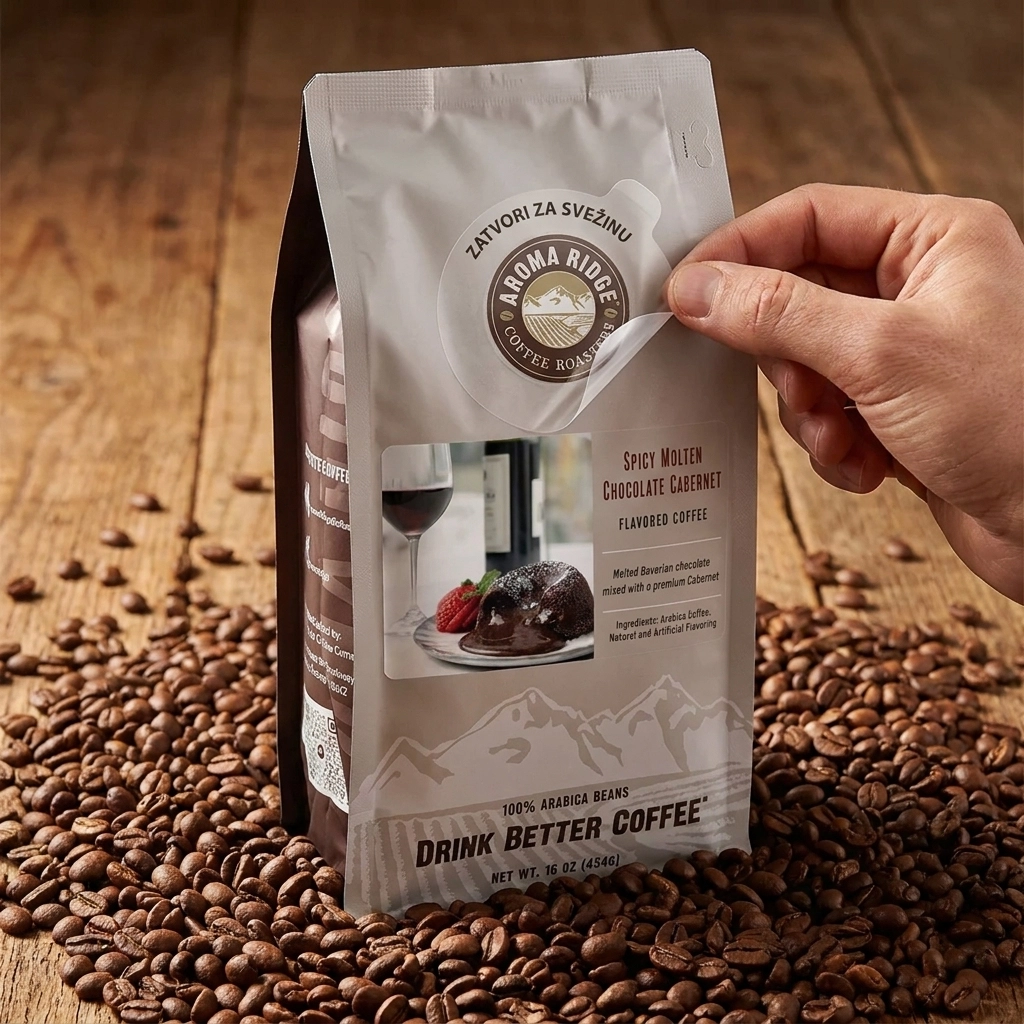
An open-close label is not just a functional closure. It is a branding surface that stays in front of the consumer throughout the product's shelf life. Every opening is a touchpoint with the brand. At the same time, replacing plastic lids and zip closures reduces the total amount of plastic in the packaging.
Answers to the questions manufacturers of wipes, food products, and packaging ask us most often about reclosure labels.
The reclosure adhesive is designed for hundreds of opening and closing cycles without losing tack. The exact number depends on the type of adhesive, the packaging material, and the conditions of use. For wet wipes that are opened several times a day over weeks, the label functions reliably throughout the product's shelf life. For dry applications (coffee, snacks), where opening is less frequent, the adhesive lasts far longer than needed.
Yes, that is its primary function in wet applications. The reclosure adhesive for wipes is formulated to retain adhesion in the presence of moisture and vapor. If the label is closed properly after each use (press and seal), the contents stay moist from the first opening to the last. The quality of the seal depends on the combination of the film, the adhesive, and the precision of the die-cut opening, so it matters that all three components are engineered together.
Tamper evidence is visual proof that a package has not been previously opened. It can take the form of a perforation that tears on first opening, a visual indicator that changes color, or a destructible element that cannot be returned to its original state. After the first opening, the label continues to function as a reclosure closure for every use after that. This matters for retail because the consumer can see that the product is an unopened original.
Most often PP (polypropylene) for wet applications, since it resists tearing, moisture, and repeated bending. PET (polyester) is used for dry applications where mechanical rigidity, a glossy finish, or a transparent window for product display is needed. For mono-material packaging, where the label is made from the same material as the packaging film (for example, a PP label on PP film), the entire package goes into recycling without separation.
Yes. Rigid plastic lids on wipes packaging cost more, are harder to recycle, and require a separate step in packaging (fitting the lid on the line). An open-close label is applied in the same step as a standard label, with no additional fitting equipment. The result is less packaging mass, less plastic, a simpler process, and mono-material packaging suited for recycling. Large wipes manufacturers are increasingly switching to reclosure labels for exactly these reasons.
Yes. Open-close labels for food use adhesives and films that comply with food contact regulations. Applications include whole bean and ground coffee, snacks, nuts, pasta, cereal, confectionery, and dried fruit. The adhesive does not transfer onto the food and does not affect the product's taste or smell. For coffee packaging, the adhesive is also resistant to oils and aroma. Tell us the type of food in your inquiry so we can recommend the right adhesive.
Yes. An open-close label is printed using the flexo process in full color, up to 9 colors in a single pass, including Pantone spot colors, a white base on transparent material, and a UV protective coating. The entire surface of the label is branding space with your logo, design, and messaging. Unlike a plastic lid, which is visually neutral, an open-close label carries your brand, and the consumer sees it every time they open the package.
It is applied on your existing packaging line the same way as a standard self-adhesive label. It comes on a roll, on a core matched to your applicator's specification. The only difference is that the label has to be positioned precisely over the die-cut opening in the package. For new implementations, we recommend a trial run to tune the applicator's parameters (position, pressure, speed). Tell us the type of line and applicator in your inquiry so we can confirm compatibility.
The minimum depends on the label dimensions, the type of film, the adhesive, and the number of colors. Open-close labels are produced using the flexo process, where the economics favor medium and larger print runs. For smaller quantities, we will discuss the options openly and suggest an alternative if the economics do not work in your favor. Send us your specification with dimensions, product type, and approximate quantity, and you will get a quote within 48 hours.
For a first order, plan on 7 to 12 business days from proof approval, depending on the complexity of the construction and the type of material. For repeat orders with saved parameters, the lead time is shorter because the die-cutting tool and prepress setup are already done. If you are working against a tight deadline, note it in your inquiry so we can check capacity availability and schedule production around your timeline.
Tell us the product type (wet wipes, food, coffee, or other), the packaging dimensions, and the expected number of openings. We will recommend a film, adhesive, and die-cut construction with a per-unit cost calculation. Quote within 48 hours.