Ibarski put 31, Nevade, 32300 G.Milanovac, Srbija

Request a Quote
SR | EN
Sustainable label production: FSC-certified materials and liner recycling
Sustainability and Quality

Responsibility that is
measured, not declared

For us, sustainability is not a marketing phrase; it is concrete processes, certified standards, and traceable materials. From FSC™-certified paper sourced from responsibly managed forests, through ISO quality and environmental management systems, to daily waste control and workplace safety.

ISO 9001:2015 Quality · QS-0612 · StandCert · valid through January 2028
ISO 22000:2018 CAT 1 Food Safety · FS-0008 · StandCert · valid through January 2027
ISO 14001:2015 Environment · ES-0309 · StandCert · valid through January 2028
FSC™ Chain of Custody BV-COC-221179 · Bureau Veritas · valid through October 2030
01Responsible Supply Chain

From responsible suppliers to recycled raw material, the entire chain is traceable

Sustainability starts before the material enters the plant and doesn't end when the label leaves the warehouse. We choose suppliers with certified processes, use FSC-certified papers, keep scrap to a minimum, and sort all waste by type at the point where it is generated.

Štamparija RP commits to acting responsibly toward the environment in all business activities. Environmental protection is everyone's responsibility, from the owner to every employee on the floor, and this is not a sentence from a document but a work routine you can see on the shop floor.
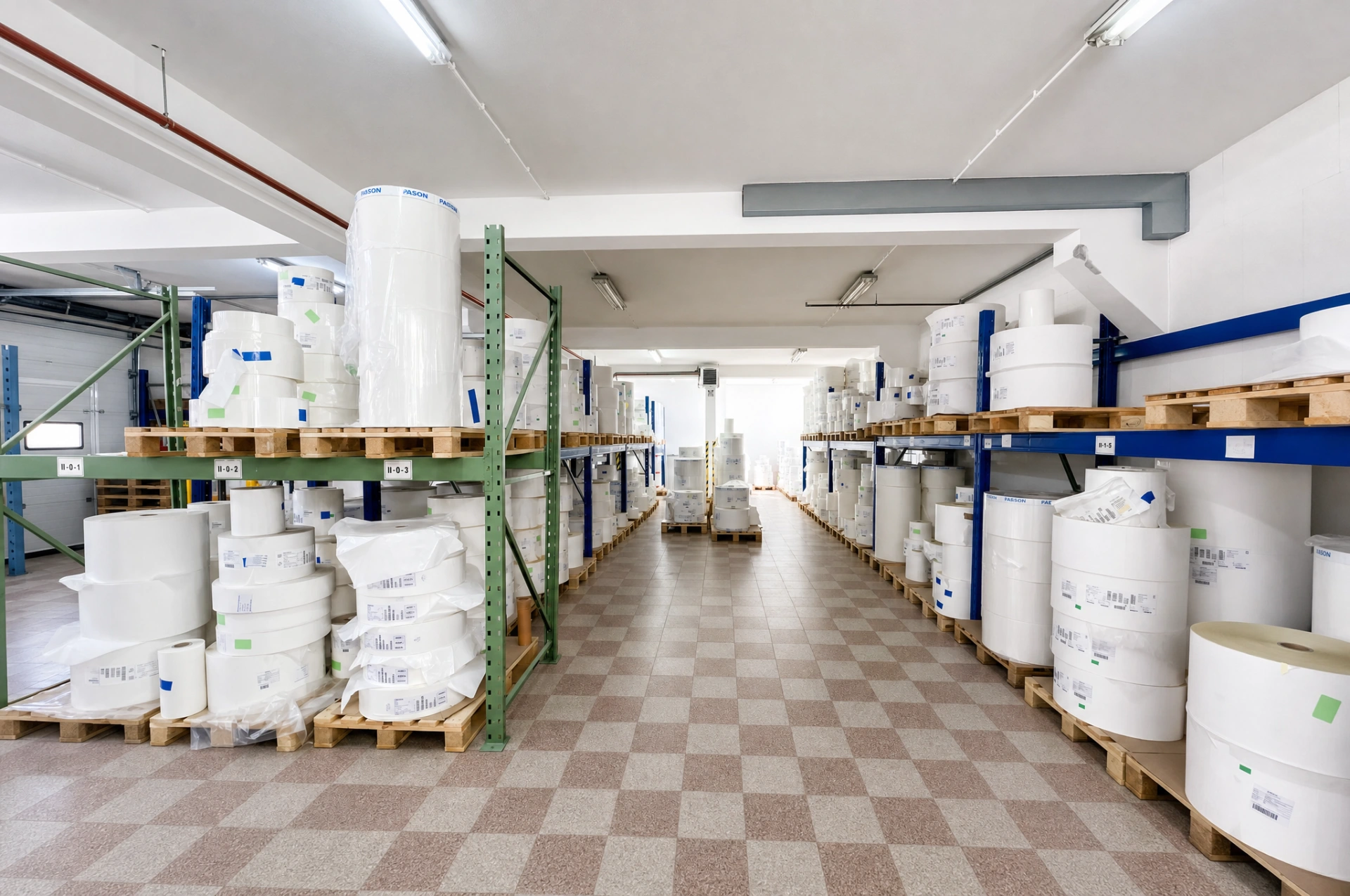
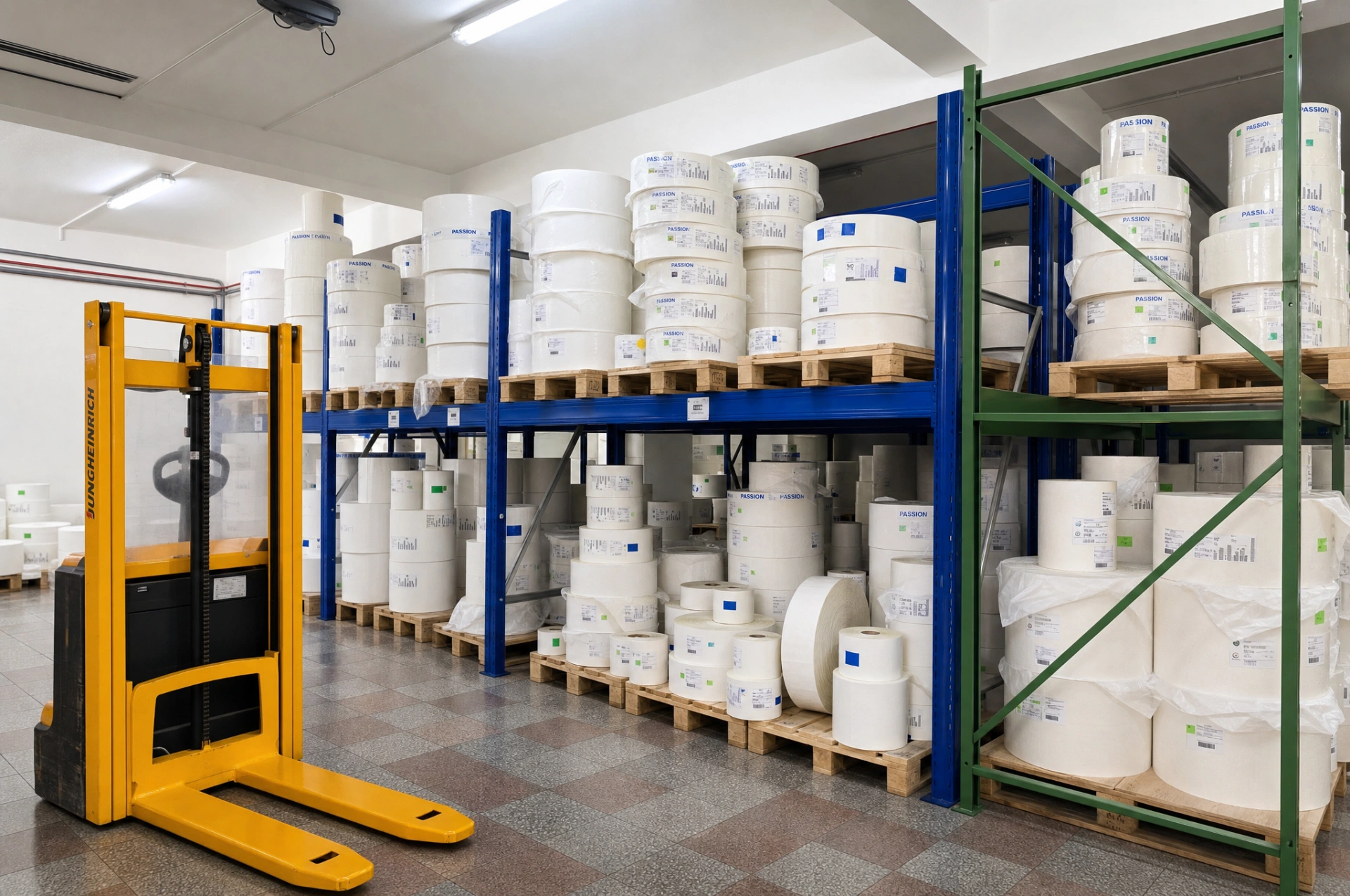
Štamparija RP material warehouse with rolls of self-adhesive material on pallet racks
Certified material suppliersWe source materials from leading European manufacturers: Raflatac (Finland), Fasson (Germany), Tores (Spain), and Intercoat (Germany). All of them hold their own environmental certifications, and FSC-certified papers are available to any customer who needs them for their own chain of responsibility.
Stock levels that reduce the number of deliveriesFour warehouses, for materials, finished products, cores, and ribbons, mean material is ordered in full quantities instead of in urgent partial deliveries. Fewer deliveries means fewer kilometers per square meter of printed material.
Scrap is reduced before it happensMost waste material is generated at job startup, before the colors come into register. Automatic register control on the printing lines shortens that part, and good file preparation in prepress removes the reasons for restarting the job.
Label layout on the webLabels are arranged on the web to use as much of the material's width as possible. A few millimeters per row, over a print run of several million labels, means fewer rolls of material per job.
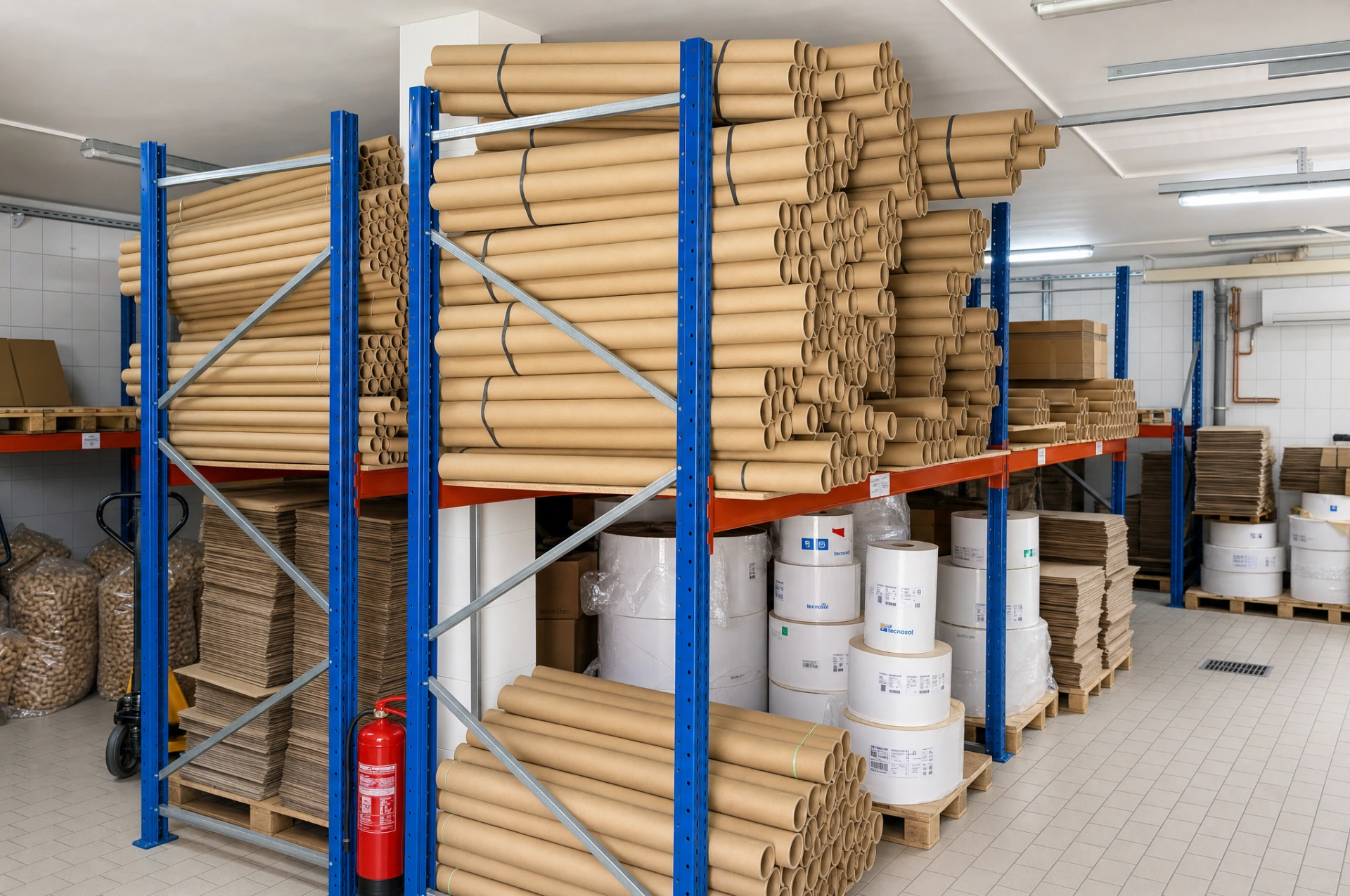
Cores are returned to circulationCardboard cores with a diameter of 40 and 76 mm are kept in a separate warehouse. Sound ones are reused, and damaged ones go into paper waste, which is one of the categories we sort and hand over for recycling.
A label that doesn't complicate recyclingWhen the nature of the product allows it, we recommend a material that matches the packaging. A polypropylene label on polypropylene packaging and a PET label on PET packaging go into recycling together with the packaging, without separating the label.
02Waste Sorting

Waste is separated where it is generated, not afterward

Most of the waste in a label printing plant is generated at the press: silicone liner, trimmed material edges, used ribbon, doctor blades, and photopolymer plates. If all of that is mixed into one container, none of it can be recycled anymore. That's why sorting is the first step, and it happens immediately.

In front of the plant stand four labeled bins for paper, plastic, metal, and glass. In the covered and fenced area stand drums with clear labels for each type of production waste. When every type has its own place, sorting stops being a matter of goodwill and becomes a habit.
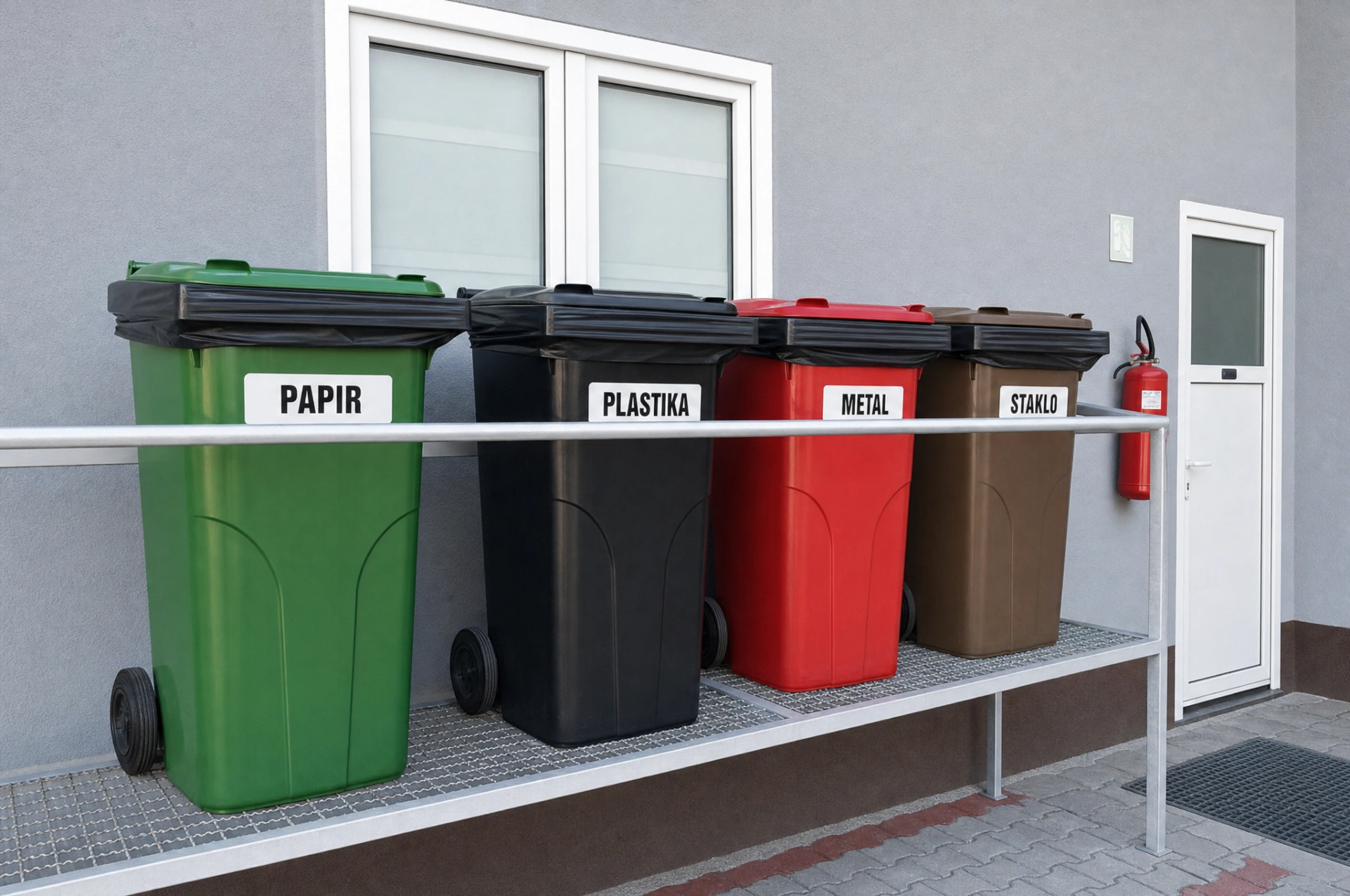
Four labeled waste-sorting bins in front of the Štamparija RP plant: paper, plastic, metal, and glass
Four bins, four streamsPaper, plastic, metal, and glass, each bin labeled and placed along the path employees already walk. Sorting that isn't within arm's reach doesn't happen, so the placement of the bins matters just as much as their existence.
Drums for production wasteSeparate drums are labeled RIBBON, DOCTOR BLADES, and PLASTIC AND PHOTOPOLYMER. Each type has its own drum, so at handover it's known exactly what is being handed over, in what quantity, and to whom. Without labels, mixing is only a matter of time.
Silicone liner, the largest single streamThe liner left behind when the label is removed from the web is the largest single source of waste in the label industry. At our plant it is sorted on-site, baled, and handed over for further processing, instead of ending up as mixed waste from which nothing is recovered.
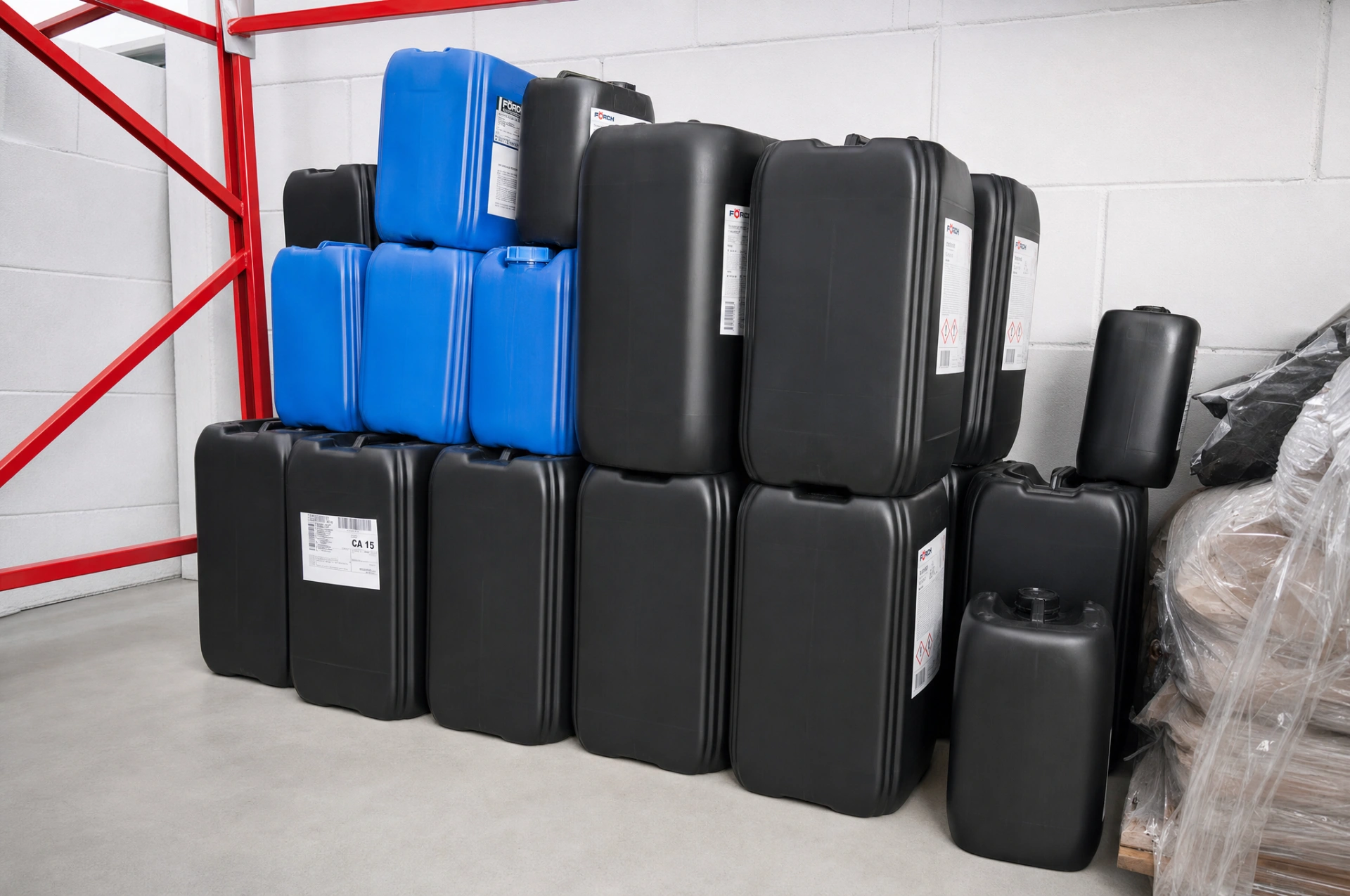
Packaging from inks and chemicalsContainers from inks, varnishes, and washing agents do not go with ordinary waste. They are stored separately, on pallet racks, with a label on every container, and handed over to a licensed operator authorized for that type of waste.
Covered and fenced storageThe temporary waste storage area is covered, fenced with a mesh gate, and marked with a warning sign. Waste is not left out in the open, doesn't get rained on, and isn't scattered by the wind, so no category degrades before it is handed over.
Order in waste handling is also a fire-safety measurePaper, films, and washing agents are highly flammable materials. That's why the waste storage area has fire extinguishers within reach and is kept tidy. Waste stored in an orderly way is both an environmental and a fire-safety measure.
03From Waste to Raw Material

Baler, bale, pallet, licensed operator

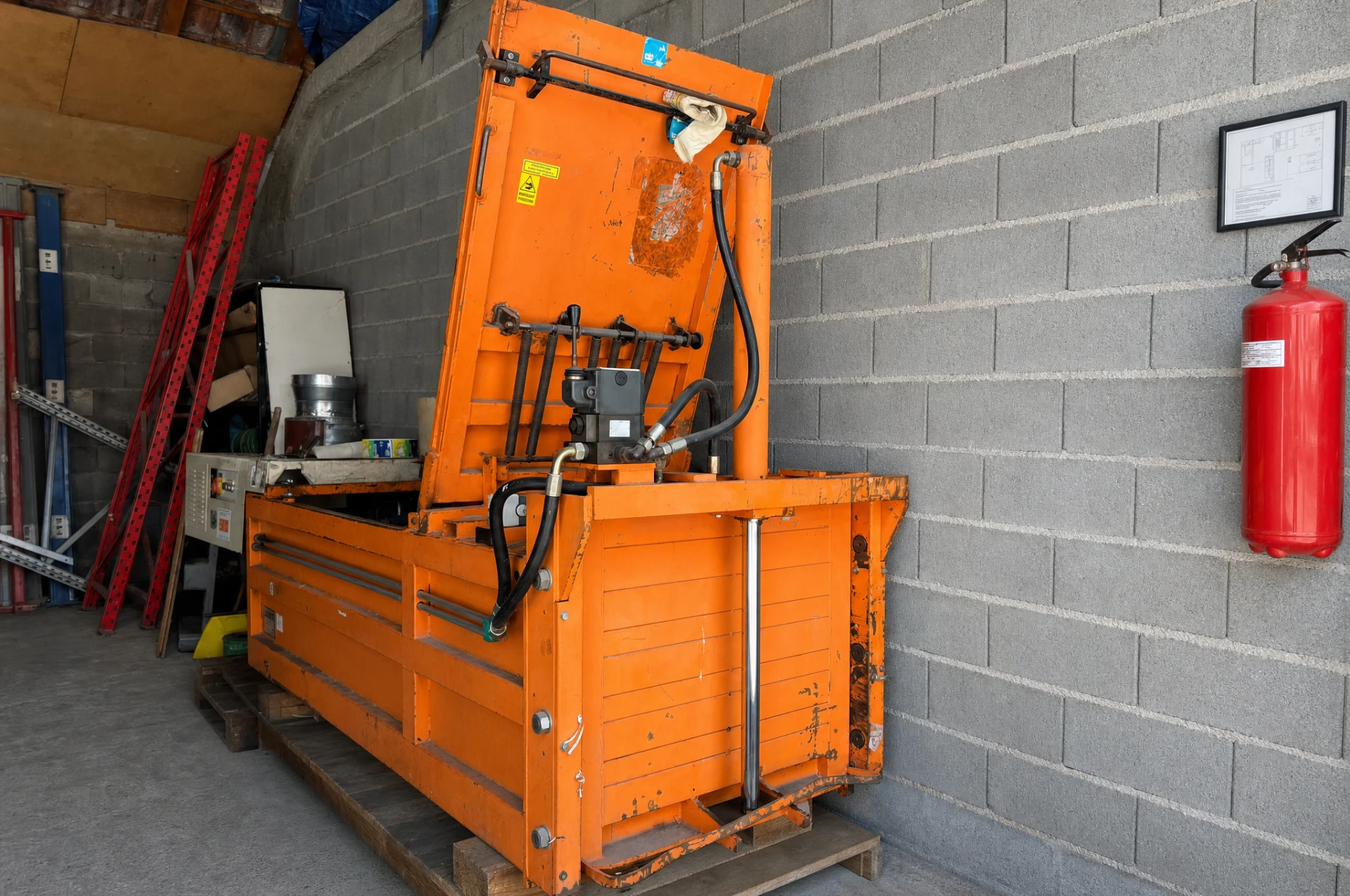
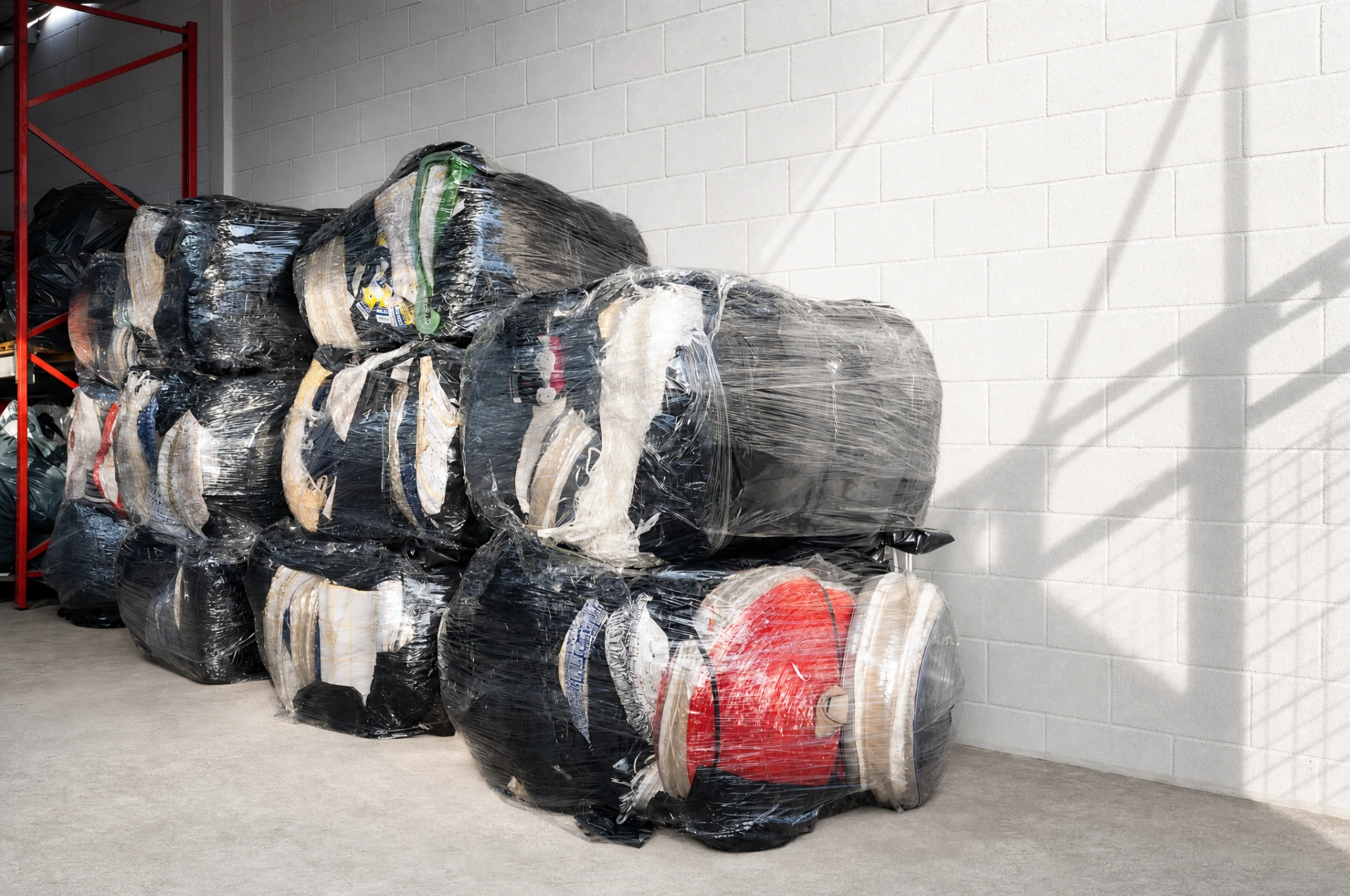
Sorted waste goes into a baler that stands right in the plant. It is baled, wrapped in film, and stacked on pallets. A bale takes up many times less space than loose waste, doesn't scatter around the yard, and is loaded all at once, so the trip to the recycler is shorter and less frequent.

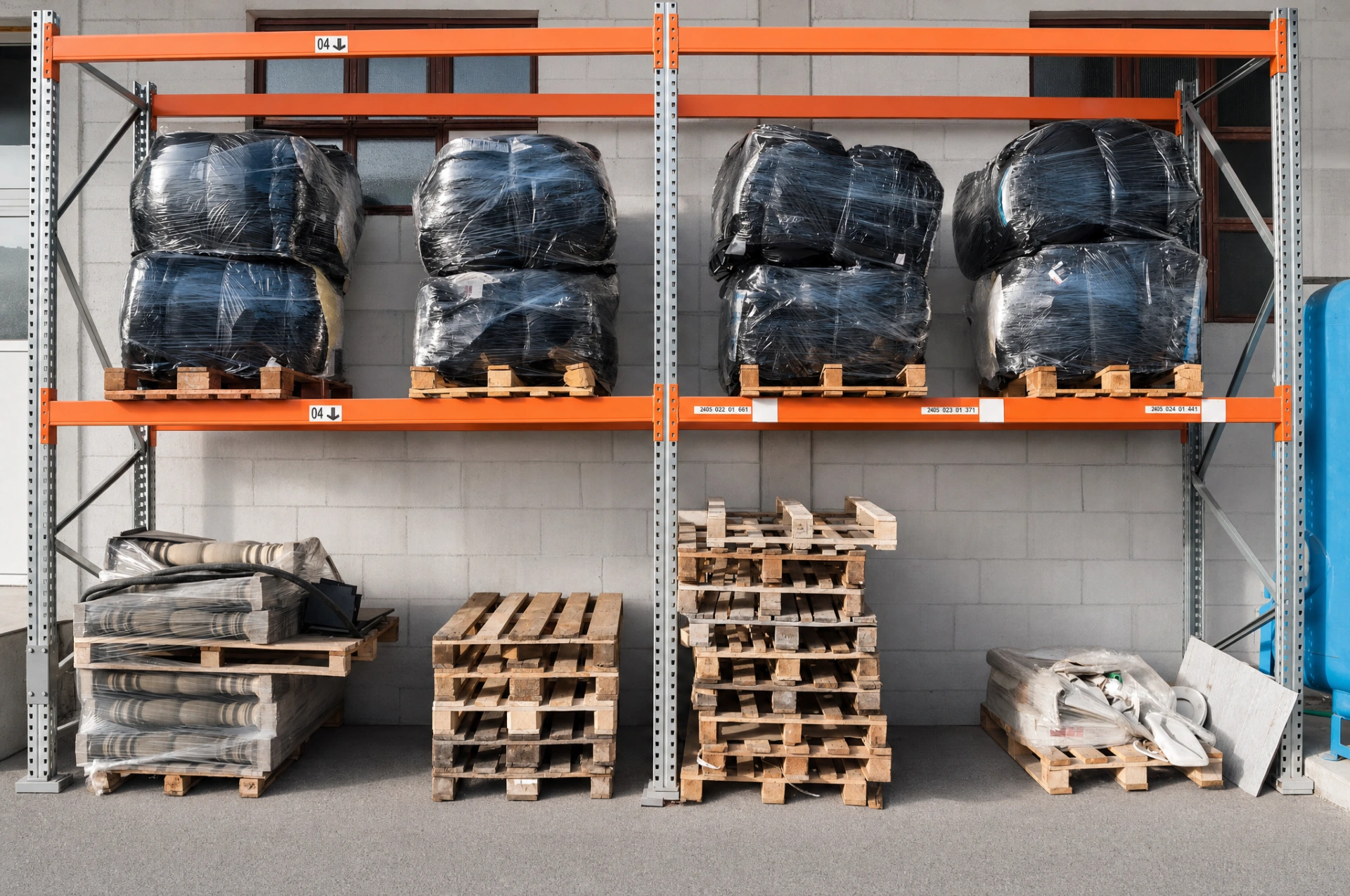
Bales are kept on pallet racks in a covered area until a full load is collected. The waste is then picked up by a licensed operator, with documentation that stays in our records and serves as evidence within our ISO 14001 management system.
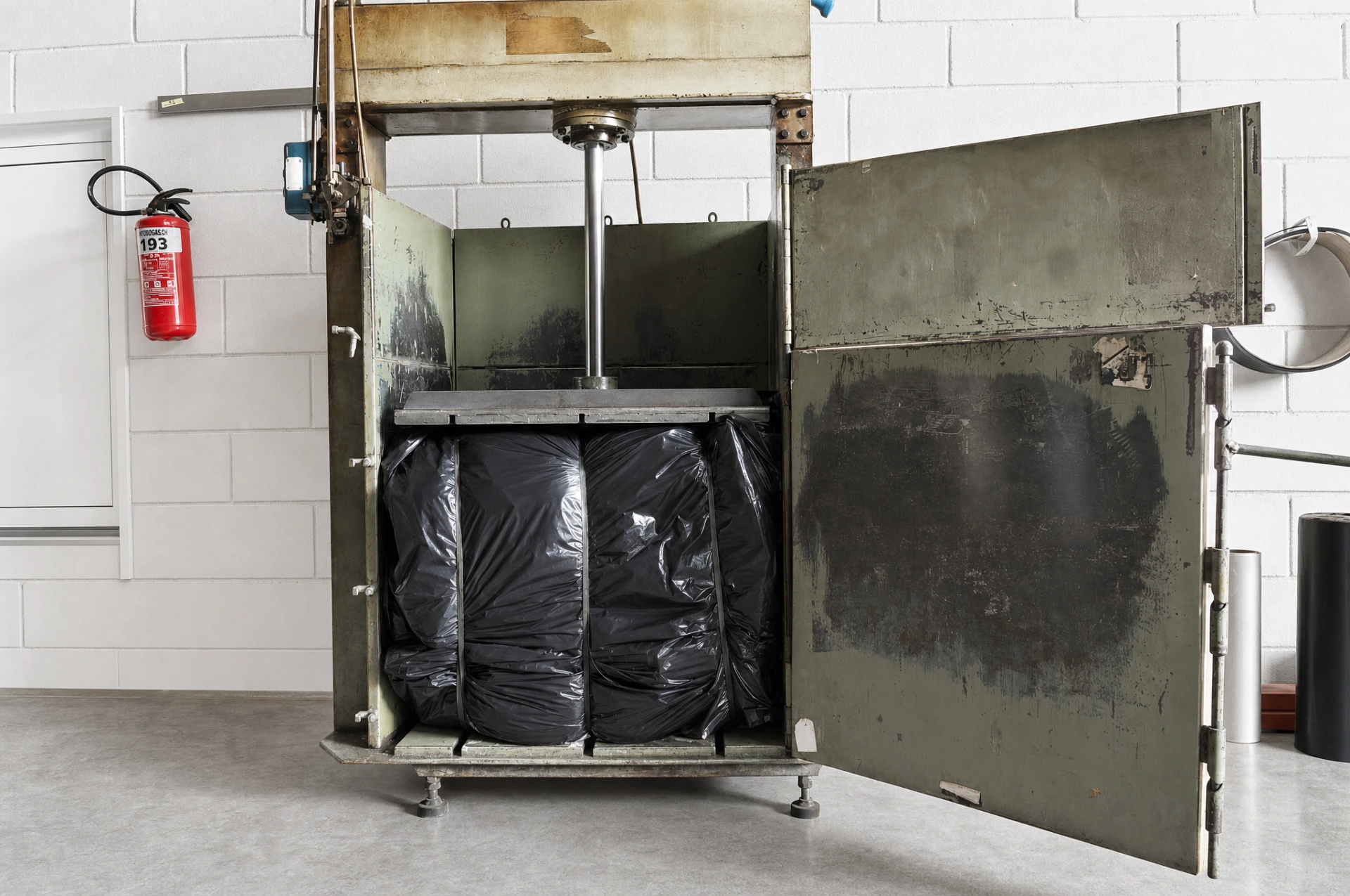
An open waste baler at the Štamparija RP plant, with a fire extinguisher on the wall
The baler is on-site, not somewhere elseWaste is baled on the spot, in our own baler. There is no hauling of loose material and no containers traveling half-empty, which is the most expensive and environmentally costliest way to move waste.
A bale instead of loose wasteA baled and wrapped bale is stable, doesn't dirty the space, and can be stacked to height. The same amount of waste takes up several times less space, so it can be stored in the same area until a full load is reached instead of being hauled away in parts.
Waste on racks, just like materialBales go on pallets, pallets go on racks. The waste storage area is organized on the same principle as the material warehouse, with the same order and the same visibility, so at any moment it's clear how much of each type there is and when to call the operator.
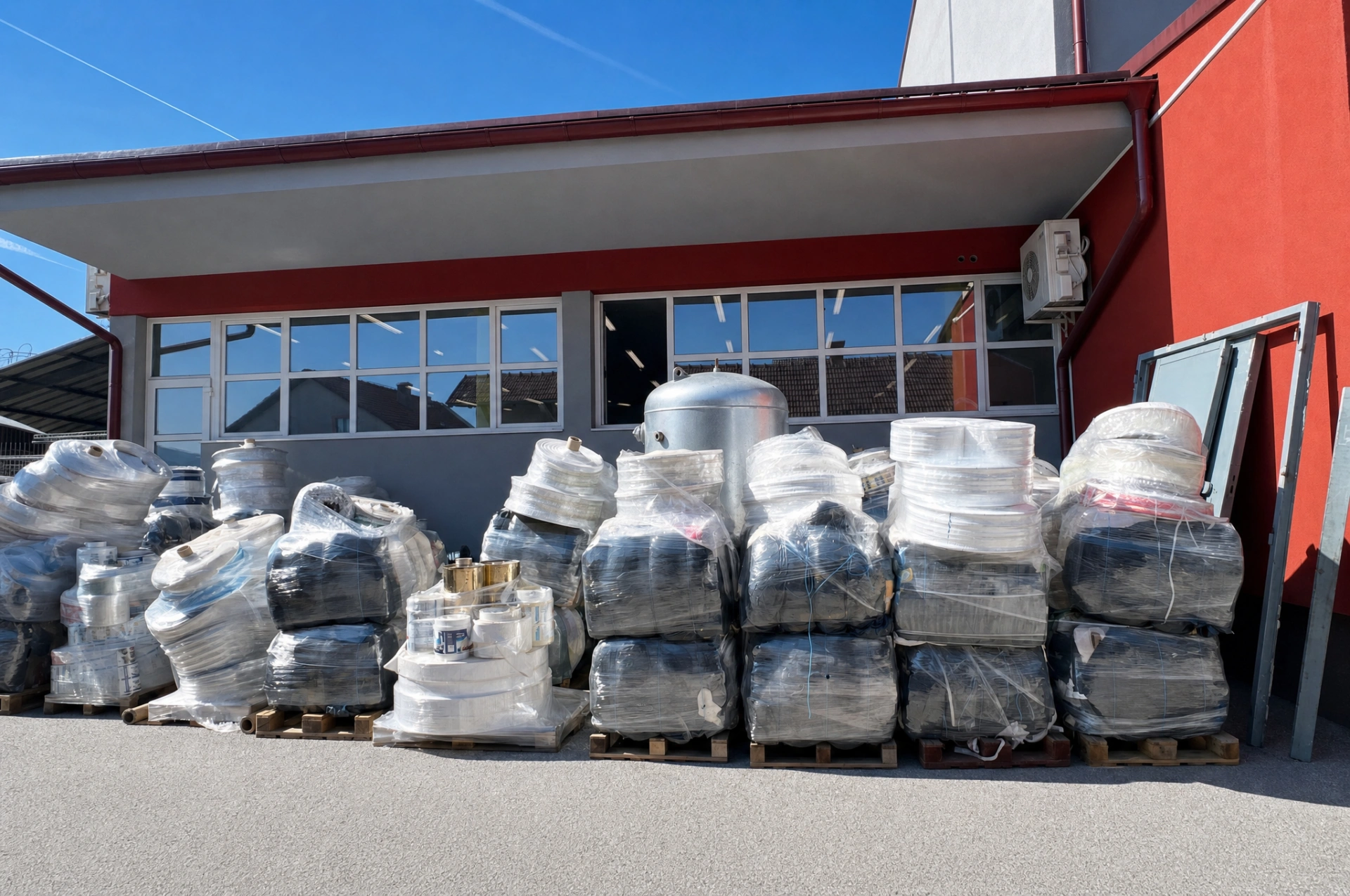
A full load, fewer tripsWaste is handed over when a full load has been collected, not when a pile has built up. Fewer truck trips mean less fuel and fewer emissions per ton of waste handed over, which is part of the same calculation as recycling itself.
Handover to a licensed operatorEach category is handed over to an operator licensed for that specific type of waste. The handover documentation goes into our records and is part of the evidence the environmental management system requires at every audit.
Records that show where to improveWhen quantities are tracked by waste type, it becomes visible where they're increasing and why. Then the cause is sought in the process instead of just hauling the waste away, and that's the difference between measuring and making excuses.
04FSC™ Chain of Custody

Paper with traceable origin, from the forest to your label

FSC™ Chain of Custody certificate number BV-COC-221179 confirms that the paper we use comes from responsibly managed forests, with full traceability. The certificate was issued by Bureau Veritas Certification under standard FSC-STD-40-004 V3-1, valid from October 5, 2025, to October 4, 2030.

For your brand, the FSC™ mark on a label means joining a chain of trust recognized by the most demanding European retail chains. Many of them require FSC-certified material from suppliers as a condition for listing a product, so this is increasingly a matter of market access, not just image.

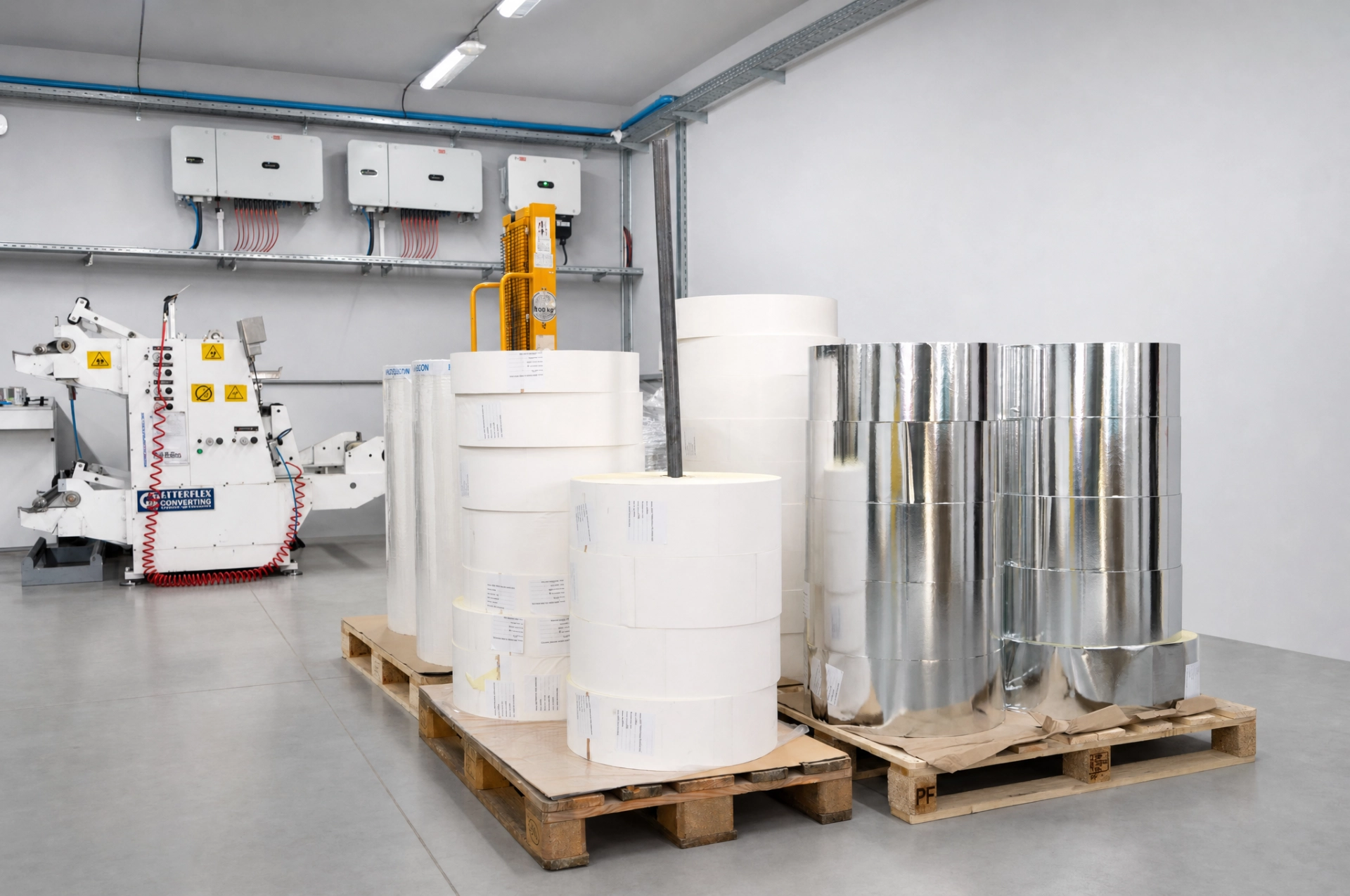
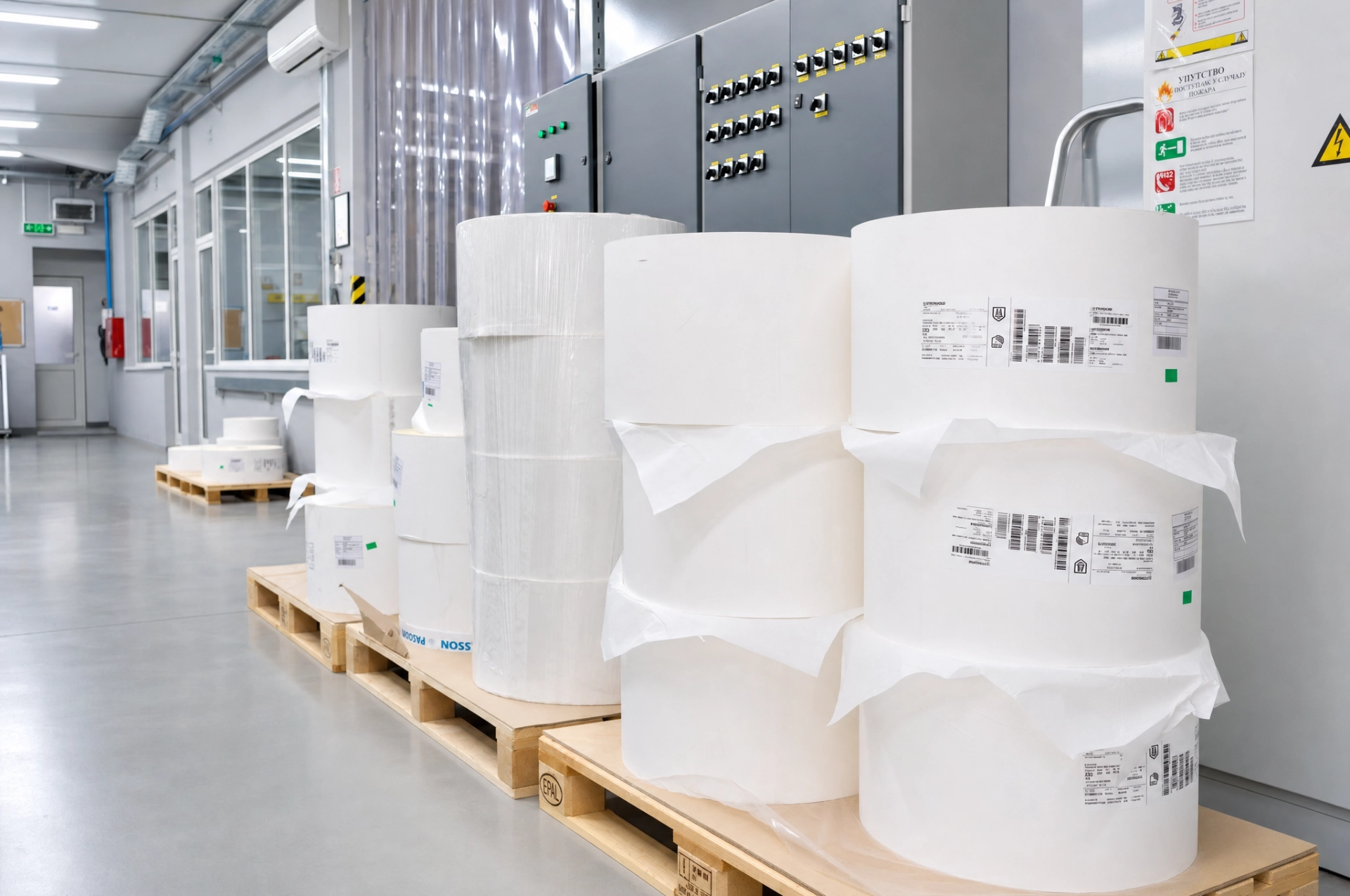
Rolls of paper self-adhesive material on pallets in the Štamparija RP warehouse
What FSC™ means for your companyIf you use FSC-certified labels, you're entitled to put the FSC™ mark on your product. It's a visible signal to consumers and partners that your supply chain respects the principle of responsible forestry. For exports to the European Union market, this is becoming an increasingly important requirement.
Scope of certificationPurchase of FSC Mix and FSC Recycled paper and board, and the production and sale of FSC Mix and FSC Recycled printed material, industrial labels, and other pulp and paper products. An updated list of products and wood species is available at info.fsc.org.
FSC Mix and FSC Recycled, what's the differenceFSC Mix denotes paper from responsibly managed forests combined with controlled and recycled fiber. FSC Recycled denotes paper made exclusively from recycled fiber. Both are covered by our certificate, so the material is chosen based on what the product and the market require.
Chain of custody in practiceEvery step, from the forest through the paper manufacturer to our print shop and your label, is documented and verifiable. A product is considered FSC-certified only when the FSC claim is clearly stated on the sales and shipping documentation, so traceability has to exist on paper too, not just in the material.
Separate tracking of FSC materialCertified material is tracked separately and labeled in the warehouse, so it doesn't get mixed with uncertified stock. Without that order in the warehouse, the claim on the invoice wouldn't hold up, no matter how sound the paper's origin actually is.
Certificate detailsCertificate number BV-COC-221179, standard FSC-STD-40-004 V3-1, type Single. Issued by Bureau Veritas Certification Holding, office Bureau Veritas Certification Serbia. Initial certification October 5, 2025, valid until October 4, 2030.
05ISO Standards

Three ISO standards, integrated into one production system

All three ISO certificates were issued by StandCert d.o.o. Belgrade, for the same location and the same activity: printing self-adhesive labels. Quality, food safety, and environmental protection are not three separate projects, but one integrated management system applied in day-to-day production.

The Integrated Management System Policy, signed in Gornji Milanovac on June 15, 2022, combines the requirements of ISO 9001:2015, ISO 14001:2015, and ISO 22000:2018 into a single document that binds both management and employees. It's available for download at the bottom of this page, along with the certificates.

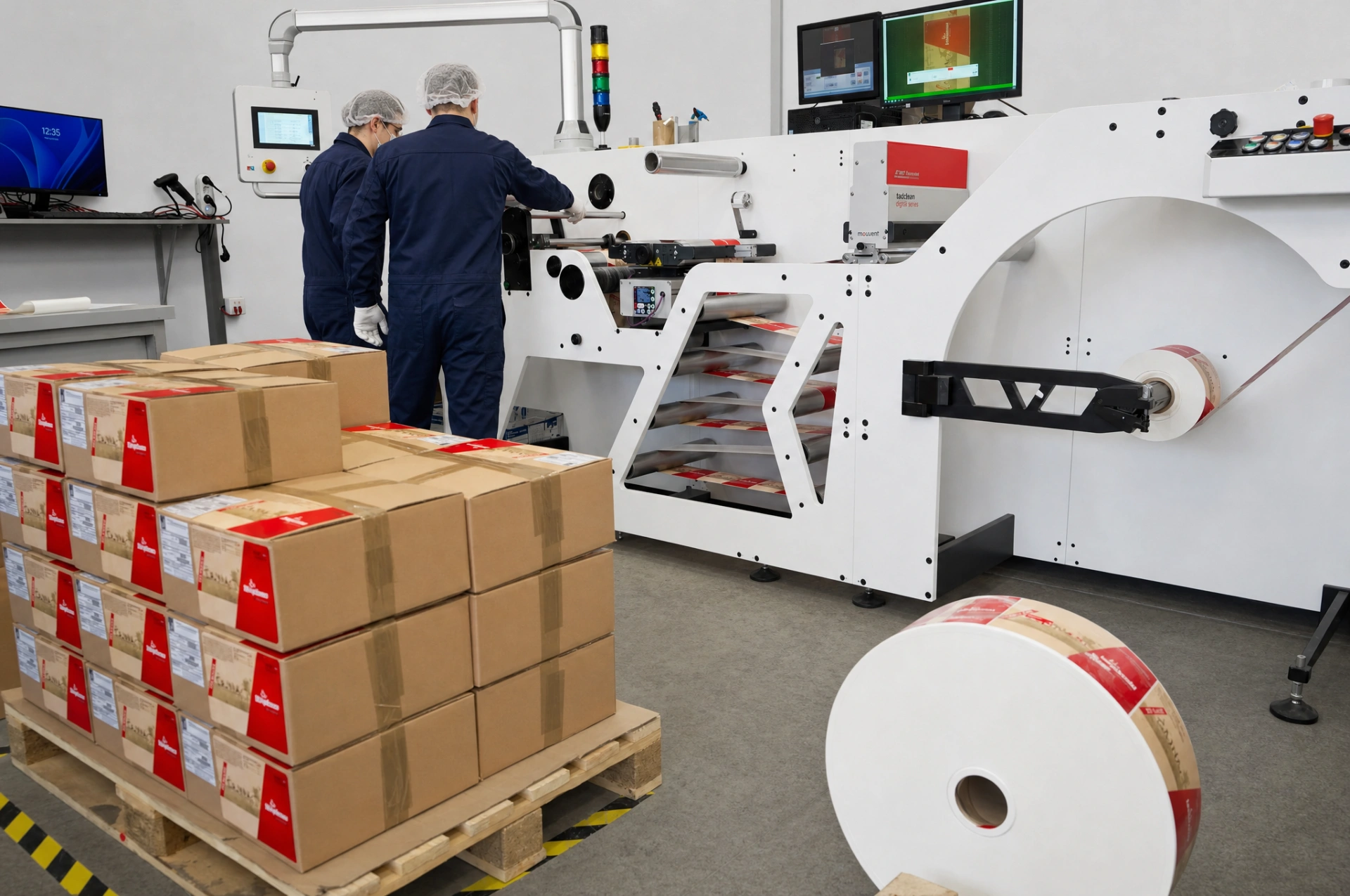
Štamparija RP employees in work uniforms and caps in front of an inspection machine
SRPS ISO 9001:2015
Quality management system
Certificate numberQS-0612
Certification bodyStandCert d.o.o. Belgrade
ScopePrinting of self-adhesive labels
Initial certificationJanuary 28, 2019
RecertificationJanuary 28, 2025
Valid untilJanuary 27, 2028
The standard requires that every job have a defined workflow, responsibility, and record. In practice that means for every roll it's known who worked on it, on which machine, and under which work order, and that a repeat order is run to the same parameters as the first.
SRPS EN ISO 22000:2018
Food safety, category CAT 1
Certificate numberFS-0008
Certification bodyStandCert d.o.o. Belgrade
ScopePrinting of self-adhesive labels (CAT 1)
Initial certificationJanuary 11, 2018
RecertificationJanuary 11, 2024
Valid untilJanuary 10, 2027
Category CAT 1 covers the production of packaging material that comes into contact with food. Because of that, attention is paid to the choice of materials and inks, to the cleanliness of the plant, and to production staff wearing caps and hairnets.
SRPS ISO 14001:2015
Environmental management
Certificate numberES-0309
Certification bodyStandCert d.o.o. Belgrade
ScopePrinting of self-adhesive labels
Initial certificationJanuary 28, 2019
RecertificationJanuary 28, 2025
Valid untilJanuary 27, 2028
This is the standard behind everything described in blocks 02 and 03 of this page. It requires that waste streams be identified, measured, and documented, and that handovers to licensed operators be proven with paperwork, not just a statement.
IMS Policy
One document for three standards
ScopeISO 9001, ISO 14001, ISO 22000
SignedGornji Milanovac, June 15, 2022
SignatoryDirector
AvailabilityPublic, via the website
The policy obligates management to provide the conditions and resources, and employees to apply it in their day-to-day work. It's available to all interested parties, so a customer can read it before asking us how we operate.
06Occupational Health and Safety

Safe work is not a legal formality, it's an imperative

Running a business policy that gives workers safe and secure work, free of the threat of dismissal and free of the risk of any kind of workplace injury, that is our imperative. Štamparija RP, in accordance with the Law on Occupational Health and Safety, governs the implementation of safety for all employees and for anyone involved in its work processes.

Our team includes a person who has passed the professional examination for occupational health and safety duties. A written risk assessment has been adopted for all workstations, and measures for eliminating risk have been established. Work clothing, caps and hairnets, gloves, and protection when working with chemicals are not a recommendation but a rule.
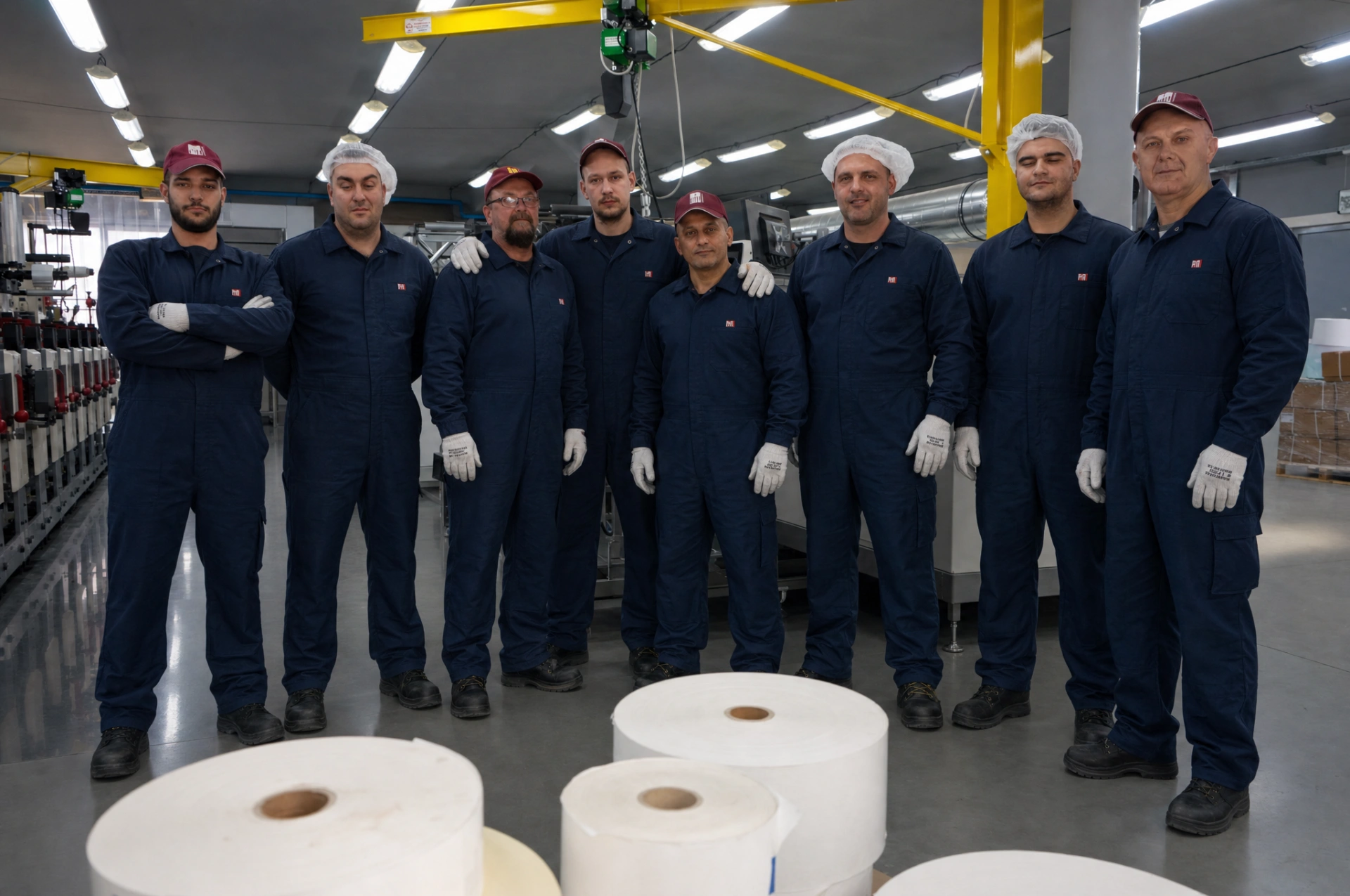
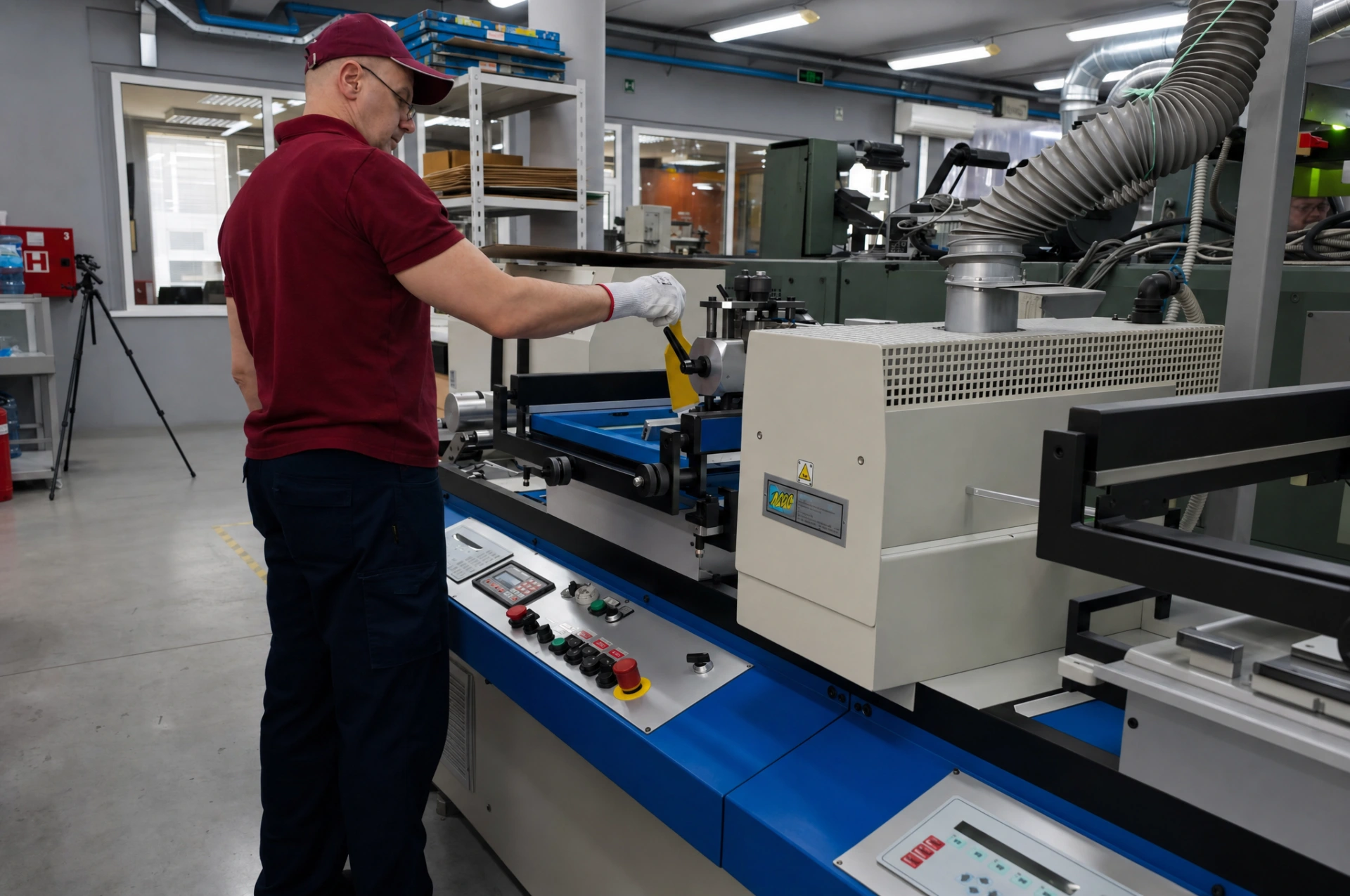
Štamparija RP employees in work uniforms, caps, hairnets, and gloves on the production floor
Personal protective equipment in every shiftWork clothing, caps, and hairnets in zones where material for food contact is processed, gloves for handling rolls and tools, chemical-resistant gloves for washing rollers and working with cleaning agents. Equipment stays at its designated spot and is replaced when worn out.
A dedicated, permanently employed safety officerOccupational health and safety duties are carried out by a permanently employed staff member who has passed the professional examination. This isn't a service called in as needed, but a person who is on-site and monitors the application of measures day by day.
Risk assessment for every workstationA written risk assessment has been adopted for every workstation in the plant, with specific measures for eliminating or reducing risk. The work environment, work equipment, and personal protective equipment are all set up so as not to endanger employees.
Training for safe workEvery employee is trained for safe work at their own workstation, and the work process is adapted to the employee's physical and mental capabilities. The Occupational Health and Safety Rulebook defines the rules and procedures for every situation that may arise.
Fire protection, third-degree hazard levelSelf-adhesive materials, papers, and films are highly flammable materials and require a third-degree fire hazard rating. The fire protection officer continuously carries out the preventive measures set out by law and fire protection regulations.
Fire protection infrastructureA hydrant network with regular testing, fire extinguishers in accessible spots throughout the plant, in the warehouses, and in the waste storage area, lightning protection systems, emergency lighting, marked evacuation routes, and fire department access routes. Functionality is checked within the legally required intervals.
Chemical handling and ventilationFlexo printing uses inks, varnishes, and washing agents that require proper storage and handling. Safety data sheets for all materials are available to employees, and extraction and ventilation in the plant maintain a safe working atmosphere.
Job security as part of company policyThe company's mission explicitly mentions employees' secure livelihood and work free of the risk of injury. Safety is therefore not seen as a cost imposed by law, but as a condition for the work to be done calmly and for people to stay with the company long-term.
07Environmental Policy

ISO 14001 in practice, not on paper

Štamparija RP aims to achieve steady progress in meeting the requirements of SRPS ISO 14001:2015, by keeping negative impacts on the local and global environment to the smallest possible measure. Environmental objectives are set at every level and built into business processes, not into a separate document that no one reads.

What that looks like on the shop floor is described in blocks 02 and 03: labeled bins and drums, covered and fenced storage, a baler, bales on racks, and handover to licensed operators with documentation. Certificate number ES-0309 confirms that this system is in place, and the recertification in January 2025 confirms it's still working.
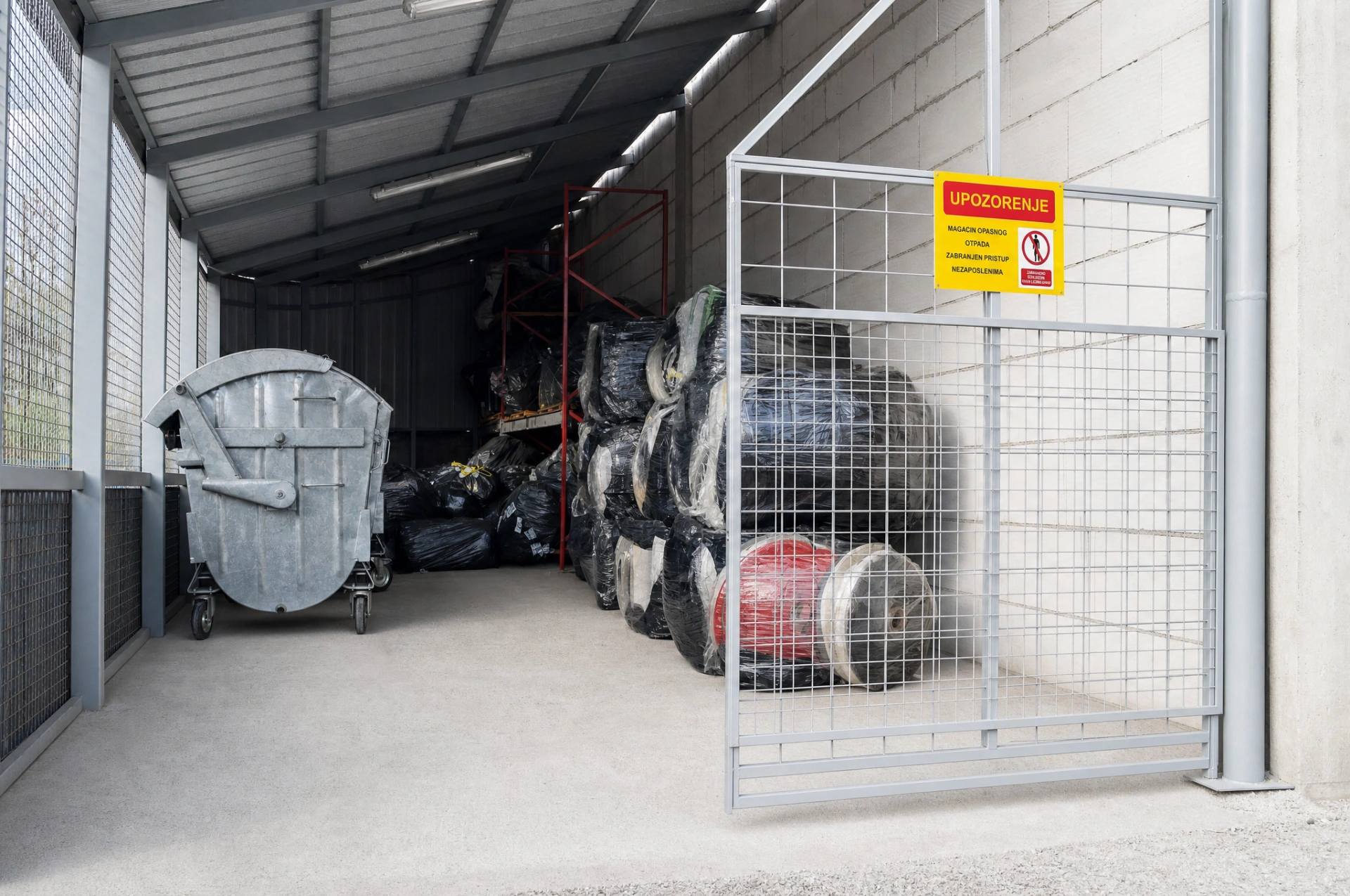
Covered and fenced waste storage area at Štamparija RP with a warning sign and a container
Compliance with regulationsWe operate in accordance with all applicable regulations and standards regarding environmental protection. Certificate ES-0309, issued by StandCert d.o.o. Belgrade, confirms compliance with standard SRPS ISO 14001:2015 and was recertified on January 28, 2025.
Objectives at every levelThe organization has established environmental objectives at every level and taken measures to achieve them by integrating them into business processes. Identified risks and opportunities are documented, and measures are implemented and verified.
Continual improvement of the systemThe environmental management system is continually reviewed and improved. Internal audits and management review exist to find what isn't working, not to confirm that everything is.
Rational use of resourcesLess scrap means less material consumed, less energy per usable square meter, and less waste to dispose of. That's why savings are sought at the preparation and job-startup stage, where it's decided how much material will be used up in the first place.
Contribution to the sustainable development of the surroundingsThrough our overall operations we contribute to the sustainable development of the company and of the environment in which we work. Ongoing care for environmental protection and contributing to a healthy environment and healthy living are part of the company's values, not a campaign.
Employee awareness as a preconditionEmployees working in the plant are familiar with the environmental policy and their own role in it. We encourage them to identify on their own where waste or consumption can be reduced, because a system that depends only on a document doesn't survive past the first shift.
Sustainability, Up Close

What environmental care looks like on the shop floor

Fourteen photographs from the Štamparija RP plant. The top row shows the waste journey: labeled drums and containers, the baler, bales on racks, and pallets ready for the licensed operator. The bottom row shows what that system serves: the material and core warehouses, and the people in work gear who keep it all in order.

Drag a row left or right, click an image to enlarge it Swipe left or right, tap an image to enlarge it
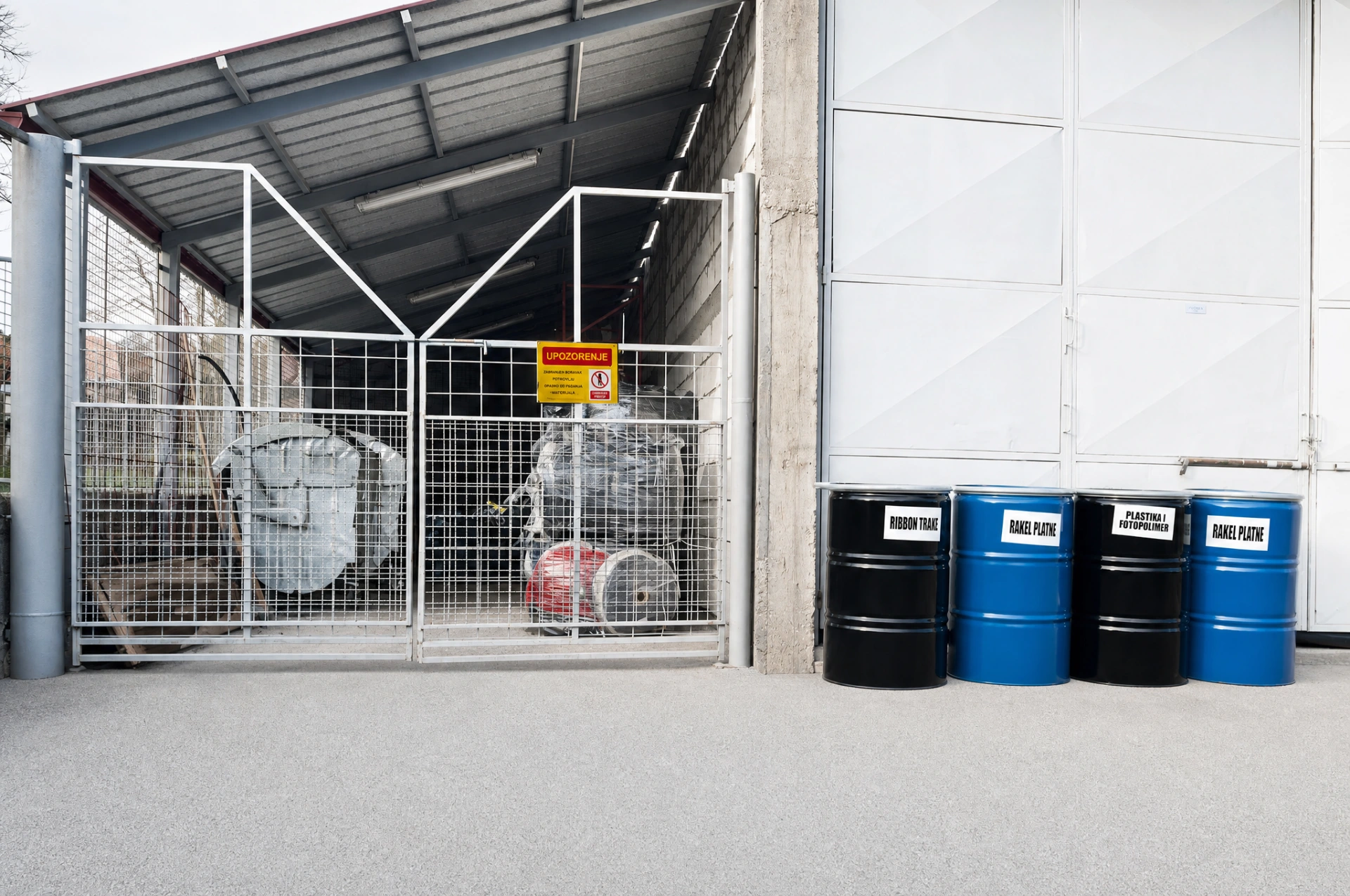
Labeled drums for production waste: ribbon, doctor blades, plastic, and photopolymer
Containers of inks and chemicals stacked on a pallet rack, separate from production
Waste baler at the Štamparija RP plant
Baled, sorted waste stacked in a covered area
Waste bales on pallet racks, organized just like the material warehouse
Pallets of baled waste ready for pickup by the licensed operator
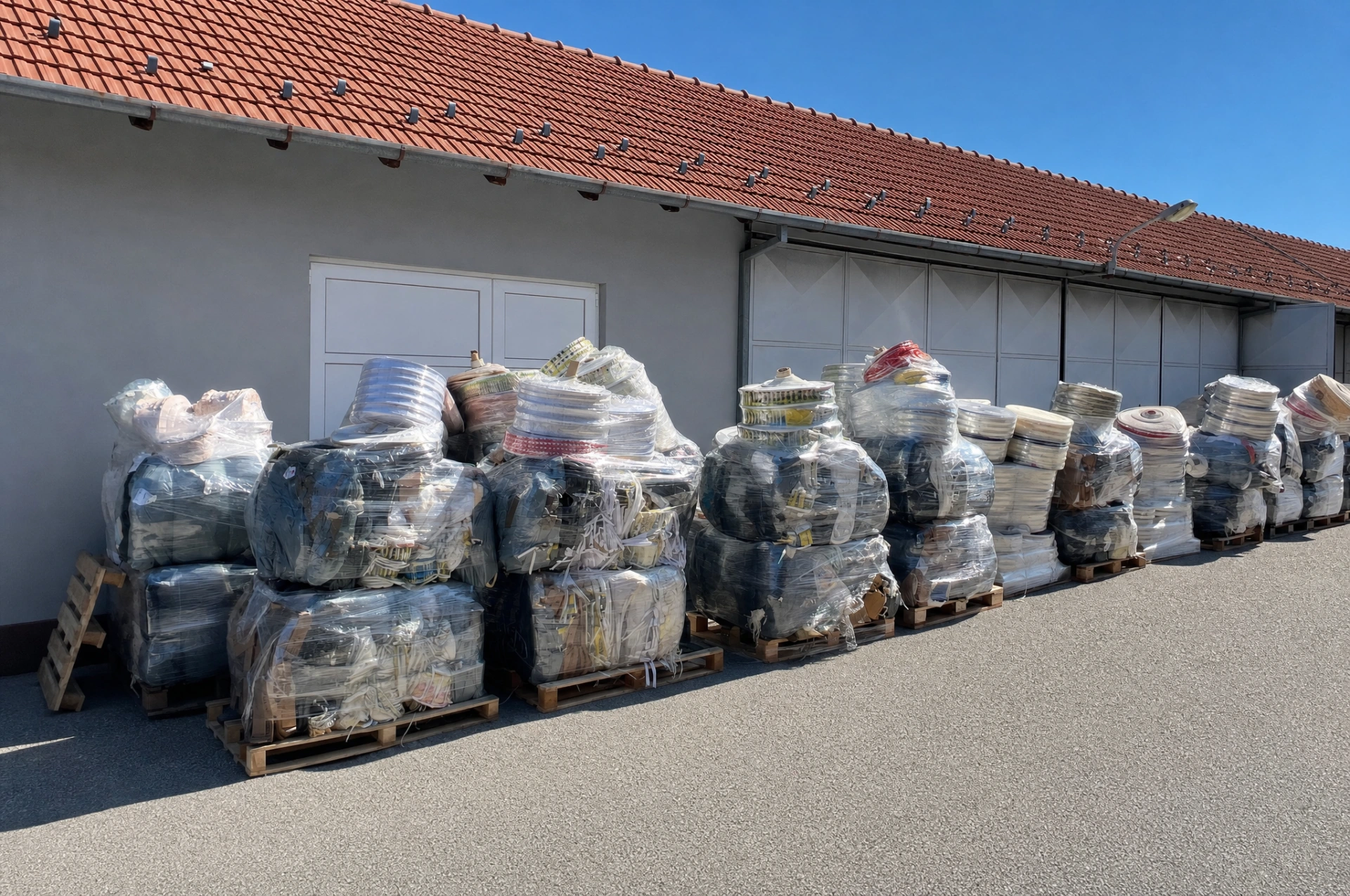
Baled waste on pallets in front of the plant, staged into a full load for transport
Štamparija RP material warehouse with a pallet forklift and rolls on racks
Warehouse of cardboard cores, 40 and 76 mm diameter, on racks
Rolls of paper and metallized self-adhesive material staged on pallets
Work on a printing line alongside pallets of finished labels ready for delivery
An employee in a work uniform, cap, and gloves stacking rolls of finished labels
Washing a roller with chemical-resistant gloves, part of routine maintenance
Work on a finishing line with extraction that maintains a safe working atmosphere
Document Preview

Štamparija RP Certificates: Document Preview

ISO 9001 · ISO 22000 · ISO 14001 · FSC™ Chain of Custody, all certificates in a single document

Download
Loading certificates...
1 of
100%
Certified Production

Quality proven
by certificates, not words

Four international certifications are not a decoration on the wall. Each one represents a concrete process that protects your product, your customer, and the environment. ISO 9001 means your order goes through a controlled process from receipt to delivery. ISO 22000 means the label on your food product does not compromise food safety. ISO 14001 means we choose materials and processes that reduce waste. FSC means the paper in your label does not come from endangered forests.

Certificates available on request FSC labels with CoC number Annual external audit of all standards
ISO 9001 · Quality Management System QS-0612 · valid through January 27, 2028
For you, this means every order goes through a defined process: receipt, prepress review, Star Proof, printing, quality control, packaging, and delivery. Nothing is skipped, and every step is documented.
ISO 22000 · Food Safety FS-0008 · valid through January 10, 2027
For you, this means the label on your food product is made through a process that controls contamination, substance migration, and hygiene practice. Your customer gets a safe product with a safe label.
ISO 14001 · Environmental Protection ES-0309 · valid through January 27, 2028
For you, this means we choose materials and processes that reduce waste, streamline energy and water consumption, and manage chemicals responsibly. Your label is made through an environmentally conscious process.
FSC CoC · Responsible Paper Origin BV-COC-221179 · valid through October 4, 2030
For you, this means the paper in the label comes from responsibly managed forests with a complete chain of custody. If your brand communicates sustainability, the FSC label confirms it concretely, not with generic claims.
4 International
Certifications
ISO 9001 Process
Quality
ISO 22000 Food
Safety
FSC Responsible
Paper Origin
35+ Years of Štamparija RP
Experience